TorontoOntario · 36 tours
 Niagara FallsOntario · 25 tours
 New York CityNew York · 30 tours
 Las VegasNevada · 8 tours
 San FranciscoCalifornia · 16 tours
 VancouverBritish Columbia · 17 tours
 DubaiUAE · 54 tours
 Abu DhabiUAE · 5 tours
 Buenos AiresArgentina · 23 tours
 AthensGreece · 31 tours
 AucklandNew Zealand · 38 tours
 CancunMexico · 54 tours
No destinations match “”. Try searching all tours instead — that search understands full questions, not just place names.
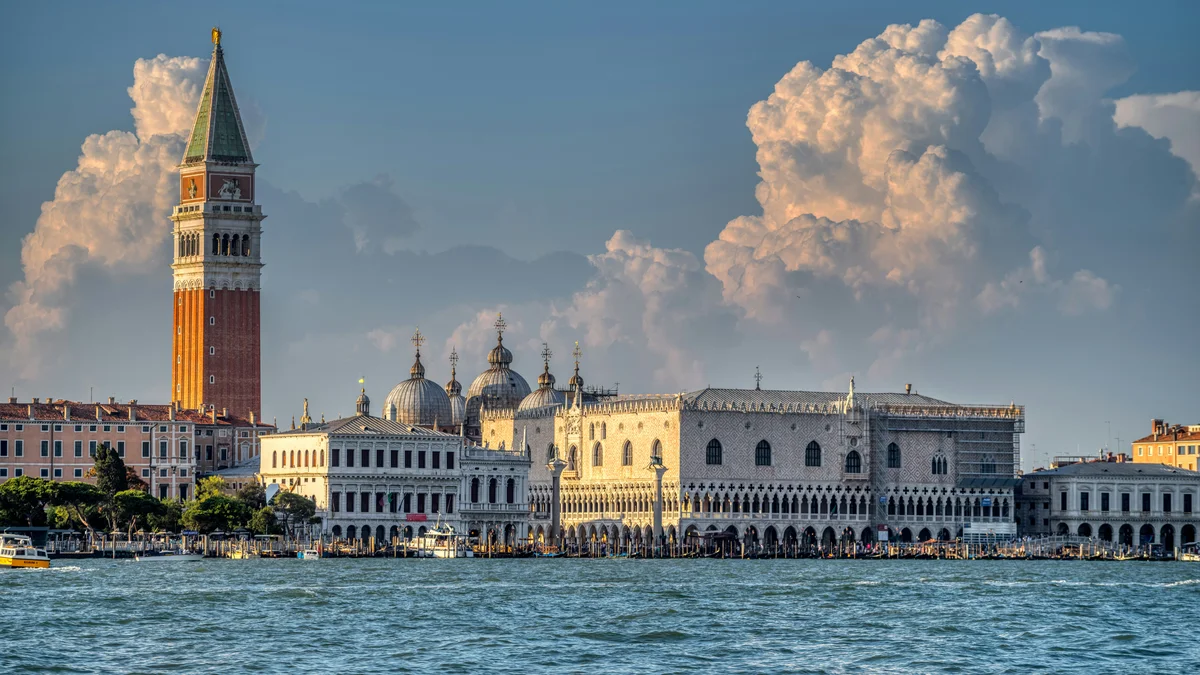
The Doge's Palace was the political and residential heart of the Venetian Republic, home to the Doge and the seat of government for centuries. Visitors can explore its ornate public rooms, the armory, and the historic prisons, crossing the famous Bridge of Sighs that once led convicted prisoners from the courtrooms to their cells.
Visitor guide
The Doge's Palace, or Palazzo Ducale, is a palace in the Venetian Gothic style and one of the main landmarks of Venice in northern Italy. It was the residence of the Doge, the elected leader of the former Republic of Venice, and also housed government offices and a jail. It has been a museum since 1923 and is one of the museums run by the Fondazione Musei Civici di Venezia.
According to Wikipedia, the first palace was built in 810, when Doge Agnello Participazio moved the seat of government to the area of present-day Rialto, but no trace remains of it. It was partially destroyed in the 10th century in a fire set by citizens rebelling against Doge Pietro IV Candiano and was rebuilt under Doge Sebastiano Ziani in the late 12th century. The Gothic palace that stands today began to be built around 1340, starting with the wing facing the lagoon, and the Piazzetta wing followed from 1424 under Doge Francesco Foscari.
A violent fire in 1483 destroyed the Doge's apartments, which were rebuilt by Antonio Rizzo, who introduced Renaissance elements. More fires followed in 1574 and 1577, the latter destroying the Great Council Chamber and works by Titian, Bellini and others. Despite designs submitted by Andrea Palladio for a neoclassical alternative, it was decided to rebuild in the original Gothic style.
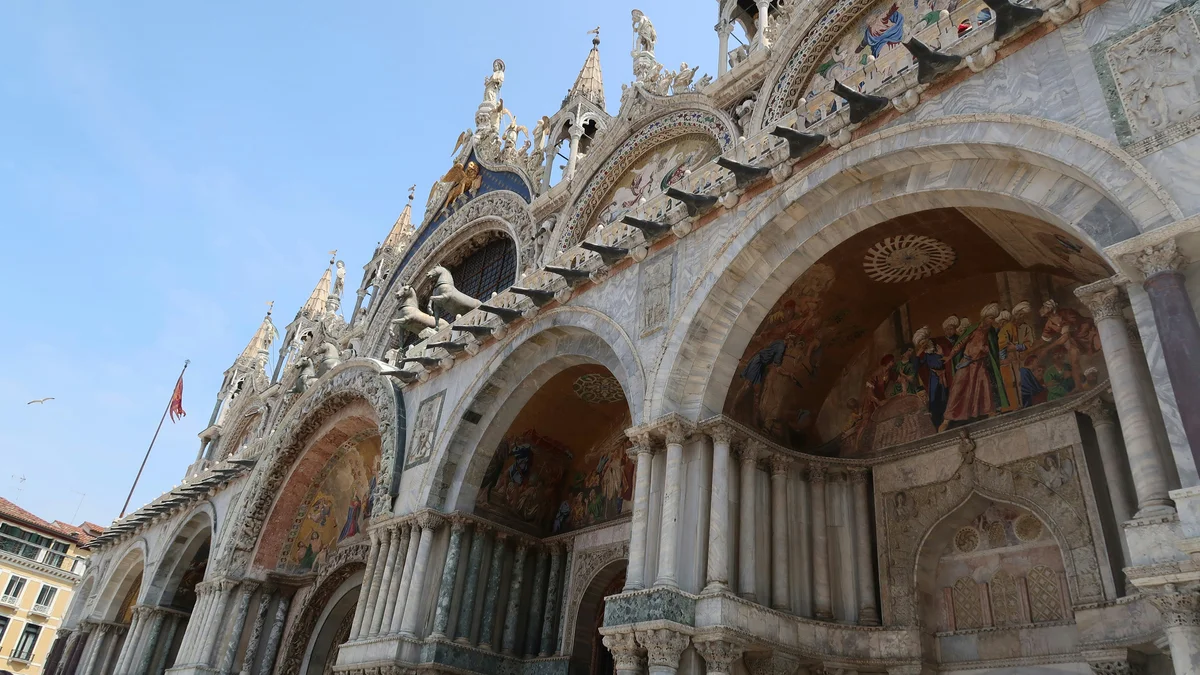
The Porta della Carta, built in 1438 to 1442 by Giovanni and Bartolomeo Bon, was the ceremonial entrance and is crowned by a statue of Justice. The sculpture of Doge Foscari before the lion of Saint Mark is a 19th-century replacement for the original, destroyed in 1797. In the courtyard, the Giants' Staircase, guarded since 1565 by Sansovino's colossal statues of Mars and Neptune, represents Venice's power by land and sea. The north side of the courtyard joins the palace to St Mark's Basilica, which used to be the Doge's chapel.
Inside, the institutional chambers were decorated by leading Venetian painters. The Four Doors Room has frescoes painted by Tintoretto from 1578 onward and Titian's portrait of Doge Antonio Grimani, and the antechamber to the Hall of the Full College has a central fresco by Veronese showing Venice distributing honours and rewards. The palace housed the councils that governed the Republic, and the decoration was designed to stress the independence and historical mission of Venice.
Prisons occupied the ground floor of the southern wing from the 13th and 14th centuries. The dark, damp cells below were called the Pozzi, meaning wells, and those directly under the lead roof were called the Piombi. Among the famous inmates were Silvio Pellico and Giacomo Casanova, who in his memoirs describes escaping through the roof. The Bridge of Sighs, built shortly after 1600, links the palace to the New Prisons across the Rio di Palazzo. Its romantic name dates to the Romantic period and refers to the sighs of prisoners taking a last look at the lagoon.
The palace stands next to St Mark's Basilica and the waterfront. With its many rooms, a guided private visit can help you focus on the chambers, the courtyard and the prisons, and understand how the Republic's government worked.
See every tour and attraction we cover in Venice.