TorontoOntario · 36 tours
 Niagara FallsOntario · 25 tours
 New York CityNew York · 30 tours
 Las VegasNevada · 8 tours
 San FranciscoCalifornia · 16 tours
 VancouverBritish Columbia · 17 tours
 DubaiUAE · 54 tours
 Abu DhabiUAE · 5 tours
 Buenos AiresArgentina · 23 tours
 AthensGreece · 31 tours
 AucklandNew Zealand · 38 tours
 CancunMexico · 54 tours
No destinations match “”. Try searching all tours instead — that search understands full questions, not just place names.
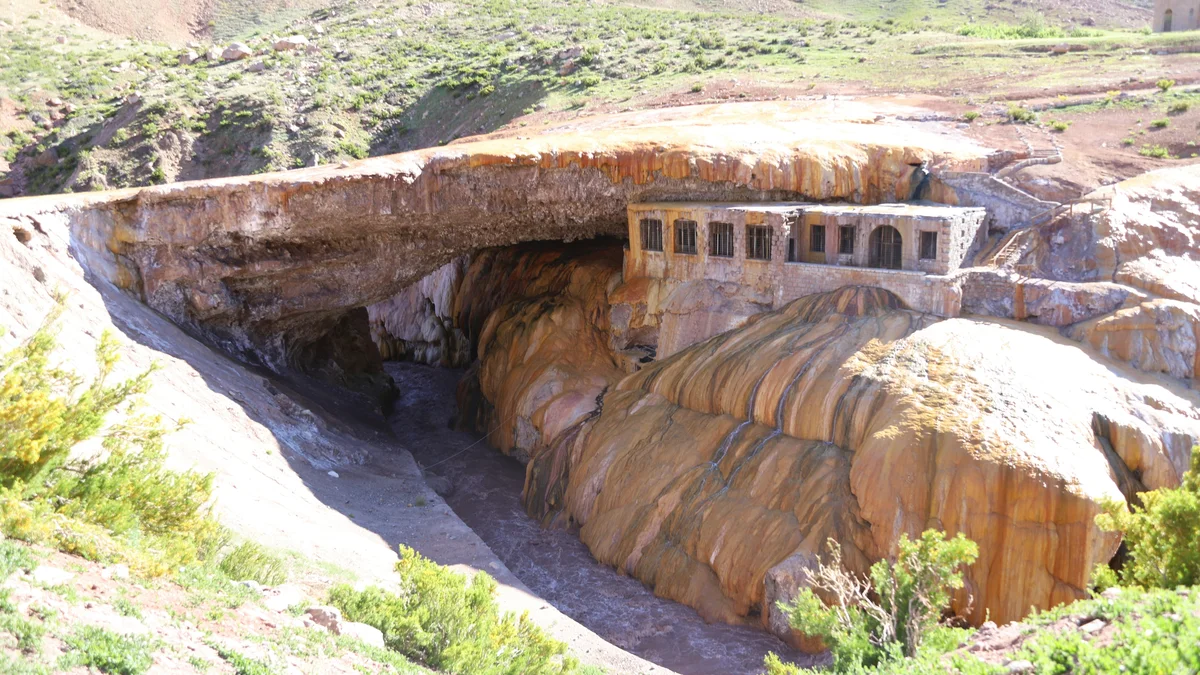
A natural rock bridge spanning the Las Cuevas River high in the Andes, colored yellow and orange by mineral deposits from the thermal springs that once ran beneath it — one of the most-photographed stops along the High Mountain route toward Chile.
Visitor guide
Puente del Inca, meaning Bridge of the Inca, is a natural rock arch over the Las Cuevas River in Las Heras Department, Mendoza Province, Argentina. It lies high in the Andes at about 2,744 m above sea level, and a small village and hot springs share its name.
According to Spanish Wikipedia's article on the natural monument, the arch is suspended about 19 m above the river, with a length of roughly 53 m, a width of about 28 m and a thickness of about 10 m. Its asymmetric rounded profile is stained green, orange, yellow and ochre by mineral deposits and microbial communities, and hanging stalactites and calcium formations decorate it, with ice needles appearing in winter. The site is about 183 km from Mendoza city by National Route 7, close to the entrance of Aconcagua Provincial Park.
Wikipedia explains that both glaciers and hot springs shaped the arch. During an ice age glaciers expanded down the valley, and as the ice retreated it left large piles of eroded debris. Water from the hot springs is so rich in minerals that it can coat small objects in a petrifying layer, and over time it cemented the debris into one solid mass. During a very wet period a powerful river then cut a channel through the least encrusted lower layers, gradually creating the large opening of the arch. The Spanish article describes one geological theory in which landslides from the south wall of Aconcagua filled the valley, with cementation beginning roughly 14,000 years ago and the arch opening some 8,000 years ago through river erosion. It treats the site as a combined biological, physical and chemical system, with travertine forming when thermal water releases carbon dioxide on contact with air.
Wikipedia reports that engineering estimates give the arch factors of safety ranging from 1.5 to 3.0, and that it remains stable under its own weight although it shows signs of deterioration.
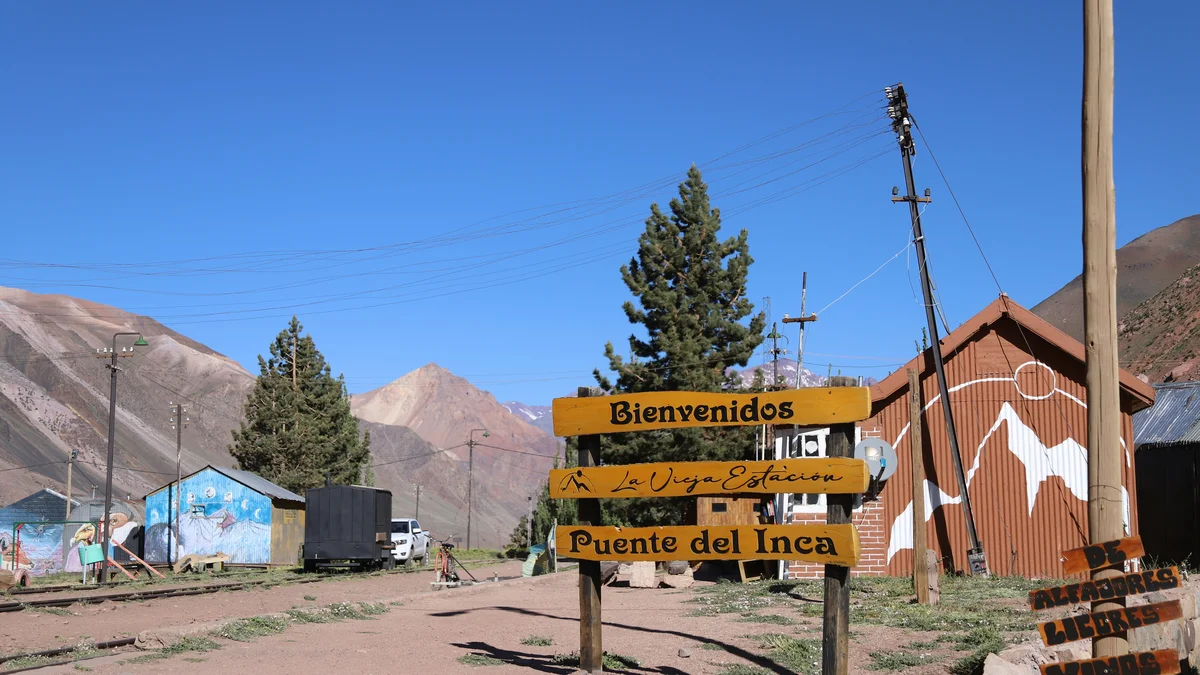
In March 1835 Charles Darwin visited the site and made drawings of the bridge with its large stalactites. In the early 20th century the springs were developed as a spa with a luxury hotel, a church and bathing pools attached to the natural bridge, linked to the hotel by a tunnel. Tourists arrived by train at a railway station that still stands, one of the last Argentine stations on the Transandine Railway before the train continued into Chile through a long tunnel under the Andes. The Spanish article says an avalanche in 1965 caused major damage to the hotel, which was then abandoned, while the baths and bridge were not affected.
The abandoned station has been turned into a mountaineering museum, the Museo del Andinista, founded by a group of climbers from Rosario to display the cultural history of the area. Wikipedia says the museum is run by its founding group of friends.
A Quechua legend, retold in the Spanish article and labelled by it as legend, tells of an Inca heir with a severe paralysis who went to the springs to be cured, with warriors forming a human bridge for him to cross; once he was healed, the warriors turned to stone and became the bridge. The site was declared an intangible zone in 1991 and a provincial natural monument by a law of 2005, and it can be viewed only from the northeast side of the river.
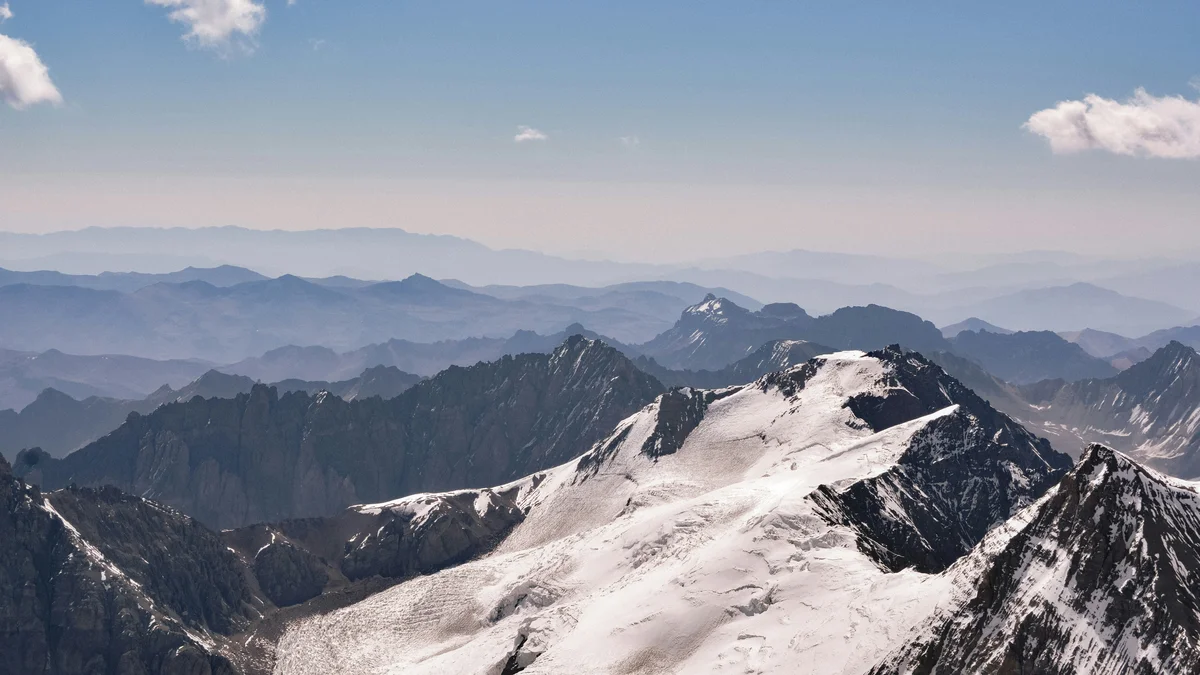
Puente del Inca sits between the two trailheads for climbing Aconcagua, the highest mountain in the Western Hemisphere. Its climate is a rare continental type, with dry, moderate summers and snowy winters, though the vegetation looks more like that of a cold semi-arid climate.
The site is usually visited as a stop on the high Andean road from Mendoza toward the Chilean border, often combined with views of Aconcagua. Because the elevation is above 2,700 m, layers and sun protection are useful. A private guided visit can combine the arch, the old station and the mountain viewpoints in a single day.
See every tour and attraction we cover in Mendoza.