TorontoOntario · 36 tours
 Niagara FallsOntario · 25 tours
 New York CityNew York · 30 tours
 Las VegasNevada · 8 tours
 San FranciscoCalifornia · 16 tours
 VancouverBritish Columbia · 17 tours
 DubaiUAE · 54 tours
 Abu DhabiUAE · 5 tours
 Buenos AiresArgentina · 23 tours
 AthensGreece · 31 tours
 AucklandNew Zealand · 38 tours
 CancunMexico · 54 tours
No destinations match “”. Try searching all tours instead — that search understands full questions, not just place names.
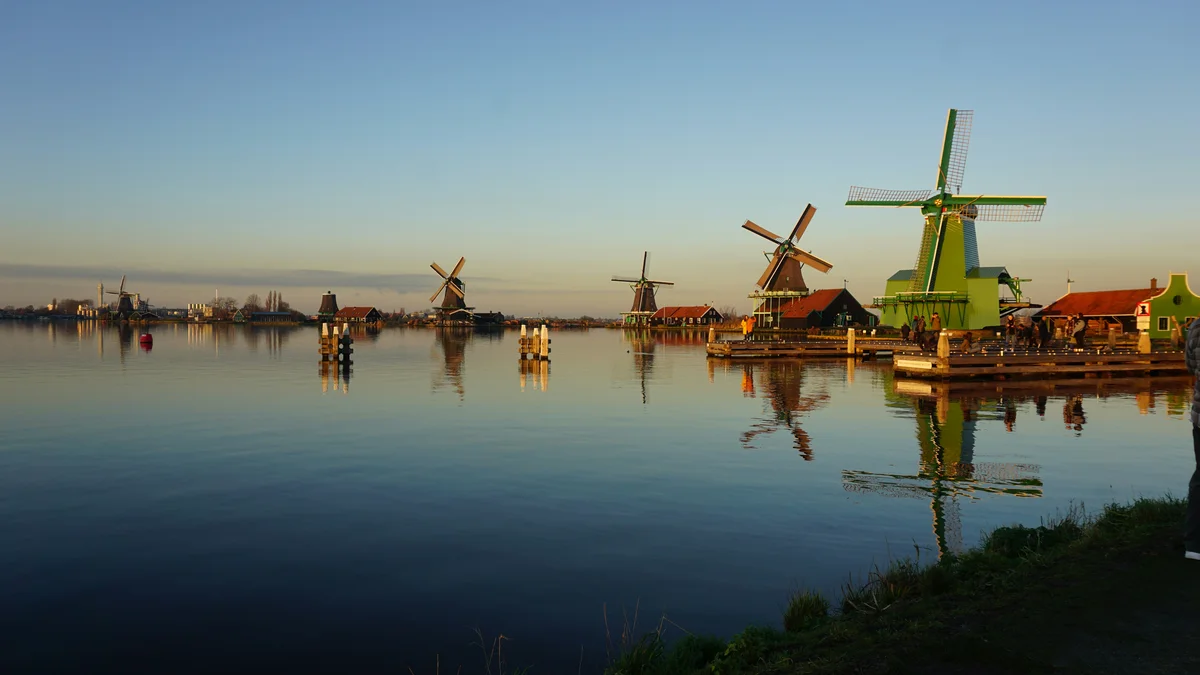
Zaanse Schans is an open-air conservation area just north of Amsterdam where historic Dutch windmills, green-timbered houses, and working craft workshops were relocated and preserved along the Zaan river. Several of its windmills are still operational, grinding spices, pigments, or oil the traditional way, and visitors can step inside a few of them. It's one of the most accessible places near Amsterdam to see the country's windmill heritage up close rather than from a passing car.
Visitor guide
Zaanse Schans is a neighbourhood of Zaandam, in the municipality of Zaanstad, North Holland, in the Netherlands, known for its collection of windmills and traditional wooden houses beside the River Zaan. It is a protected village scene that preserves Zaan timber building traditions and lies a short distance north of Amsterdam.
The name comes from the river Zaan and from the area's original role as a schans, a sconce or small fortification, against Spanish troops during the Eighty Years' War. Wikipedia says the windmills in the area were built after 1574. The industrial landscape of the Zaan region grew around windmills that powered activities such as sawing wood, pressing oil and grinding pigments and mustard.
From 1961 to 1974, historic buildings from across the Zaanstreek were moved to Zaanse Schans on trailers, and two windmills remain on their original sites and were not relocated. The area is described as an architectural reserve for Zaanse timber construction, with a mixture of inhabited homes, businesses, museums and mills. It is an anchor point of the European Route of Industrial Heritage. The Zaans Museum, established in 1994, lies just south of the neighbourhood near the first windmill.
Wikipedia lists eight mills (the official site lists ten): De Huisman, a mustard mill; De Gekroonde Poelenburg, a sawmill; De Kat, a dye mill; Het Jonge Schaap, a sawmill; De Os, an oil mill; De Zoeker, an oil mill; Het Klaverblad, a sawmill; and De Bonte Hen, an oil mill. Because the mills were built for different industries, they show how wood, oil, dyes and mustard were produced with wind power, and which of them are operating at any time depends on the mill and the day.
The attractions at Zaanse Schans include a cheese factory, a wooden shoe workshop, a bakery museum and a pewter foundry. Access arrangements differ between the windmills, museums and workshops, and they can change, so they should be checked before a visit.
The site drew about 2.6 million visitors in 2024, according to Wikipedia, so it can be busy at midday in the main season. The station Zaandijk Zaanse Schans is 18 minutes from Amsterdam Centraal. A private vehicle makes it easy to arrive early or late, when the light is good and the paths are quieter. Entry arrangements can change, so it is wise to confirm them before travel.
Seen from the Zaan, the green-painted houses and sails form the picture most associated with the Dutch windmill landscape. For visitors based in Amsterdam, it is among the easiest places to see that heritage up close,, and a visit is easy to combine with a day in the city.
See every tour and attraction we cover in Amsterdam.