TorontoOntario · 36 tours
 Niagara FallsOntario · 25 tours
 New York CityNew York · 30 tours
 Las VegasNevada · 8 tours
 San FranciscoCalifornia · 16 tours
 VancouverBritish Columbia · 17 tours
 DubaiUAE · 54 tours
 Abu DhabiUAE · 5 tours
 Buenos AiresArgentina · 23 tours
 AthensGreece · 31 tours
 AucklandNew Zealand · 38 tours
 CancunMexico · 54 tours
No destinations match “”. Try searching all tours instead — that search understands full questions, not just place names.
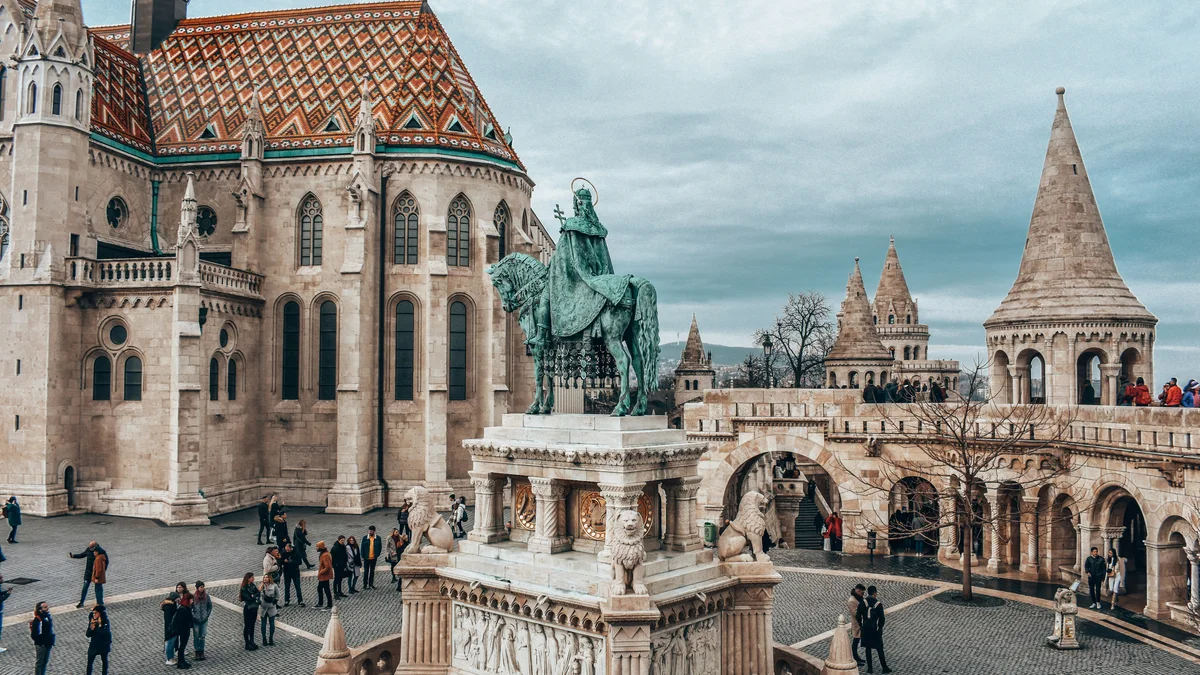
Fisherman's Bastion is a real neo-Gothic and neo-Romanesque viewing terrace built between 1895 and about 1902 (sources vary) on Castle Hill, with seven fairy-tale turrets said to represent the seven Magyar tribes that founded Hungary. Despite its medieval look, it's a relatively modern structure designed purely for the panoramic view it frames over the Danube, Chain Bridge, and Pest's skyline. It sits right beside Matthias Church, making the two a natural pairing for visitors.
Visitor guide
Fisherman's Bastion, in Hungarian Halaszbastya, is a Neo-Romanesque terrace and promenade on Castle Hill in Budapest, designed by Frigyes Schulek. Its white stone towers and arcades stand beside Matthias Church and look out across the Danube towards the Pest side of the city.
Wikipedia states that the bastion was designed by the architect Frigyes Schulek, who also led the restoration of the nearby Matthias Church. It was built in a Neo-Romanesque style on the foundations of an older stretch of the Buda Castle walls. Construction began in 1895. The infobox gives 1902 as the completion date, while the article text says the complex was finished around 1905 and handed to the capital in October of that year, so the date depends on the source.
The main facade runs roughly 140 metres parallel to the Danube. It includes covered corridors with arched colonnades, an open courtyard and a central balcony above the middle staircase. Seven tall stone towers are said to represent the seven Magyar tribes who settled the Carpathian Basin and founded Hungary around 895.
The bastion has not always been called by its present name. Wikipedia says the name most likely comes from Fishtown, or Halaszvaros, a Danube-side settlement below the hill. Historians generally agree that in the Middle Ages the fishermen's guild protected this section of the castle wall, and fishermen sold their catch at a market near Matthias Church. Despite the name, the structure was built as a viewing terrace and not as a working fortification.
Castle Hill was a centre of settlement and defence under the Arpad dynasty and an administrative centre under King Matthias Corvinus. The area was damaged during the Ottoman occupation and later conflicts. Austrian military authorities kept parts of it fortified until 1874, when the castle was judged no longer modern enough as a fortress. City planners then proposed opening the area as a public space with views over the city, and Schulek's design turned the former military site into a promenade.
A bronze equestrian statue of Stephen I, the first king of Hungary, by Alajos Strobl, was unveiled on 21 May 1906, with a Neo-Romanesque pedestal designed to Schulek's plans and reliefs of scenes from the king's life. The bastion also features a statue of John Hunyadi by Istvan Toth, a bronze copy of a statue of St George whose original dates to 1373 in Prague Castle, and a memorial to two thirteenth-century Dominican friars, Julian and Gerhardus.
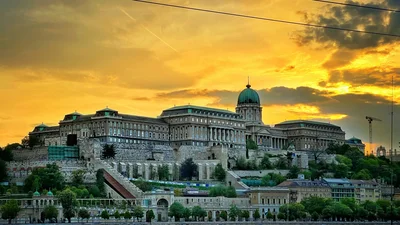
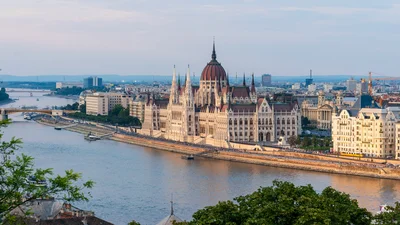
From the terraces there are views of the Danube, Margaret Island, Gellert Hill and the Pest skyline. Wikipedia reports that the bastion was severely damaged in the sieges of World War II and that restoration led by architect Laszlo Bors was completed in 1953. It is part of the UNESCO World Heritage Site covering Budapest, the Banks of the Danube and the Buda Castle Quarter. A private tour with a driver can pair it with Matthias Church and Buda Castle, which are all within a short walk of one another.
See every tour and attraction we cover in Budapest.