TorontoOntario · 36 tours
 Niagara FallsOntario · 25 tours
 New York CityNew York · 30 tours
 Las VegasNevada · 8 tours
 San FranciscoCalifornia · 16 tours
 VancouverBritish Columbia · 17 tours
 DubaiUAE · 54 tours
 Abu DhabiUAE · 5 tours
 Buenos AiresArgentina · 23 tours
 AthensGreece · 31 tours
 AucklandNew Zealand · 38 tours
 CancunMexico · 54 tours
No destinations match “”. Try searching all tours instead — that search understands full questions, not just place names.
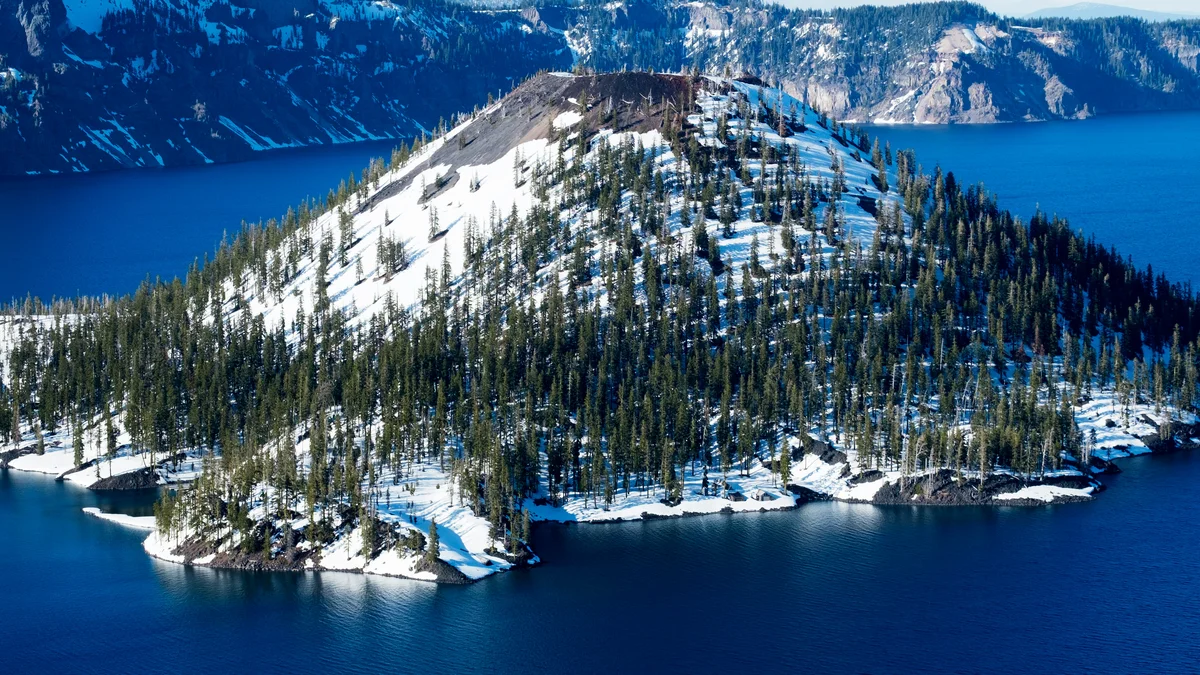
Wizard Island is a real volcanic cinder cone rising about 760 feet above Crater Lake's surface, formed by eruptions after the collapse of ancient Mount Mazama roughly 7,700 years ago created the caldera itself. It's the lake's most recognizable feature and can be reached by a seasonal boat tour, with a trail leading hikers up to its own small summit crater. The deep blue color of the surrounding water comes from the lake's exceptional clarity and depth, with no rivers feeding in or draining out.
Visitor guide
Wizard Island is a cinder cone that rises from the western end of Crater Lake in Crater Lake National Park, Oregon. It is one of four post-caldera volcanoes built inside the caldera, and the only one that broke the lake's surface; only about 2 percent of it is above the water. A small crater sits at its summit, known as the Witches Cauldron.
Crater Lake fills a caldera created about 7,700 years ago when Mount Mazama collapsed after a major eruption. Soon after, eruptions from new vents began building the base of Wizard Island while rain and snowmelt started filling the basin. According to the National Park Service, all post-caldera activity occurred within about 750 years of the climactic eruption.
The island is a cinder cone: loose volcanic fragments piled into a symmetrical mound, with lava flowing out through the cinders in blocky tongues. The USGS describes the summit cone as small fragments of frothy andesite, with blocky andesite flows around the base. Lava that entered the deepening lake formed benches on the island's flanks that record how deep the water was during those eruptions. The last eruptions on the island happened when the lake stood about 80 meters (260 feet) lower than today, and the last known eruption at Crater Lake, a small underwater lava dome on the east flank of the island's base, occurred about 4,800 years ago.
Sources differ on the exact figures. Wikipedia gives a summit about 755 feet above the average lake surface, while the USGS cites about 767 feet; the crater is described as roughly 300 to 500 feet across and about 70 to 100 feet deep depending on the source. William Gladstone Steel named both the island and the Witches Cauldron in 1885. NPS pages give about 767 feet above the lake and a summit crater about 300 feet across and 90 feet deep, while a separate NPS cinder-cone article gives less than 500 feet wide and about 70 feet deep.
The other three post-caldera volcanoes are mostly underwater. Merriam Cone, in the northeast of the lake, appears to have formed underwater, since it lacks a crater.
Public access is by boat tours that depart from Cleetwood Cove, the only trail down to the lake, during the summer season. The NPS visitor guide says hikers can cross a lava tongue on the Fumarole Bay Trail or climb the Summit Trail to explore the vent, and notes that fishing and cold-water swimming are allowed. Overnight camping is not permitted. Tour operations, trail access, and construction affecting Cleetwood Cove vary by season and year, so check the National Park Service and the concessioner for current permits, access, and schedules before planning around the island.
On a private Crater Lake day, a Voyzo driver can handle the drive between Rim Drive overlooks and the Cleetwood Cove trailhead, and wait while your group is on the water. Because boat access depends on the park's seasonal operations, treat it as something to confirm with the park rather than assume.
See every tour and attraction we cover in Crater Lake National Park.