TorontoOntario · 36 tours
 Niagara FallsOntario · 25 tours
 New York CityNew York · 30 tours
 Las VegasNevada · 8 tours
 San FranciscoCalifornia · 16 tours
 VancouverBritish Columbia · 17 tours
 DubaiUAE · 54 tours
 Abu DhabiUAE · 5 tours
 Buenos AiresArgentina · 23 tours
 AthensGreece · 31 tours
 AucklandNew Zealand · 38 tours
 CancunMexico · 54 tours
No destinations match “”. Try searching all tours instead — that search understands full questions, not just place names.
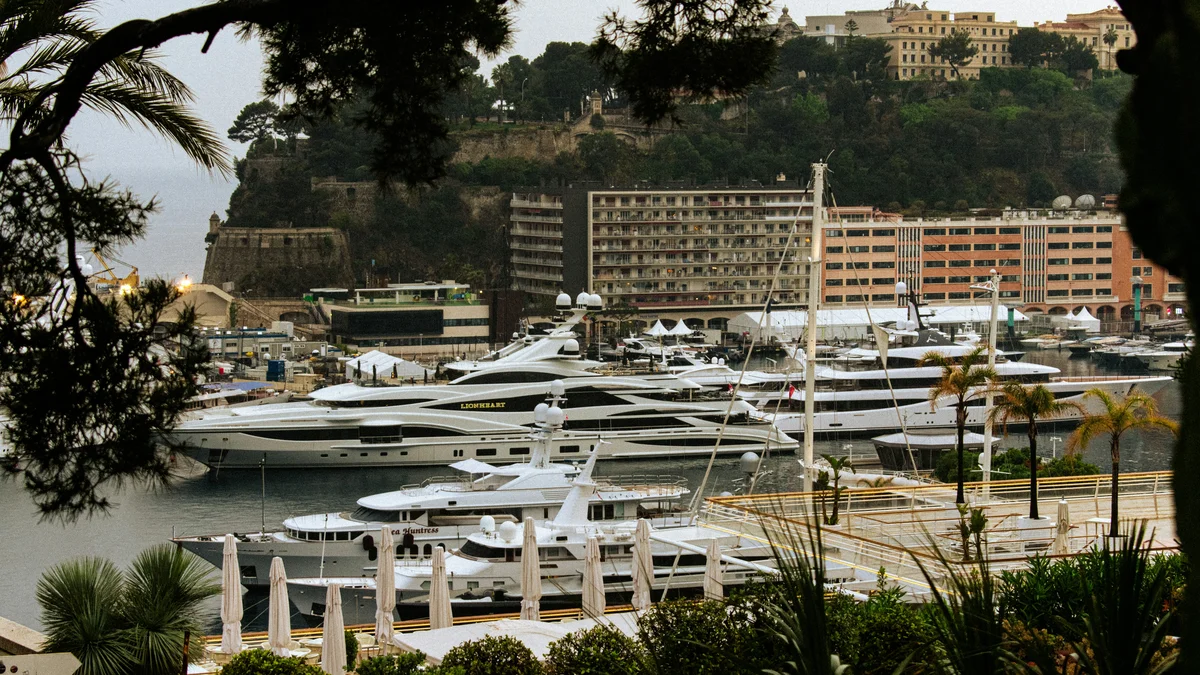
Monaco is the world's second-smallest sovereign state after Vatican City, packed into about 2 square kilometres (roughly 0.8 square miles) along the French Riviera, yet it remains an independent principality ruled by the Grimaldi family since 1297. Port Hercule, its real harbor, regularly fills with some of the largest superyachts in the world, framed by the Prince's Palace on the rock above and the district of Monte-Carlo with its famous casino beyond. Despite its tiny size, Monaco hosts major annual events like the Monaco Grand Prix, run through its own city streets since 1929.
Visitor guide
Monaco, officially the Principality of Monaco, is a sovereign city-state on the French Riviera in Western Europe, bordered by France on three sides and the Mediterranean Sea on the fourth. Monte-Carlo is its best-known district, home to the casino and the grand hotels. Wikipedia describes Monaco as the second smallest sovereign state in the world after Vatican City.
Monaco covers 2.08 square kilometres and has a population of about 38,000, making it the most densely populated country in the world. Its national coastline is only 3.83 kilometres long. French is the official language, and Italian and Monegasque are also widely spoken. Fewer than 10,000 of its residents are Monegasque nationals. It is about 13 kilometres east of Nice, and the Italian region of Liguria lies some 15 kilometres further east.
The principality is governed as a semi-constitutional monarchy with Prince Albert II as head of state. The House of Grimaldi has ruled Monaco, with brief interruptions, since 1297, and the state's sovereignty was officially recognised by the Franco-Monegasque Treaty of 1861. Monaco became a full United Nations voting member in 1993, uses the euro through its relationship with France, and is not a member of the European Union.
According to Wikipedia, Monaco's economic development was spurred in the late 19th century by the opening of the state's first casino, the Monte Carlo Casino, and a rail connection to Paris. The area where the casino stands was known as Les Spelugues, the Caves, until it was renamed Monte Carlo in honour of Prince Charles. The mild climate, scenery and gambling facilities made Monaco a tourist destination for the wealthy.
Monaco is first mentioned by the Greek historian Hecataeus of Miletus, who called it Monoikos, a Ligurian town. In 1191 the Holy Roman Empire granted the area to Genoa, and the seat of power was established as a fortress on the Rocher de Monaco, where the Prince's Palace stands. Tradition links the name with the Greek god Heracles, who had a temple there.
The principality hosts the Monaco Grand Prix, one of the original Formula One Grands Prix, and its motorsports association gives its name to the Monte Carlo Rally, held each January. The Oceanographic Museum is part of Monaco's tradition of marine research, and the Monte Carlo Casino complex includes the Opera de Monte-Carlo and Les Ballets de Monte-Carlo.
Monaco is small enough to cover its main sights in a day, but the terrain is steep and the streets crowded in busy seasons. A private tour with a driver from Nice, Cannes or elsewhere on the Riviera lets a group choose between the Old Town on the Rock, the casino square and the harbour at their own pace. Passport and border arrangements follow French and EU rules, so travellers should check requirements for their nationality.
See every tour and attraction we cover in Nice.