TorontoOntario · 36 tours
 Niagara FallsOntario · 25 tours
 New York CityNew York · 30 tours
 Las VegasNevada · 8 tours
 San FranciscoCalifornia · 16 tours
 VancouverBritish Columbia · 17 tours
 DubaiUAE · 54 tours
 Abu DhabiUAE · 5 tours
 Buenos AiresArgentina · 23 tours
 AthensGreece · 31 tours
 AucklandNew Zealand · 38 tours
 CancunMexico · 54 tours
No destinations match “”. Try searching all tours instead — that search understands full questions, not just place names.
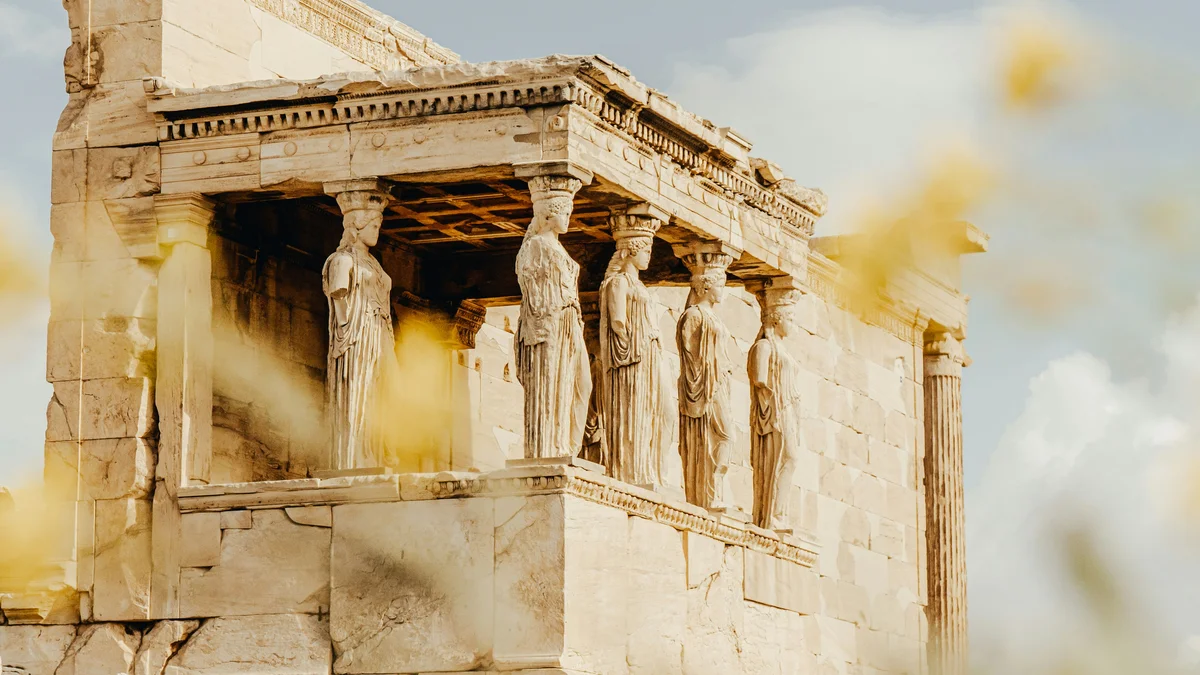
The Acropolis Museum, opened in 2009 at the foot of the Acropolis, displays artifacts recovered from the site, including original sculptures from the Parthenon frieze and the surviving Caryatids from the Erechtheion. Its top floor is set at an angle to match the orientation of the Parthenon, so visitors can see how the frieze originally wrapped around the temple. Glass floor sections let you look down onto the excavated remains of an ancient Athenian neighbourhood beneath the museum itself.
Visitor guide
The Acropolis Museum is an archaeological museum in Athens, Greece, devoted to finds from the Acropolis and its surrounding slopes. It opened to the public on 20 June 2009 and displays a collection spanning the Greek Bronze Age through the Roman and Byzantine periods, with more than 4,250 objects shown over about 14,000 square metres.
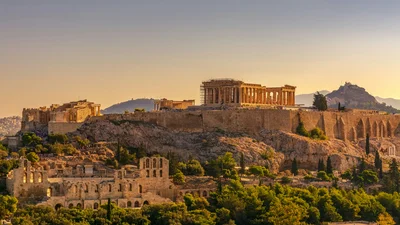
The first Acropolis Museum was completed on the rock itself in 1874 and expanded moderately in the 1950s. Repeated excavations uncovered far more artefacts than it could hold, which was a major reason for building a new museum. The museum stands on the southeastern slope of the Acropolis, on the ancient road that led up to the sacred rock, about 280 metres from the Parthenon.
An earlier competition won by the Italian architects Manfredi Nicoletti and Lucio Passarelli was annulled in 1999. The final, invitation-only competition was won by the New York-based architect Bernard Tschumi, working with the Greek architect Michael Photiadis. Tschumi's design centred on light, movement and a tectonic and programmatic element. Because the site contains archaeological remains, the building is raised on pillars that reach down to bedrock and sit on roller bearings designed to withstand a very large earthquake.
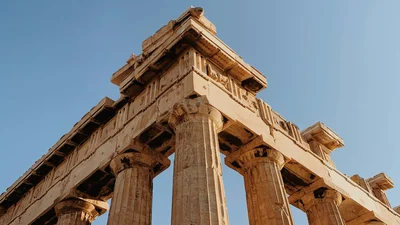
The top level holds the Parthenon Gallery, which is set askew on the lower floors so that it matches the cardinal orientation of the ancient temple. Glass walls on all four sides let natural light fall on the sculptures as it did in the temple, and its 48 columns mirror the temple's outline. Unlike the display of the marbles in the British Museum, where the sculptures face inward, the pediments, metopes and frieze here face outward, as they did on the Parthenon. Visitors begin on the top level and descend through the museum.
The Parthenon Marbles, often called the Elgin Marbles, are at the centre of a long-running dispute. According to Wikipedia, Greece asked the British Museum during the 20th century for their return, and museum officials replied that Greece had no suitable place to display them. A gallery for the Parthenon Marbles therefore became central to nearly every proposal for the new museum, and Greek officials hoped it would strengthen their campaign.
The lower level houses finds from the slopes of the Acropolis in a long rectangular hall with a sloping floor that evokes the climb to the rock, and a large trapezoidal hall holds Archaic works. Sculptures and artefacts from the Erechtheion, the Temple of Athena Nike and the Propylaea are also shown, along with Roman and early Christian finds. In 2012 the museum received the Keck Award from the International Institute for Conservation for its conservation and restoration of the Caryatids, the sculpted maidens from the Erechtheion.
Parts of the floor are glass, allowing visitors to see excavations below. They revealed two layers of modest private houses and workshops along an ancient roadside, one from the early Byzantine era and one from the Classical era. On 21 June 2019 the museum opened this site to visitors, who can walk through an ancient Athenian neighbourhood that survived from the Classical period to Byzantine times. A private guided visit pairs well with the nearby Acropolis, as the museum explains what stood on the rock.
See every tour and attraction we cover in Athens.