TorontoOntario · 36 tours
 Niagara FallsOntario · 25 tours
 New York CityNew York · 30 tours
 Las VegasNevada · 8 tours
 San FranciscoCalifornia · 16 tours
 VancouverBritish Columbia · 17 tours
 DubaiUAE · 54 tours
 Abu DhabiUAE · 5 tours
 Buenos AiresArgentina · 23 tours
 AthensGreece · 31 tours
 AucklandNew Zealand · 38 tours
 CancunMexico · 54 tours
No destinations match “”. Try searching all tours instead — that search understands full questions, not just place names.
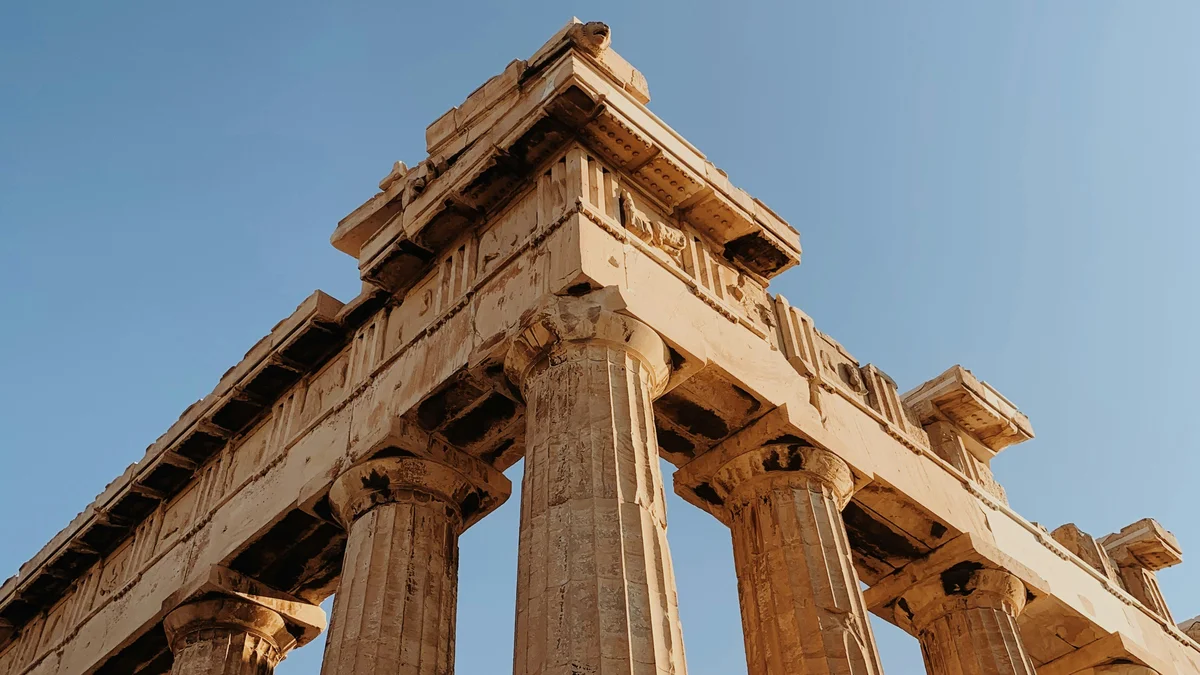
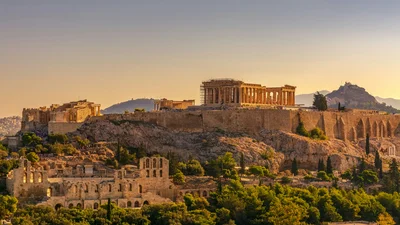
The Temple of Olympian Zeus was, when finished under the Roman emperor Hadrian in AD 131-132, the largest temple in Greece — a project that had actually been started more than six centuries earlier and left unfinished for centuries. Only 15 of its original 104 towering Corinthian columns are still standing today, but their scale alone gives a sense of how immense the structure once was. It sits within easy walking distance of the Acropolis, near Hadrian's Arch.
Visitor guide
The Temple of Olympian Zeus, also called the Olympieion, is a large ruined temple in central Athens, about 500 metres southeast of the Acropolis. Dedicated to Zeus as head of the Olympian gods, it took roughly six and a half centuries to complete, and today its surviving Corinthian columns convey the scale of the original building.
The tyrant Peisistratos built an earlier temple on the site around 550 BC, and his sons Hippias and Hipparchos demolished it around 520 BC to begin a far larger one. Work stopped when Hippias was expelled in 510 BC, leaving only the platform and some column elements. Aristotle later cited the project as an example of a tyranny keeping its people busy with huge public works.
The Seleucid king Antiochus IV Epiphanes revived the project in 174 BC and hired the Roman architect Decimus Cossutius, who changed the design to the Corinthian order and Pentelic marble. After the king died in 164 BC the temple was about half finished. In 86 BC the Roman general Sulla sacked Athens, damaging the partly built temple and removing some unfinished columns to Rome, where they were reused in the Temple of Jupiter on the Capitoline Hill.
The Roman emperor Hadrian completed the temple between AD 131 and 132, roughly 638 years after construction began, and dedicated it in 132, taking the title Panhellenios on the occasion. In its Hadrianic form the building measured about 110 metres by 44 metres and had 104 Corinthian columns, arranged in a double row of twenty along the long sides and three rows of eight on the short sides. Each column stood about 17 metres high. The cella housed a statue of Zeus in gold and ivory, with a statue of Hadrian beside it, and the precinct held statues of the emperor at regular intervals.
The Arch of Hadrian still stands at the northwest corner of the enclosure, a short walk from the temple.
The temple was badly damaged in the sack of Athens by the Heruli in AD 267 and was probably never repaired. Wikipedia says an earthquake destroyed it in the 5th century, after which its stone was quarried for buildings across medieval Athens. In 1436 the traveller Cyriacus of Ancona found only 21 of the 104 columns standing. In 1759 the Ottoman governor Mustapha Agha Tzistarakis destroyed one column with gunpowder to reuse its marble for plaster in the Tzistarakis Mosque, and a Greek inscription on a surviving column records the event.
Today 16 columns survive and 15 stand; the sixteenth fell during a storm in 1852. Nothing remains of the cella or the cult statue. During the Ottoman period Greeks called the ruins the Palace of Hadrian, and Turks called them the Palace of Belkis.
Systematic excavations began in 1886, when Stephanos Koumanoudes worked north of the precinct wall. In 1887 Francis Penrose of the British School at Athens excavated around the temple, and John Travlos led further digs in 1956 and 1961. The site is part of Athens's unified archaeological sites. A private guided visit combines it naturally with the Acropolis, the Arch of Hadrian and the neighbourhoods nearby.
See every tour and attraction we cover in Athens.