TorontoOntario · 36 tours
 Niagara FallsOntario · 25 tours
 New York CityNew York · 30 tours
 Las VegasNevada · 8 tours
 San FranciscoCalifornia · 16 tours
 VancouverBritish Columbia · 17 tours
 DubaiUAE · 54 tours
 Abu DhabiUAE · 5 tours
 Buenos AiresArgentina · 23 tours
 AthensGreece · 31 tours
 AucklandNew Zealand · 38 tours
 CancunMexico · 54 tours
No destinations match “”. Try searching all tours instead — that search understands full questions, not just place names.
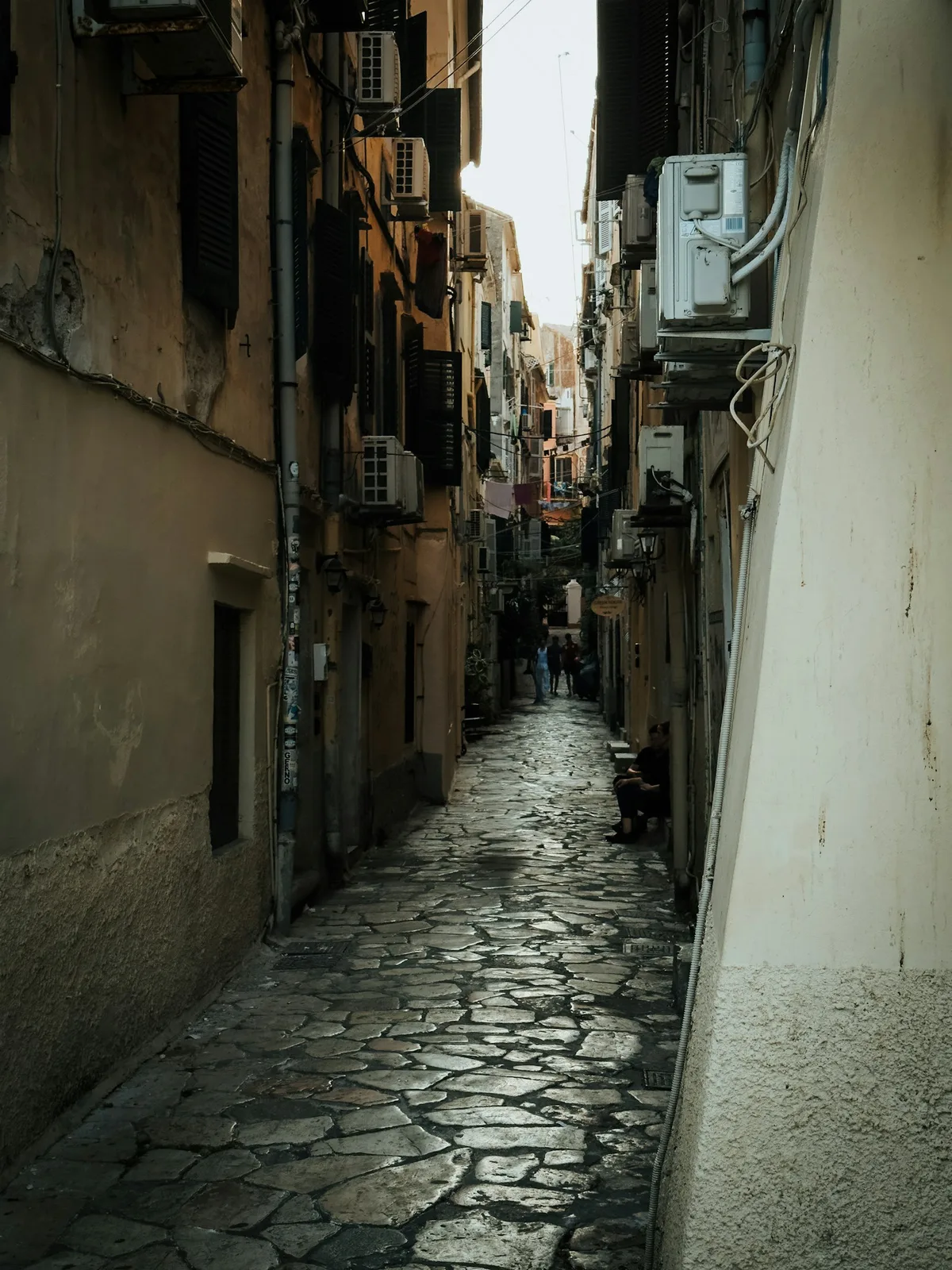
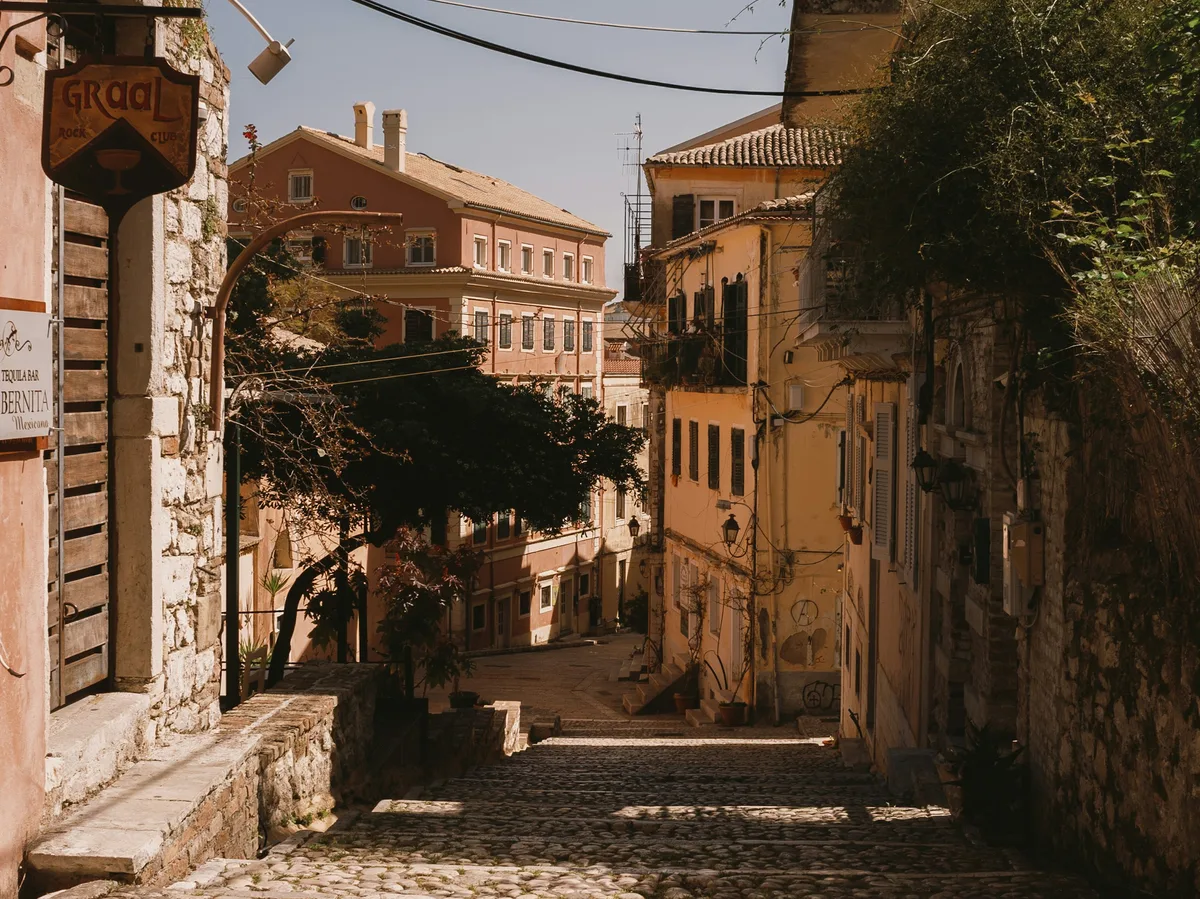
A UNESCO-listed old town on the Ionian island of Corfu, shaped by centuries of Venetian, French, and British rule, with narrow lanes, two Venetian fortresses, and the wide Liston esplanade.
Visitor guide
The Old Town of Corfu is the historic core of Corfu town on the Ionian island of Corfu in Greece, shaped by centuries of Venetian rule and later French and British influence. Inscribed on the UNESCO World Heritage List in 2007, it is known for its two fortresses, narrow multi-storey lanes and the Liston esplanade.
The ancient city of Korkyra took part in the Battle of Sybota, which helped trigger the Peloponnesian War, and according to Thucydides it was one of three great naval powers of fifth-century BC Greece alongside Athens and Corinth. Its ruins, known as Palaiopolis, include the Kardaki Temple, the Temple of Artemis and the Temple of Hera. Because of its two castles the city later became known as Kastropolis, the Castle City.
From 1386 to 1797 Venetian nobility ruled Corfu, and much of the old town's character, including its tall buildings on narrow lanes, dates from that time. The city endured four notable sieges, in 1537, 1571, 1573 and 1716, and its Venetian fortifications repeatedly held. The writer Will Durant argued that Corfu owed to Venice its status as the only part of Greece never conquered by the Ottomans.
The Old Venetian Fortress, or Palaio Frourio, occupies the tip of the peninsula on which the town stands. An artificial moat, formed in a natural gully, separates it from the town, and its salt-water ditch, the Contra-Fossa, now doubles as a small marina. The New Fortress, the town's second castle, is a vantage point for views of the Old Fortress and the old town.
The Liston is an esplanade between the town and the old fortress, lined with restaurants and cafes in a European bistro style. Its name has several proposed origins. Many former Venetian cities have a similarly named promenade derived from a Venetian word for an evening stroll, while another explanation ties it to the closed list of nobles registered in the Libro d'Oro. The open space beside it is the Spianada.
The British period also left a mark. The Palace of St Michael and St George, built in 1815 by Sir Thomas Maitland, Lord High Commissioner of the Ionian Islands, is a large building of white Maltese stone. The city's university was founded in 1823 by Frederick North, 5th Earl of Guilford. An ICOMOS evaluation cited by Wikipedia states that about 70 percent of the pre-20th-century buildings date from the British period.
The city has numerous Greek Orthodox churches, and it is the seat of both a Greek Orthodox and a Roman Catholic archbishop. The Cathedral is dedicated to Our Lady of the Cave, Panagia Spiliotissa. St Spyridon's Church holds the tomb of the island's patron saint and has a notable bell tower that is a landmark of the old town.
UNESCO listed the Old Town of Corfu in 2007 under cultural criterion iv, with a core area of 70 hectares and a buffer zone of 162 hectares. ICOMOS noted that German bombing in the Second World War destroyed whole blocks, which were replaced by new construction in the 1960s and 1970s, but still found the city's layout and Venetian fortifications to make it a model fortified maritime city. A private guided visit suits the old town because its lanes are narrow and pedestrian, and a guide can link the fortresses, churches and esplanade.
See every tour and attraction we cover in Greece.