TorontoOntario · 36 tours
 Niagara FallsOntario · 25 tours
 New York CityNew York · 30 tours
 Las VegasNevada · 8 tours
 San FranciscoCalifornia · 16 tours
 VancouverBritish Columbia · 17 tours
 DubaiUAE · 54 tours
 Abu DhabiUAE · 5 tours
 Buenos AiresArgentina · 23 tours
 AthensGreece · 31 tours
 AucklandNew Zealand · 38 tours
 CancunMexico · 54 tours
No destinations match “”. Try searching all tours instead — that search understands full questions, not just place names.
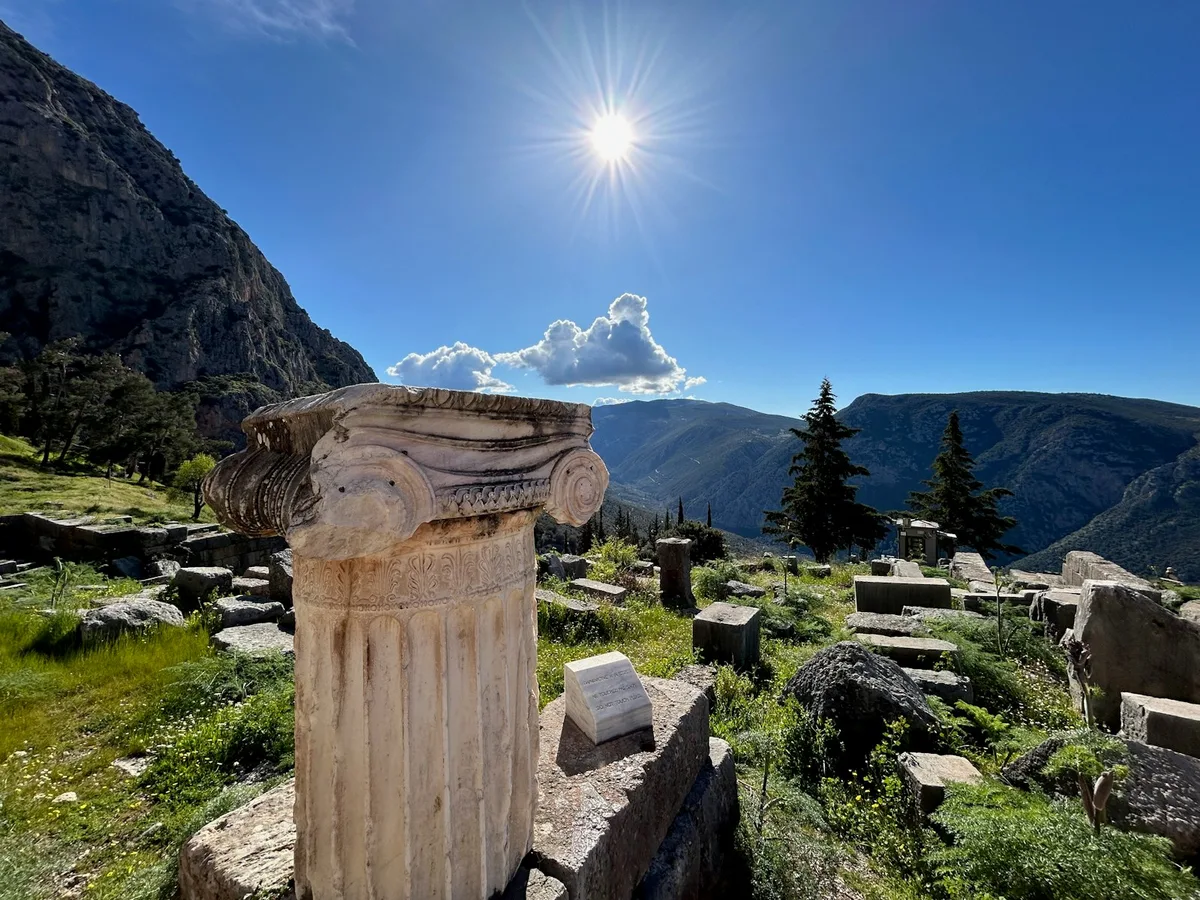
The sanctuary of Apollo on the slopes of Mount Parnassus, seat of the ancient world's most famous oracle, with the Temple of Apollo, a well-preserved theatre, and a museum of finds from the site.
 Multi-Day Tours
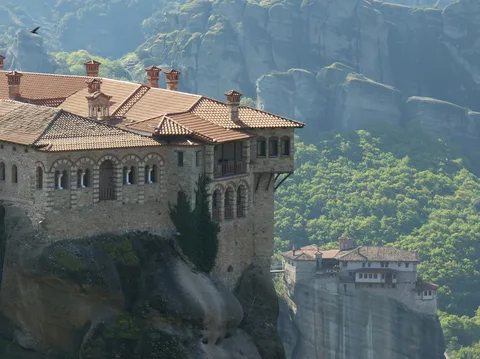
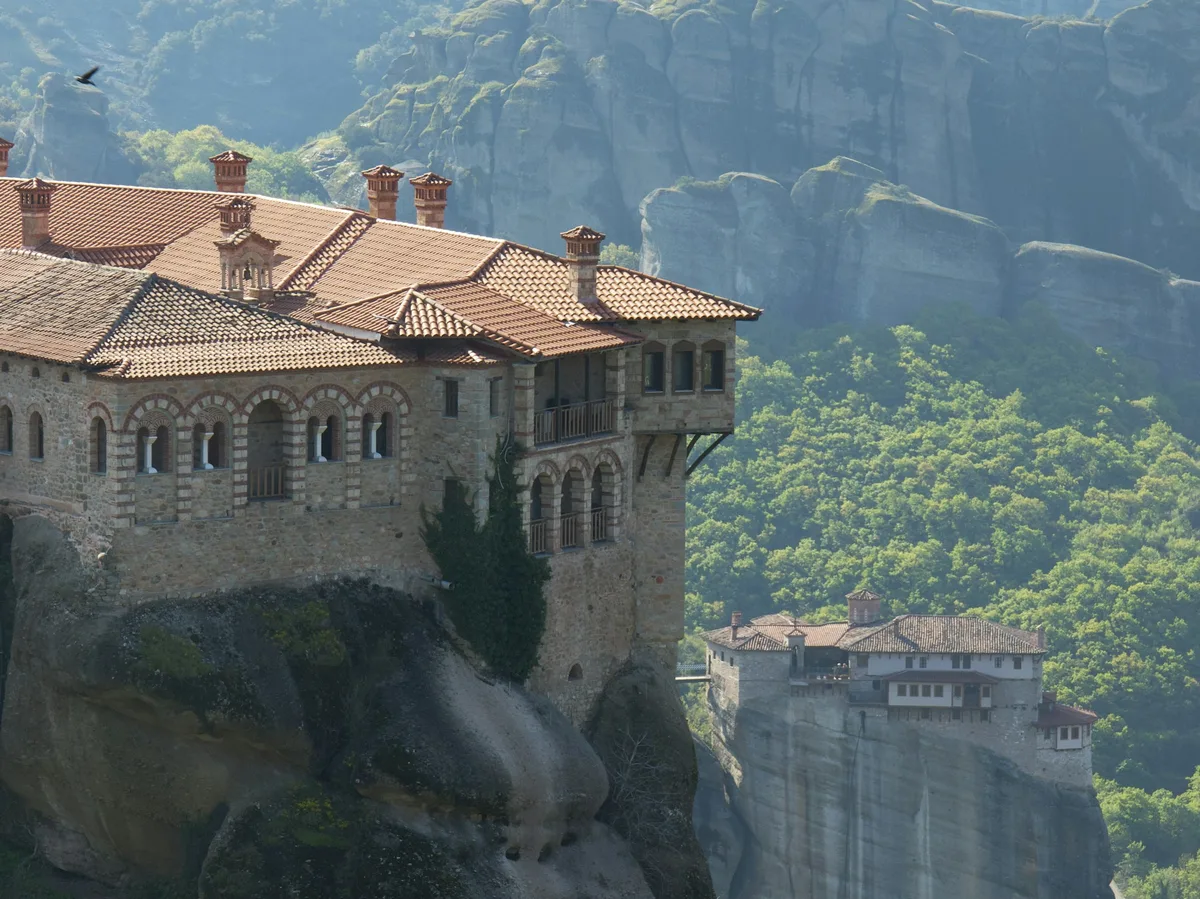
A 12-day mainland circuit from Athens through Delphi, the Meteora monasteries, the remote Zagori villages and Vikos Gorge, ancient Olympia, and the Peloponnese coast to Monemvasia and Nafplio.
 Multi-Day Tours
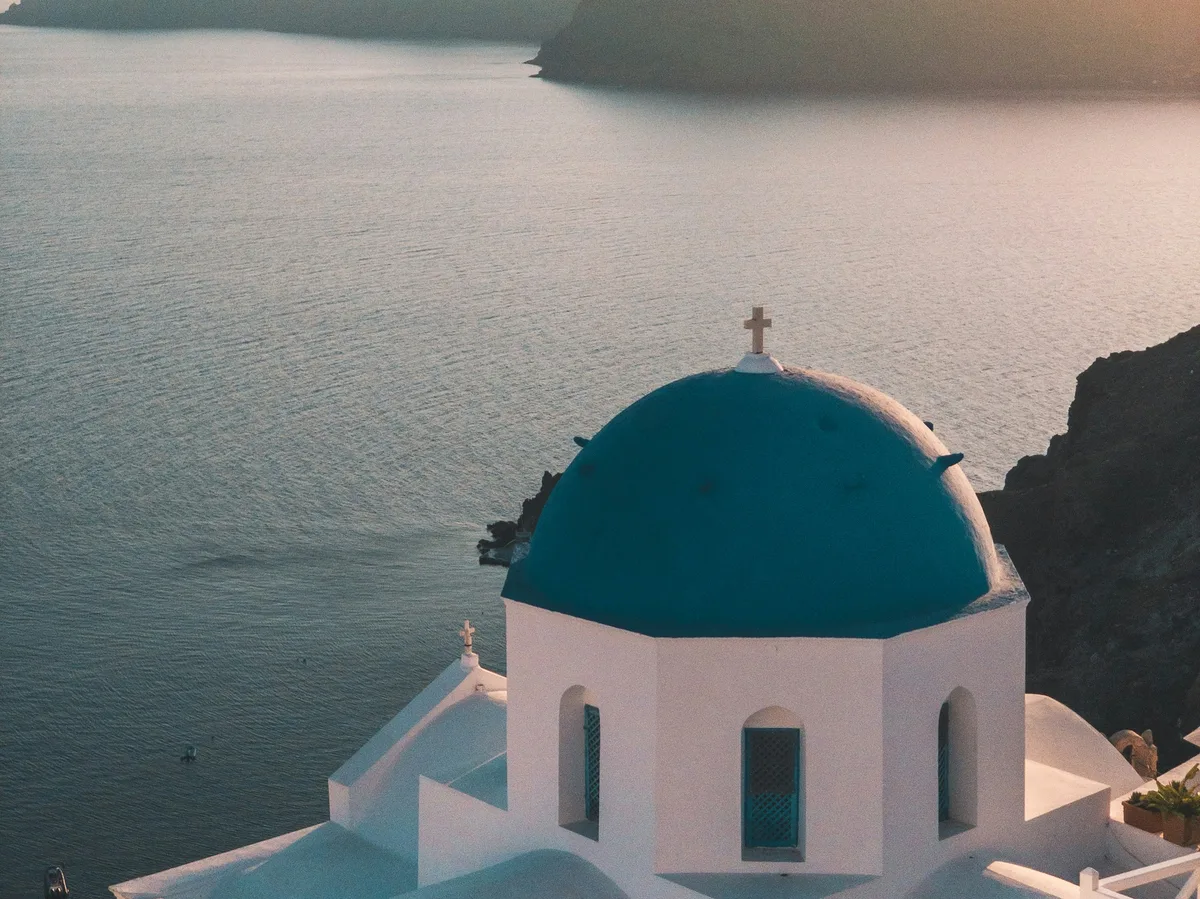
A comprehensive 16-day journey from Athens through Olympia, Delphi, Meteora, and Thessaloniki on the mainland, then Mykonos, Santorini, and Crete by ferry — the essential grand tour of Greece.
 Multi-Day Tours
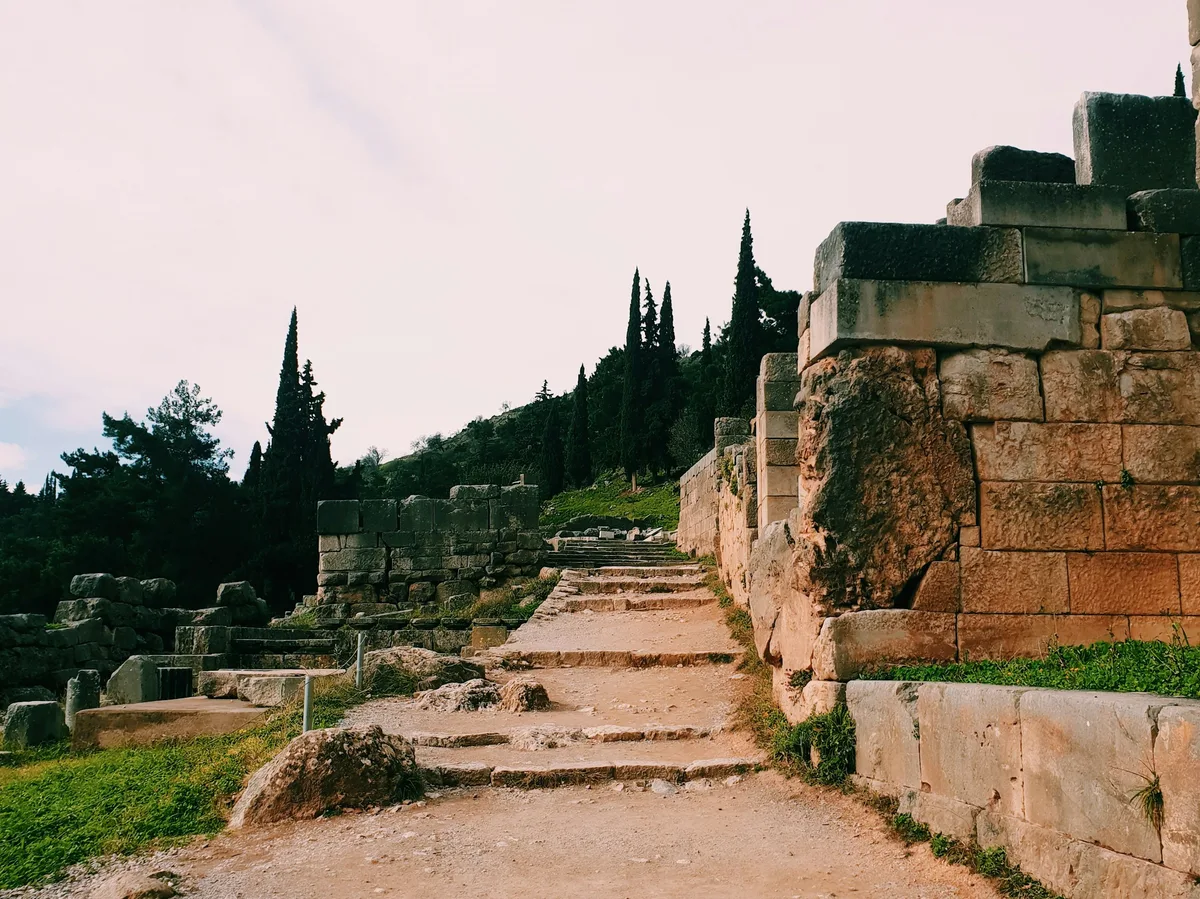
A 7-day Athens-based tour through the essential ancient sites — the Acropolis, the Temple of Poseidon at Cape Sounio, Delphi's Oracle, and the acoustically famous Ancient Theatre of Epidaurus.
 Multi-Day Tours
A 14-day deep dive into mainland Greek history from classical Athens through Cape Sounio, the Nemea wine region, Mycenae, Olympia, Delphi, Meteora, and Byzantine Thessaloniki, with food experiences woven throughout.
Visitor guide
Delphi is an ancient sanctuary on the south-western slopes of Mount Parnassus in central Greece, once home to the Pythia, the most celebrated oracle of the ancient Greek world. The Archaeological Site of Delphi, with the Temple of Apollo, a theatre, a stadium and a museum, was designated a UNESCO World Heritage Site in 1987.
The Greeks regarded Delphi as the centre of the world, marked by a stone called the omphalos, or navel. A legend says Zeus released two eagles from opposite ends of the earth and their paths met at Delphi. The site was earlier called Pytho, linked to the serpent Python that Apollo was said to have slain.
The Pythia was a woman chosen from local people who sat on a tripod in the temple's inner sanctum over a fissure in the earth. Ancient writers said vapours from the chasm put her into a trance, and priests then shaped her utterances into verse. Some researchers have proposed gases such as ethylene as an explanation, but this remains debated. According to tradition the oracle was not consulted in winter, when Apollo was said to be away among the Hyperboreans.
Tradition describes several mythical temples, and the first archaeologically attested building dates to the 7th century BC. That temple burned in 548 or 547 BC, and its replacement was also destroyed in the 4th century BC. The visible ruins belong to the 4th-century BC Doric temple, built by Spintharus, Xenodoros and Agathon. Maxims including know thyself and nothing in excess were carved on the temple.
Along the Sacred Way stood treasuries built by city-states to hold offerings to Apollo, often a tenth of battle spoils. The Athenian Treasury, commemorating the Battle of Marathon in 490 BC, is the most impressive and has been restored, while the Siphnian Treasury was financed by silver-mine tithes. The Stoa of the Athenians was built after the Athenian naval victory in 478 BC.
The theatre dates from the 4th century BC, was remodelled several times, including under Nero in AD 67, and could hold about 4,500 spectators. Higher up the slope, the stadium was built in the 5th century BC and remodelled in the 2nd century AD under Herodes Atticus, seating about 6,500. Both hosted events of the Pythian Games, held every four years from 586 BC, which were one of the four Panhellenic festivals and uniquely included musical competitions.
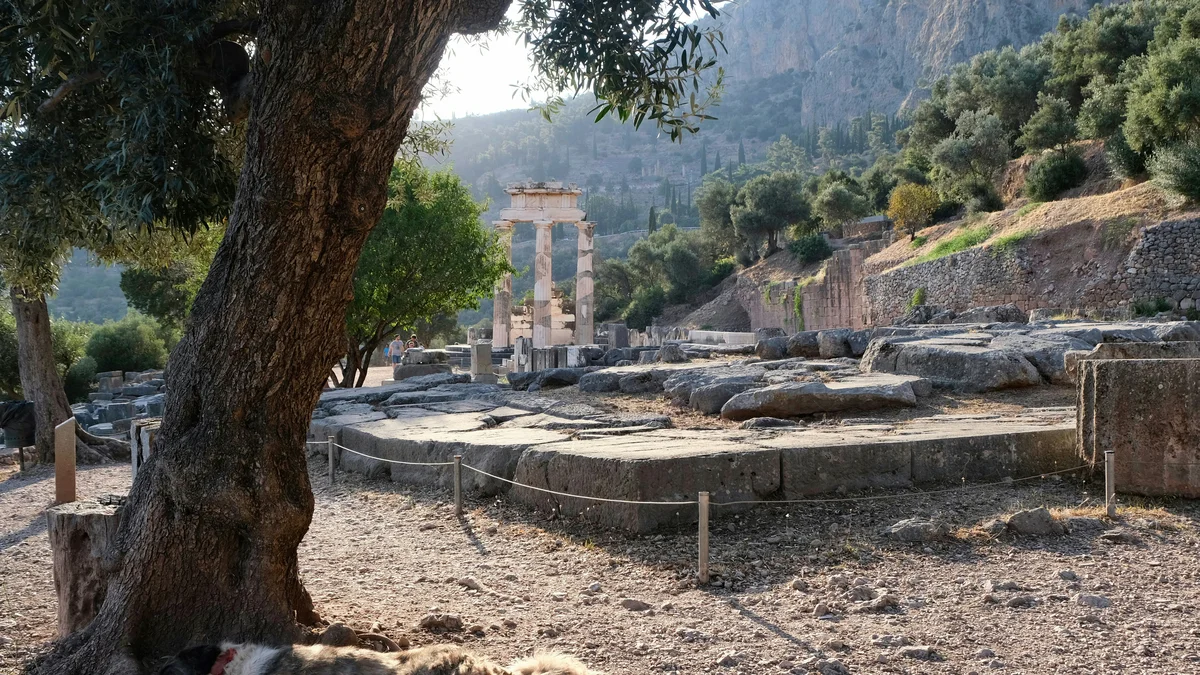
About 800 metres from the main ruins stands the Tholos of Athena Pronaia, a circular building constructed between 380 and 370 BC with 20 external Doric columns and 10 or 13 internal Corinthian half-columns. Three of the exterior columns have been restored. The Castalian Spring, in a ravine below the Phaedriades cliffs, was the sacred spring where visitors purified themselves.
The modern village of Kastri once stood on top of the ancient sanctuary. After an earthquake damaged it, residents were relocated, which allowed the French School at Athens to excavate systematically from 1893, uncovering the sanctuary of Apollo and the Athena Pronaia temple along with thousands of objects and inscriptions. Since 1938 the site has been part of Parnassos National Park.
The Delphi Archaeological Museum displays the Charioteer of Delphi, a bronze statue dated to about 478 or 474 BC that has lost its chariot and left arm, along with the statues of Kleobis and Biton, the Sphinx of Naxos and reliefs from the Siphnian Treasury. A private guided visit helps make sense of the terraced layout and its many monuments.
See every tour and attraction we cover in Greece.