TorontoOntario · 36 tours
 Niagara FallsOntario · 25 tours
 New York CityNew York · 30 tours
 Las VegasNevada · 8 tours
 San FranciscoCalifornia · 16 tours
 VancouverBritish Columbia · 17 tours
 DubaiUAE · 54 tours
 Abu DhabiUAE · 5 tours
 Buenos AiresArgentina · 23 tours
 AthensGreece · 31 tours
 AucklandNew Zealand · 38 tours
 CancunMexico · 54 tours
No destinations match “”. Try searching all tours instead — that search understands full questions, not just place names.
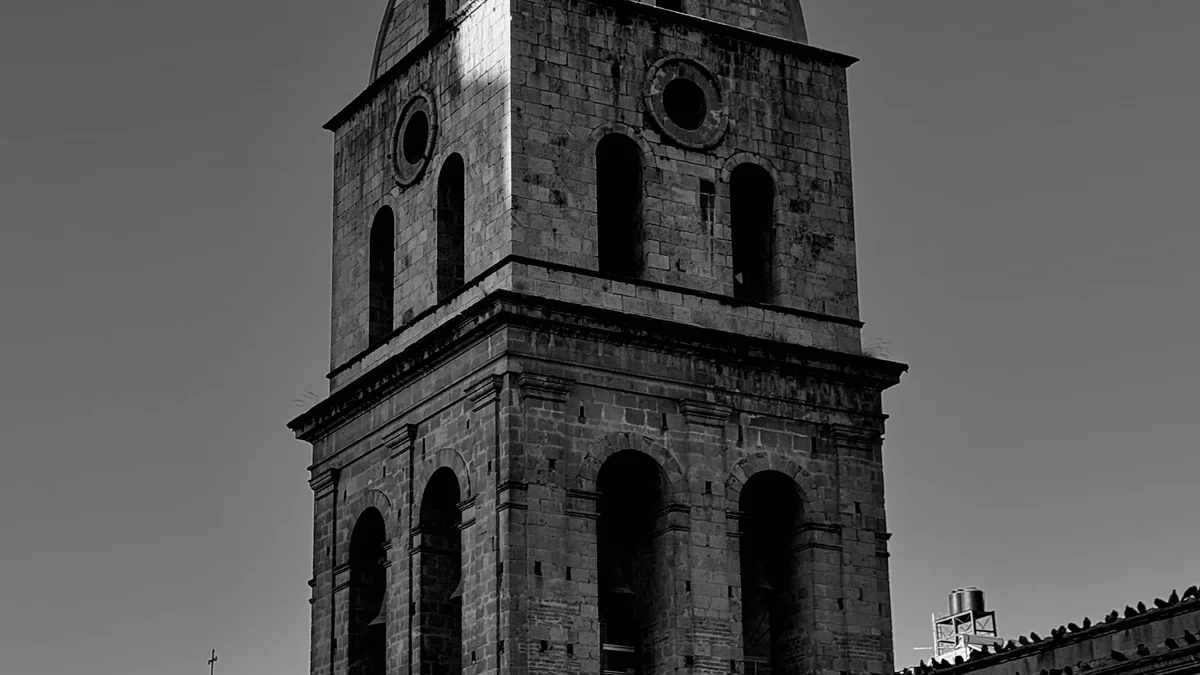
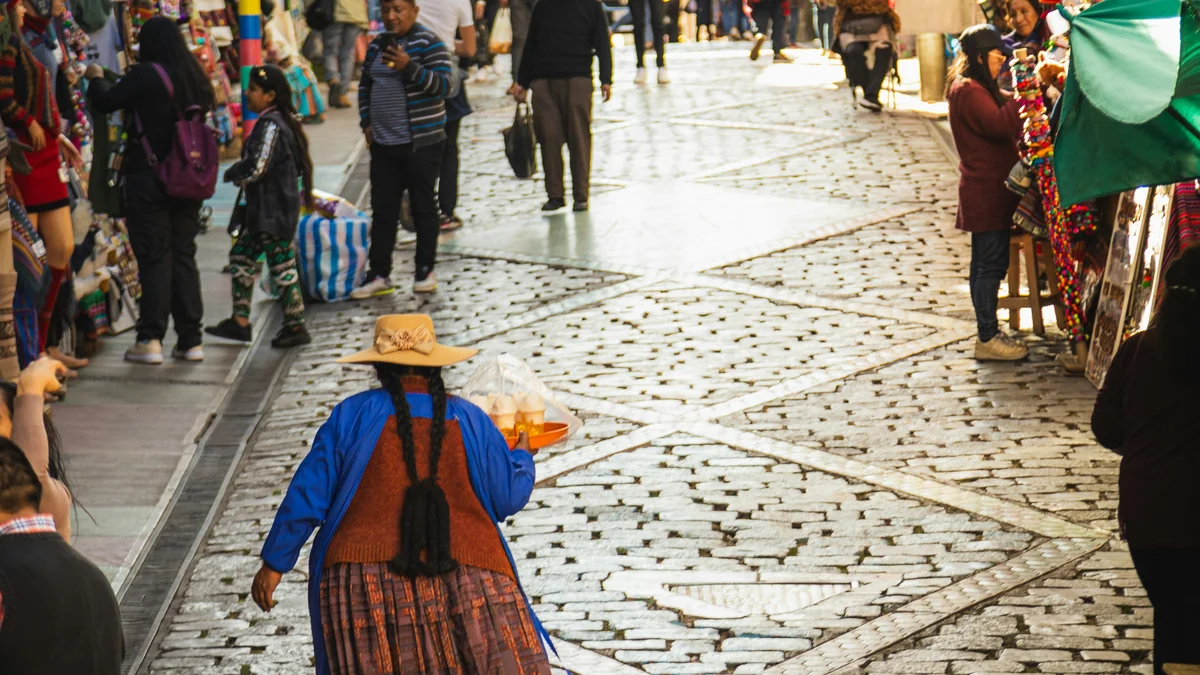
The Basilica of San Francisco was originally built in 1549 and largely rebuilt in the 18th century after earlier structures suffered damage, giving it the Andean Baroque, or 'mestizo,' facade it's known for today, blending Catholic imagery with carved pumas, native plants, and other indigenous motifs. It sits at the top of the street leading down into the Witches' Market, on the plaza of the same name.
 Private Tours
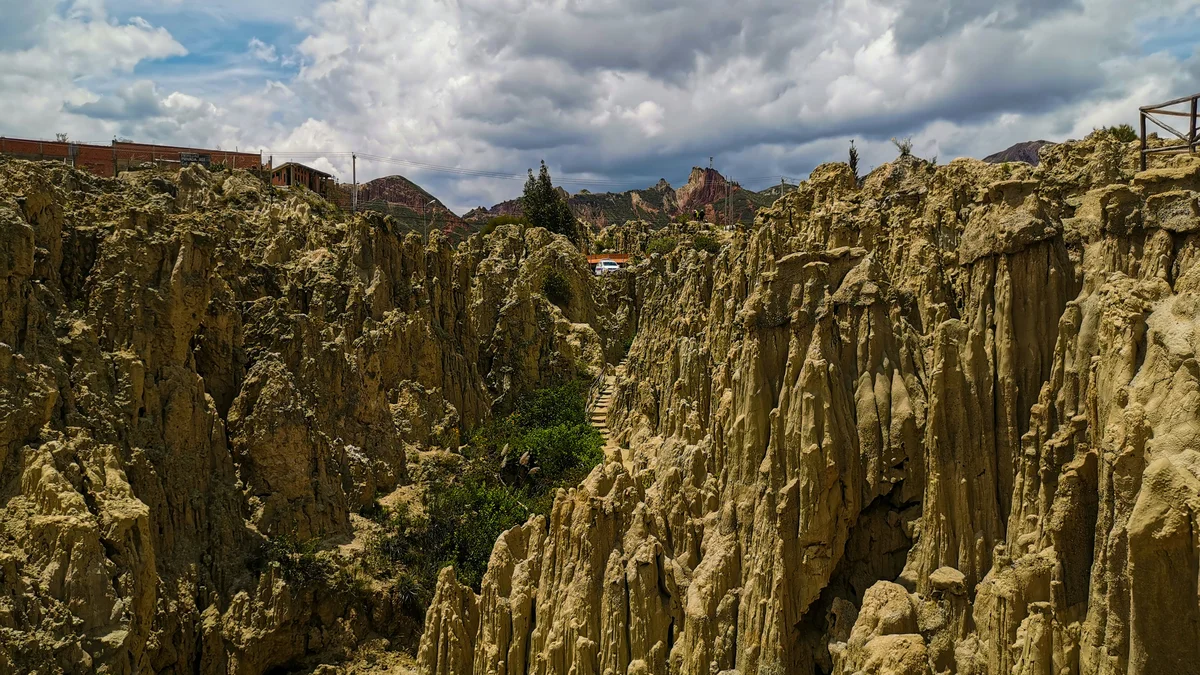
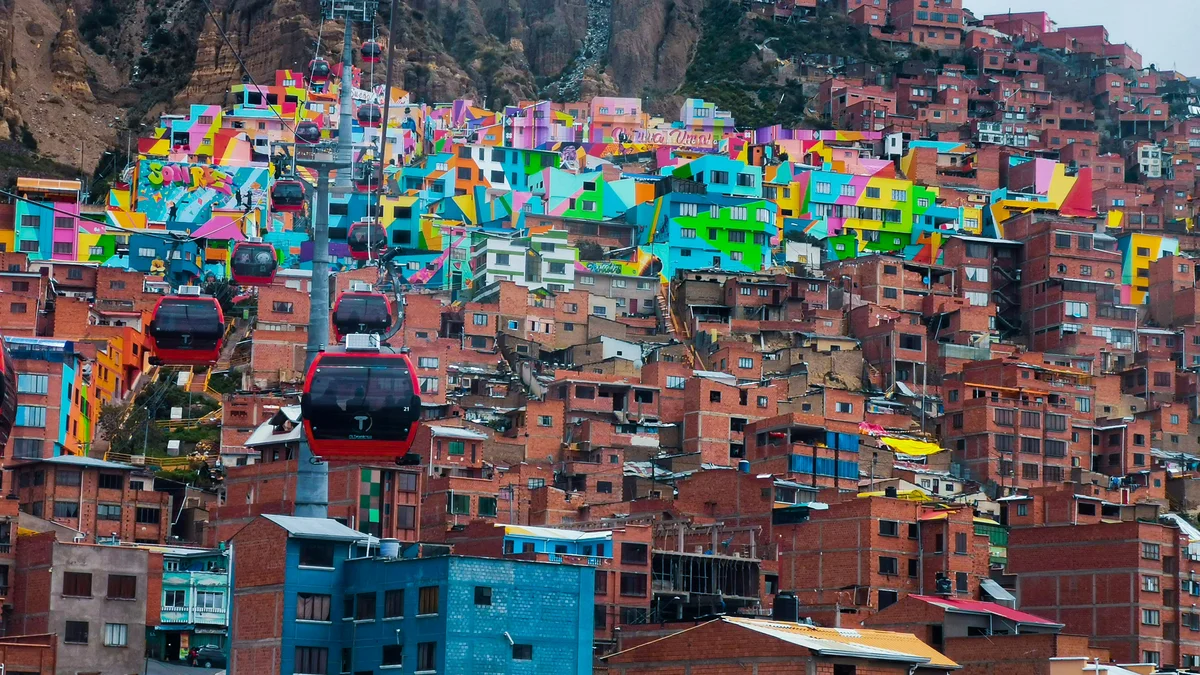
A private half-to-full-day tour through downtown La Paz — Plaza Murillo, San Francisco Church, the Witches' Market, and the otherworldly Valle de la Luna badlands on the city's edge.
 Private Tours
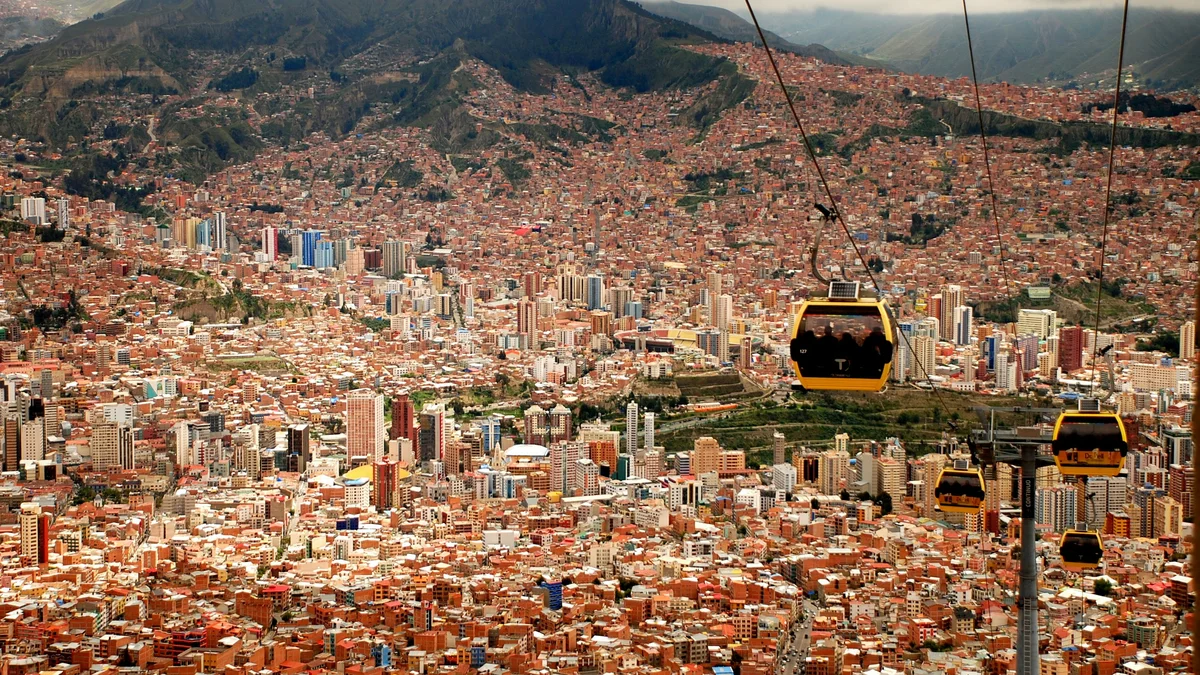
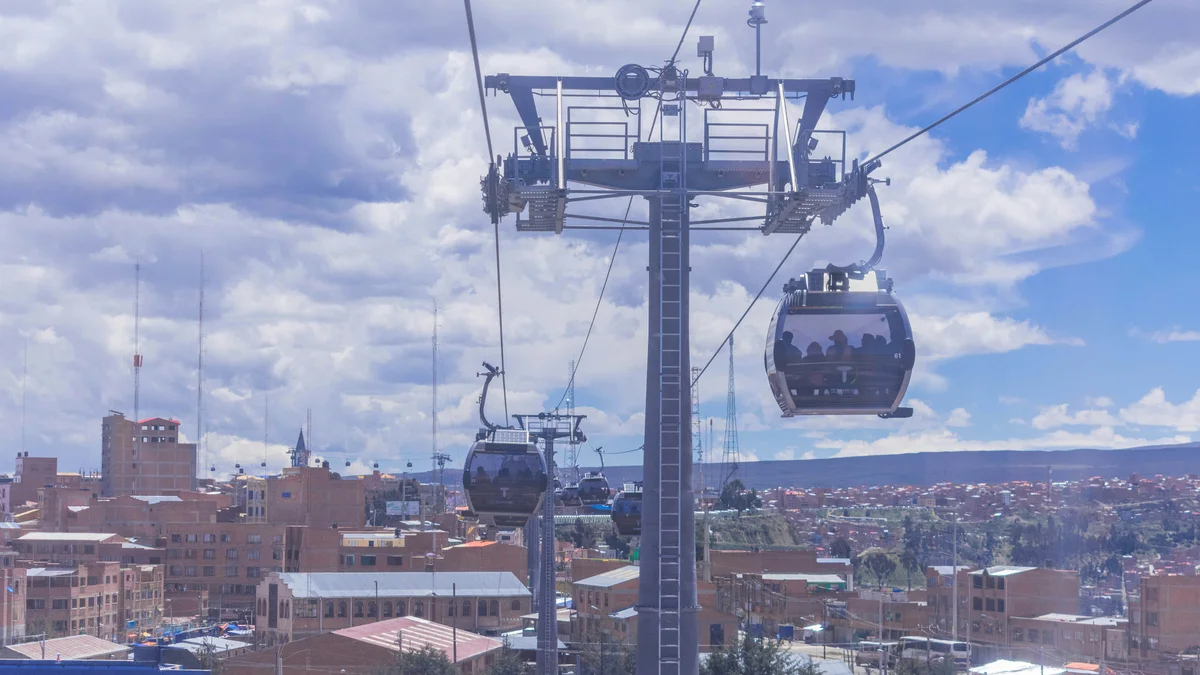
A private half-day tour on foot through La Paz's historic streets and markets, followed by a Mi Teleférico cable car ride over the city and a visit to the Valle de la Luna badlands.
Visitor guide
The Basilica of San Francisco is a Catholic church dedicated to Francis of Assisi, standing on Plaza San Francisco in the centre of La Paz, Bolivia. Built in the Andean Baroque style, it is known for its carved stone facade and for the museum that occupies part of its convent.
Spanish-language Wikipedia describes the Franciscan convent as the oldest registered religious house in La Paz, noting that it appears in records as early as 1547 although most sources give 1548 as the year Alonso de Mendoza founded the city. The convent was founded by Fray Francisco de Morales and Fray Alcocer and was originally named the Convent of Our Lady of the Angels. It stood outside the Spanish grid, bounded by the plaza, the Choqueyapu River, which separated Spanish and Indigenous neighbourhoods, and what are now the streets Illampu, Sagarnaga and Graneros.
Construction of the first church began in August 1549 and was completed in 1581, but it collapsed under heavy snowfall between 1608 and 1612. Work on the present church began in 1743 or 1744. The crossing dome was closed and roofed in 1753, with the corregidor Vicente Lafita named as a major benefactor.
Sources disagree on the later dates. English Wikipedia gives a consecration on 23 April 1758, while the Spanish article gives 23 April 1784 by Bishop Campos, and the build period is variously given as 1743 to 1758, 1743 to 1772 or 1743 to 1800. The carved facade was finished in 1790, and the church's single tower was begun in 1885.
The church is described as Andean Baroque, also called mestizo baroque, and Wikipedia calls it one of the most representative examples of colonial architecture in La Paz. It is laid out as a Latin cross with three naves and a vaulted roof, built entirely of stone; a 1923 Franciscan inventory describes it as entirely of Viacha stone, while Spanish Wikipedia names the Letanias quarry on the altiplano. Buttresses are visible on the side facing Calle Sagarnaga.
The three-tier facade is ornamented with carved columns, bases and niches. It has three doors, with a trilobed arch over the main portal, round arches over the side portals and Solomonic (twisted) columns on some of them. The centre is crowned by a mestizo-baroque coat of arms of the Franciscan Order that blends Franciscan symbols with local flora and fauna, and travel sources describe carvings of tropical birds and mythical creatures. The hemispherical dome has four windows and a lantern held up by four Solomonic columns, and Wikipedia says it resembles the dome of the church of Santiago de Pomata in Peru. The 19th-century tower does not follow Baroque proportions, and a matching tower was planned but never built.
In 1948 the church was declared a minor basilica. Between 1950 and 1960 part of the convent was demolished for the Avenida Mariscal Santa Cruz project and the atrium was reconfigured. The church and convent were restored between 1965 and 2005, and in 1965 the Museo San Francisco Cultural Center began operating in part of the former convent. According to a separate source, the museum preserves paintings, hymn books, liturgical objects and vestments that narrate the religious and cultural history of Bolivia. Spanish Wikipedia also states that the remains of the independence hero Pedro Domingo Murillo are interred in the church.
The plaza in front of the basilica was remodelled in 2011 under the Revive el Centro urban plan. Spanish Wikipedia says it now consists of a sequence of three esplanades bounded by the basilica, Calle Sagarnaga, Avenida Mariscal Santa Cruz, Calle Figueroa and the Mercado Lanza. It adds that ceramic remains found during excavations suggest the area was an Aymara ritual space near the river, associated with the cacique Quirquinchu, before the church was built. The plaza has long hosted civic gatherings, fairs and concerts.
During the early 19th-century independence struggle the convent was occupied first by forces loyal to the Spanish king and later by a Colombian army led by Simon Bolivar, according to a travel source. The plaza sits at the top of the street leading toward the Witches' Market.
A private guided visit suits the basilica as part of a walking route through the historic centre, since a guide can explain the facade's symbolism and link the church to the nearby plaza and markets.
See every tour and attraction we cover in La Paz.