TorontoOntario · 36 tours
 Niagara FallsOntario · 25 tours
 New York CityNew York · 30 tours
 Las VegasNevada · 8 tours
 San FranciscoCalifornia · 16 tours
 VancouverBritish Columbia · 17 tours
 DubaiUAE · 54 tours
 Abu DhabiUAE · 5 tours
 Buenos AiresArgentina · 23 tours
 AthensGreece · 31 tours
 AucklandNew Zealand · 38 tours
 CancunMexico · 54 tours
No destinations match “”. Try searching all tours instead — that search understands full questions, not just place names.
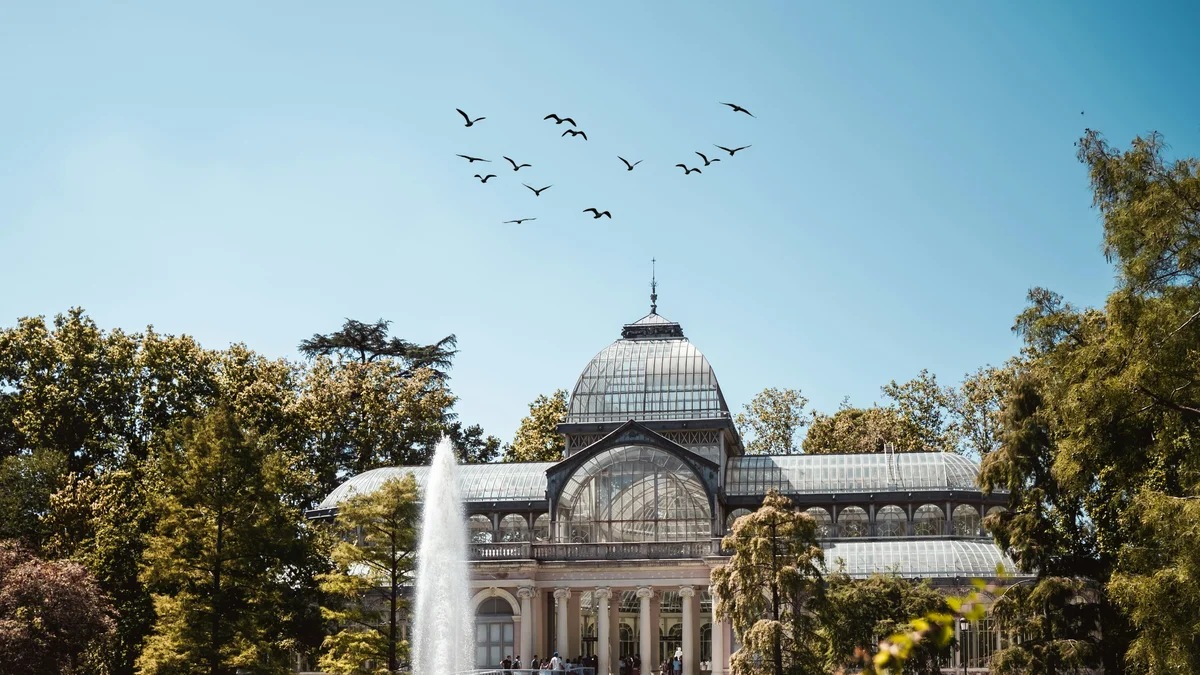
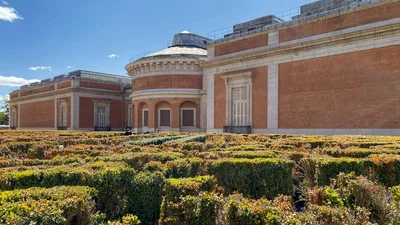
A sprawling 19th-century park that began as royal grounds, Retiro Park is home to the glass-and-iron Crystal Palace and a large ornamental boating lake. In 2021, the park and the Paseo del Prado were together added to UNESCO's World Heritage list as a landscape of arts and sciences.
 Private Tours
A private guided tour of the Prado Museum's most important pieces, followed by a stroll through nearby Retiro Park.
Private Tours
A private Segway tour of Madrid's Retiro Park, which holds UNESCO World Heritage status, with no pressure to keep up with a group.
Visitor guide
Retiro Park, formally the Parque del Buen Retiro, is a large public park in central Madrid, Spain, that began as a royal retreat. It contains a large pond, monuments, rose gardens, and the glass Crystal Palace. UNESCO describes the gardens as about 120 hectares (other sources give larger figures), and they are part of the UNESCO World Heritage landscape of the Paseo del Prado and Buen Retiro.
According to Wikipedia, Philip II moved the Spanish court to Madrid in 1561 and had the Retiro area enlarged. In the 1630s the Count-Duke of Olivares commissioned the park, designed by the landscaper and engineer Cosimo Lotti, who had worked on the Boboli Gardens. Water features included a great pond and a great canal. Of the palace buildings from this period, two survive: the Casón del Buen Retiro and the Hall of Realms.
The gardens were neglected after the death of Philip IV in 1665. During the Peninsular War, between 1807 and 1814, French troops built a citadel on the park grounds, and most of the palace and gardens were destroyed.
The park became publicly owned in 1868, after Isabella II was overthrown in the Glorious Revolution. It then hosted exhibitions, including the National Mining Exhibition in 1883 and the Philippine Islands Exposition in 1887. The Velazquez Palace, built by Ricardo Velazquez Bosco for the 1883 National Mining Exhibition, was part of this phase. Wikipedia notes that the 1887 exposition included a human zoo, a controversial part of the park's history.
The Palacio de Cristal, or Crystal Palace, was also designed by Velazquez Bosco and inspired by London's Crystal Palace. Built in 1887 with an artificial pond, it first displayed plants native to the Philippines. Both it and the Velazquez Palace host exhibitions linked to the Reina Sofia museum.
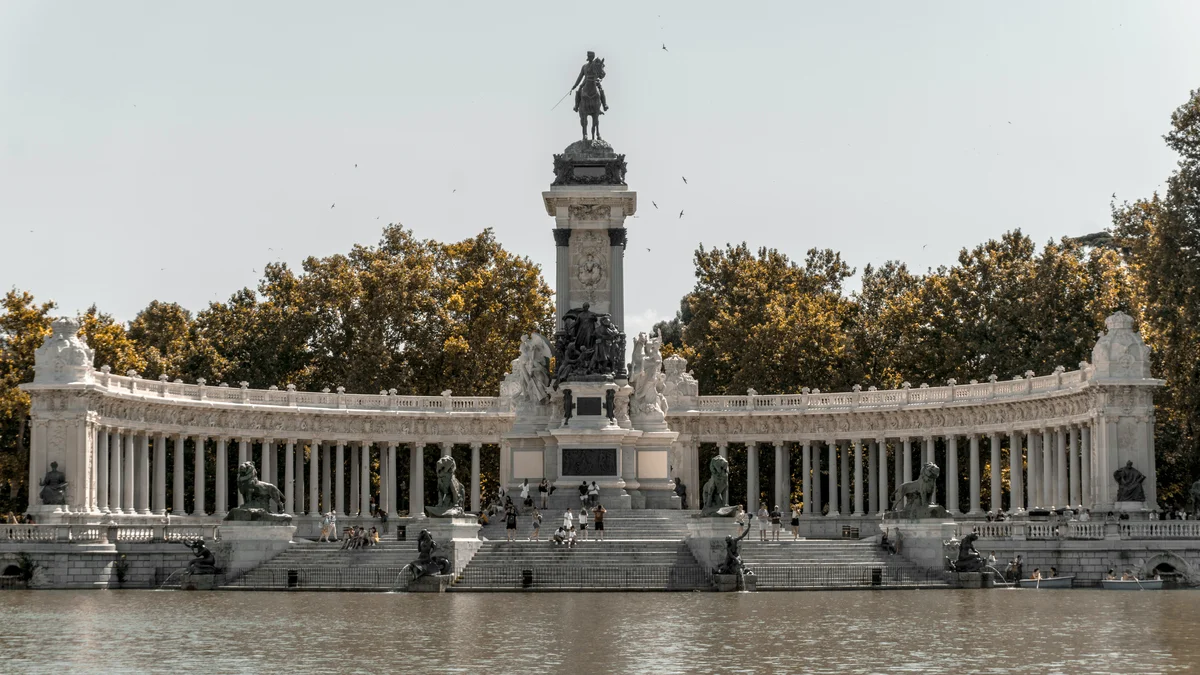
The large pond near the northern entrance is overlooked by the Monument to Alfonso XII, by Jose Grases Riera, built at the start of the twentieth century with a semicircular colonnade and an equestrian statue.
The Fountain of the Fallen Angel, installed in the park in 1885, features Ricardo Bellver's El Angel Caido (the statue dates from the 1870s), inspired by Milton's Paradise Lost. Wikipedia says it is claimed to be the only known public monument to Satan, though the claim needs a better source. The Paseo de la Argentina, also called the Paseo de las Estatuas, has statues of kings sculpted between 1750 and 1753 for the Royal Palace.
The Rosaleda, or rose garden, dates from the early twentieth century and was inspired by the Bagatelle rose garden in the Bois de Boulogne. It is attributed to the chief gardener Cecilio Rodriguez. The Casa de Vacas houses art galleries.
In 2021 UNESCO inscribed the Paseo del Prado and Buen Retiro as a landscape of arts and sciences. The park is a peaceful place for walking, and a private guided visit can combine it with nearby museums. Voyzo can arrange this with a private vehicle and driver.
See every tour and attraction we cover in Madrid.