TorontoOntario · 36 tours
 Niagara FallsOntario · 25 tours
 New York CityNew York · 30 tours
 Las VegasNevada · 8 tours
 San FranciscoCalifornia · 16 tours
 VancouverBritish Columbia · 17 tours
 DubaiUAE · 54 tours
 Abu DhabiUAE · 5 tours
 Buenos AiresArgentina · 23 tours
 AthensGreece · 31 tours
 AucklandNew Zealand · 38 tours
 CancunMexico · 54 tours
No destinations match “”. Try searching all tours instead — that search understands full questions, not just place names.
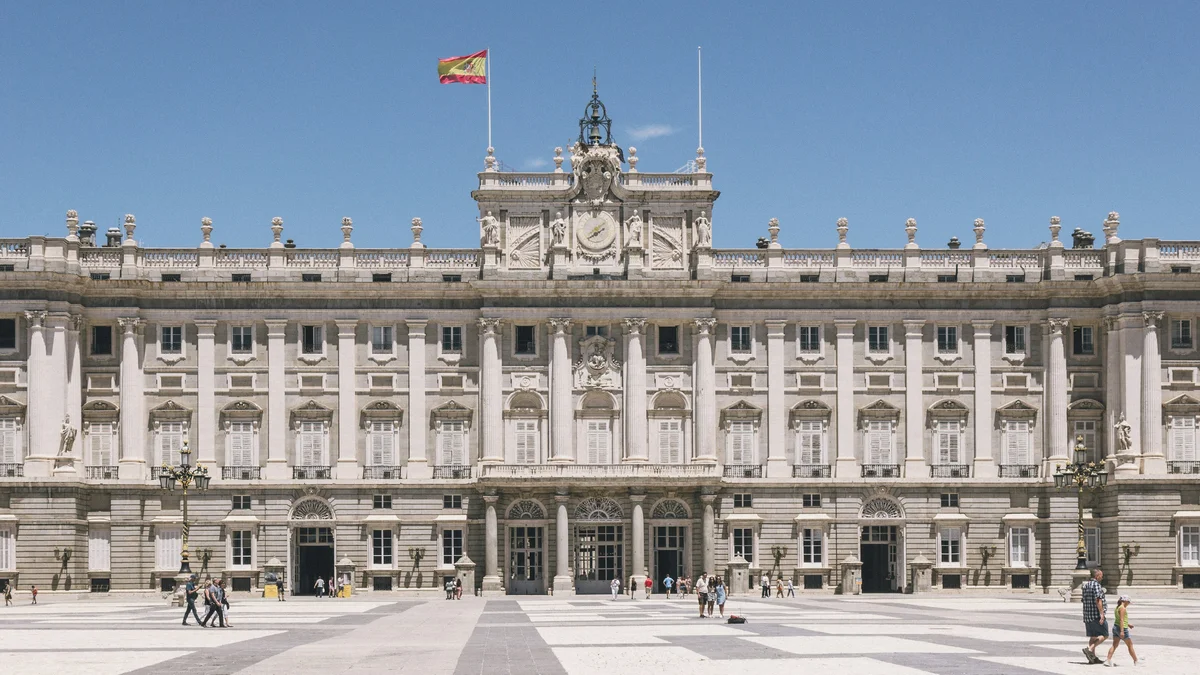
The official residence of the Spanish Royal Family, though used today mainly for state ceremonies, the Palacio Real is the largest functioning royal palace in Western Europe by floor area, with around 3,400 rooms. It was built in the 18th century on the site of the former Alcázar fortress, which burned down in 1734.
Private Tours
A private, preferential-access day with an official local guide covering the Royal Palace and the city's most emblematic 18th-century monuments.
 Private Tours
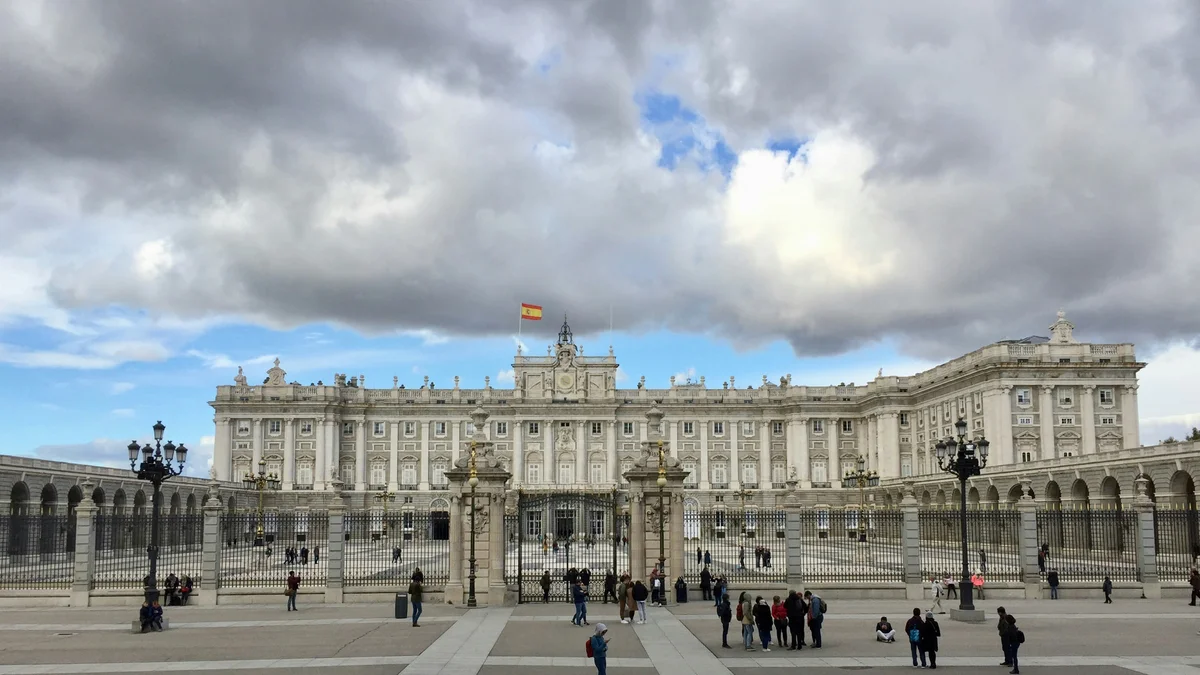
A private tour of the Royal Palace of Madrid with admission included and a flexible start time, so you can focus on the highlights without waiting in line.
Visitor guide
The Royal Palace of Madrid is the official residence of the Spanish royal family, although it is used mainly for state ceremonies. Located in central Madrid, it is administered by Patrimonio Nacional and, according to Wikipedia, has 3,418 rooms and over 135,000 square metres of floor space. Wikipedia describes it as the largest palace in Western Europe.
The present palace stands on the site of the former Alcazar of Madrid, which burned on 24 December 1734. Some works of art were saved by being thrown from the windows, including Las Meninas. The old walls were demolished in 1738, and Philip V commissioned a new palace. Filippo Juvarra designed the initial project, and Giovanni Battista Sacchetti carried it forward.
Sources give conflicting dates for construction. Patrimonio Nacional says the first stone was laid in 1738 and construction was completed in 1751, with sculptural decoration continuing to 1759; Wikipedia's lead gives 1738 to 1755, while its infobox gives a start date of 7 April 1735. Charles III first occupied the palace in 1764, and Francesco Sabatini, who worked on it from 1760, designed the grand staircase, which was built in 1789.
The main facade faces the Plaza de la Armeria, with giant-order columns and pilasters and a contrast between grey granite and white limestone. In front of the palace is the Plaza de Oriente, begun in 1808 under Joseph Bonaparte and finished under Isabella II, with a final design from 1844. The Sabatini Gardens were begun in 1933 and opened to the public in 1978, and the Campo del Moro gardens take their name from a Muslim leader said to have camped there in 1109. Across the plaza stands the Almudena Cathedral, begun in 1883 and consecrated in 1993.
The Throne Room has a ceiling fresco by Giovanni Battista Tiepolo, The Apotheosis of the Spanish Monarchy, painted in the 1760s under Charles III. The Hall of Columns has a fresco by Giaquinto and chandeliers made in Paris in 1846, and the Anteroom of Charles III has a fresco by Mengs from 1774. The Royal Chapel was designed in 1748 by Sacchetti and Ventura Rodriguez and has Giaquinto frescoes.
The Royal Armoury, first installed by Philip II next to the old Alcazar, was moved to its current pavilion in 1891 and includes pieces from the thirteenth century onward. The Royal Library includes Isabella I's book of hours, and the Royal Pharmacy displays jars and Talavera pottery. A collection of Stradivarius instruments is also kept here, which Wikipedia describes as the only complete Stradivarius string quintet.
The palace is owned by the Spanish state and, according to Wikipedia, is open to the public except during state functions. The royal family does not use it as a daily home, and its principal function is ceremonial. A private guided visit helps visitors link the rooms to the dynasties who shaped them, and Voyzo can arrange this with a private vehicle and driver.
See every tour and attraction we cover in Madrid.