TorontoOntario · 36 tours
 Niagara FallsOntario · 25 tours
 New York CityNew York · 30 tours
 Las VegasNevada · 8 tours
 San FranciscoCalifornia · 16 tours
 VancouverBritish Columbia · 17 tours
 DubaiUAE · 54 tours
 Abu DhabiUAE · 5 tours
 Buenos AiresArgentina · 23 tours
 AthensGreece · 31 tours
 AucklandNew Zealand · 38 tours
 CancunMexico · 54 tours
No destinations match “”. Try searching all tours instead — that search understands full questions, not just place names.
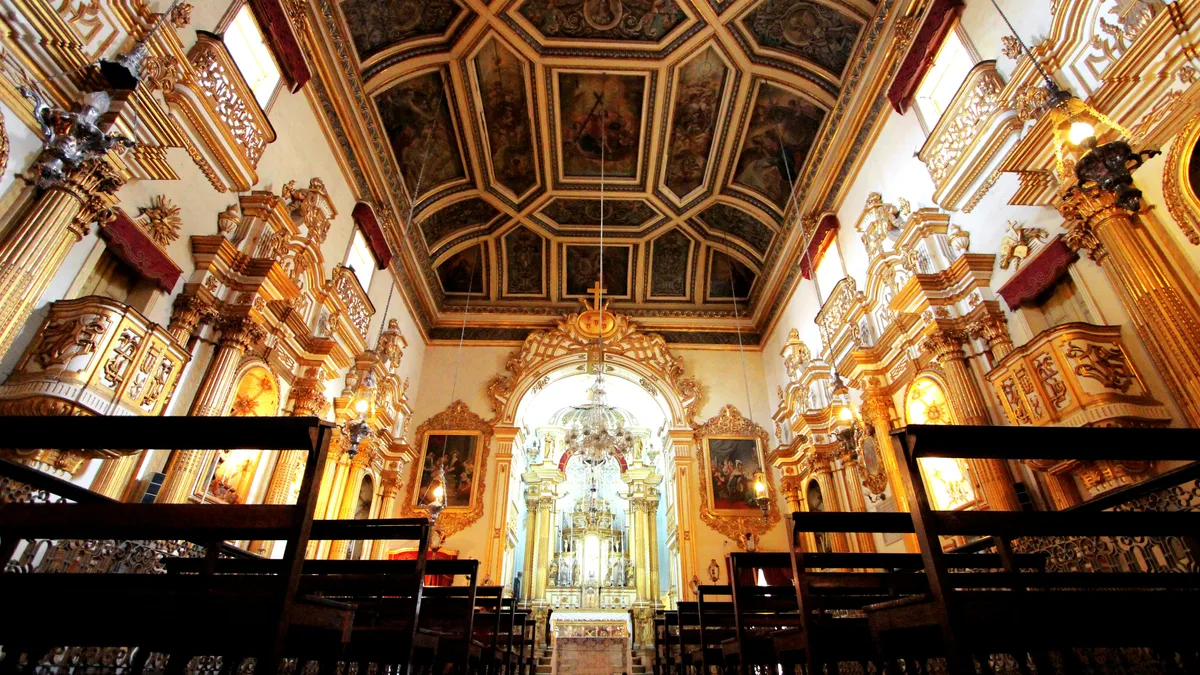
A Baroque church and convent in Pelourinho famous for its gold-leafed interior and intricate Portuguese azulejo tiles, widely considered one of the most richly decorated religious buildings in Brazil.
 Private Tours
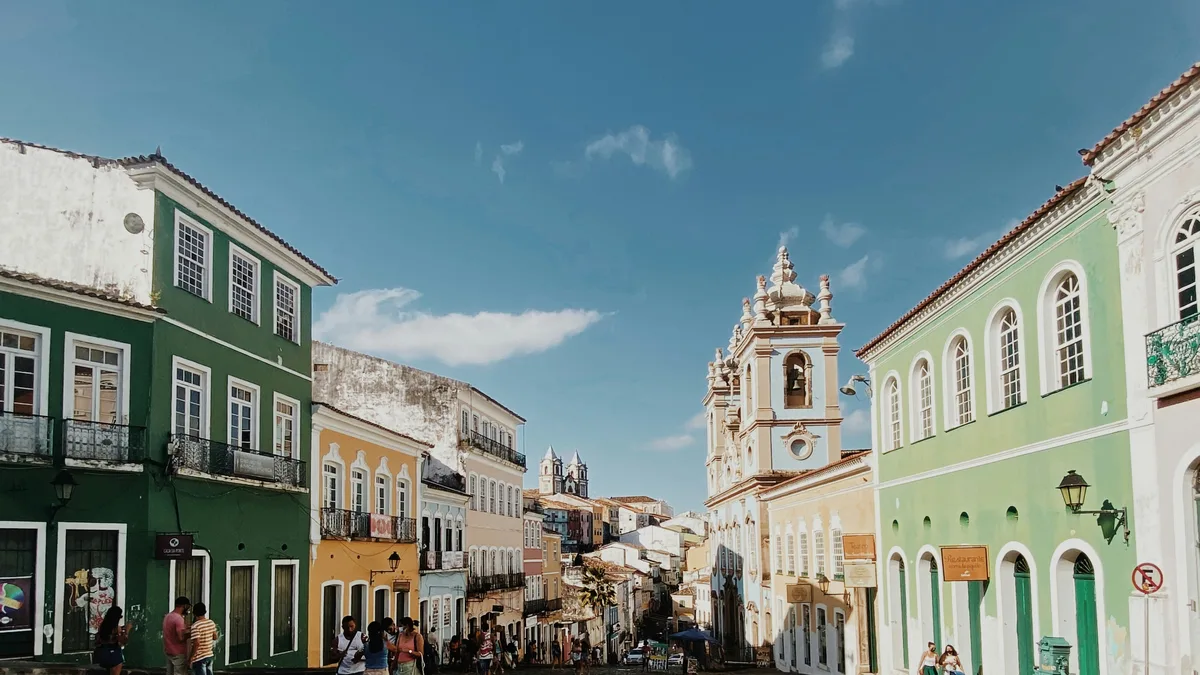
A private walking tour through Pelourinho, Salvador's UNESCO World Heritage-listed old town, focused on the colonial architecture, cobblestone squares, and layered African and Portuguese history that cars can't reach.
 Private Tours
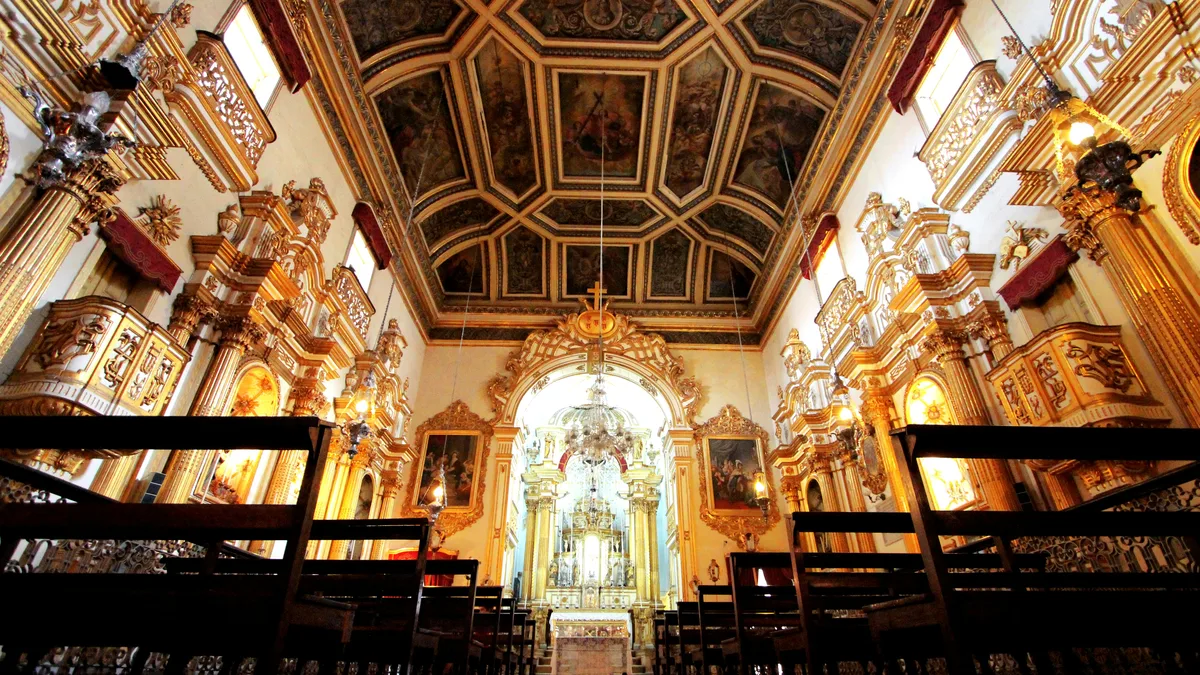
A private tour of the Igreja e Convento de São Francisco, famous for its gold-leafed Baroque interior and intricate azulejo tiles, with a licensed guide to explain the church's role in Brazil's colonial and cultural history.
Visitor guide
The Church and Convent of Sao Francisco, or Igreja e Convento de Sao Francisco, is a Franciscan complex in the historic centre of Salvador, Bahia, Brazil. It stands on Largo do Cruzeiro de Sao Francisco, practically an extension of Terreiro de Jesus, and is celebrated for the intricacy of its Baroque interior.
According to Portuguese Wikipedia, the convent was founded in 1585 by Friar Melchior de Santa Catarina with the authorisation of Pope Sixtus V, although construction did not truly begin until 1587 and the early buildings were damaged in the Dutch invasion of 1624. A rebuilding was approved in 1675 and the foundation stone of the new complex was laid on 20 December 1686. The cloister was built first. The chancel was begun in 1708, and part of the church was consecrated on 3 October 1713. The rest of the church, including the sandstone facade, was finished in 1720, a date engraved on the frontispiece. The towers were completed with bells and a clock in 1796 and 1797. Dates in other sources vary slightly.
The interior is covered in carved and gilded woodwork, with Baroque paintings on the ceilings. The church has three naves, which the article calls unusual for Franciscan churches in northeast Brazil, and eight side chapels. Motifs include florons, volutes, angels and birds. The nave ceiling paintings of the Marian cycle, made between 1733 and 1737, are attributed to Friar Jeronimo da Graca. The carved choir stalls and railings by Friar Luis de Jesus, known as Irmao Torneiro, date from the seventeenth century and were reused from the earlier church. A silver lamp of nearly 2 metres hangs before the altar group. Sources disagree about how much gold was used, with one claiming more than 100 kilograms, so any figure is best treated as an estimate.
Azulejos were commissioned from Lisbon in 1737 from the tile maker Bartolomeu Antunes de Jesus, and the chancel tiles were placed that year. In the cloister, thirty-seven panels donated by King Joao V illustrate a moral philosophy book, the Teatro Moral, with engravings by Otto van Veen, the teacher of Rubens, and with inscriptions drawn from Horace. The four wings carry different themes, including virtue and wisdom and the praise of poverty. Upper-floor tiles show landscapes, hunting, fishing and music. One source describes more than 1,500 square metres of tiles, while another claims the church has the most azulejos of any church in Latin America, around 55,000. These superlatives are not independently verified.
A corridor linking the church to the sacristy has a painted ceiling and tiles with allegories of the five senses and the months of the year. The sacristy holds a large carved cabinet by Irmao Torneiro with copper-plate paintings of the life of St Francis. The convent has dozens of cells around a square cloister, a library with paintings of Doctors of the Church, and a refectory with tile panels dated to around 1650 that came from the first church. A garden cemetery holds several Franciscan figures.
IPHAN listed the church in 1938, and it lies within the Historic Centre of Salvador, inscribed by UNESCO as a World Heritage Site in 1985. Some sources describe it as one of the Seven Wonders of Portuguese Origin in the World, a title that comes from a popularity campaign rather than from scholarly assessment. The neighbouring church of the Third Order of Saint Francis has its own richly ornamented facade. Each Tuesday the blessing of St Anthony's bread takes place in the square in front of the church, according to Portuguese Wikipedia.
The church is within a short walk of the Cathedral Basilica and the Pelourinho. A private guide can explain the iconography, the tiles and the Franciscan history, and a private driver can handle the climb from the lower city.
See every tour and attraction we cover in Salvador.