TorontoOntario · 36 tours
 Niagara FallsOntario · 25 tours
 New York CityNew York · 30 tours
 Las VegasNevada · 8 tours
 San FranciscoCalifornia · 16 tours
 VancouverBritish Columbia · 17 tours
 DubaiUAE · 54 tours
 Abu DhabiUAE · 5 tours
 Buenos AiresArgentina · 23 tours
 AthensGreece · 31 tours
 AucklandNew Zealand · 38 tours
 CancunMexico · 54 tours
No destinations match “”. Try searching all tours instead — that search understands full questions, not just place names.
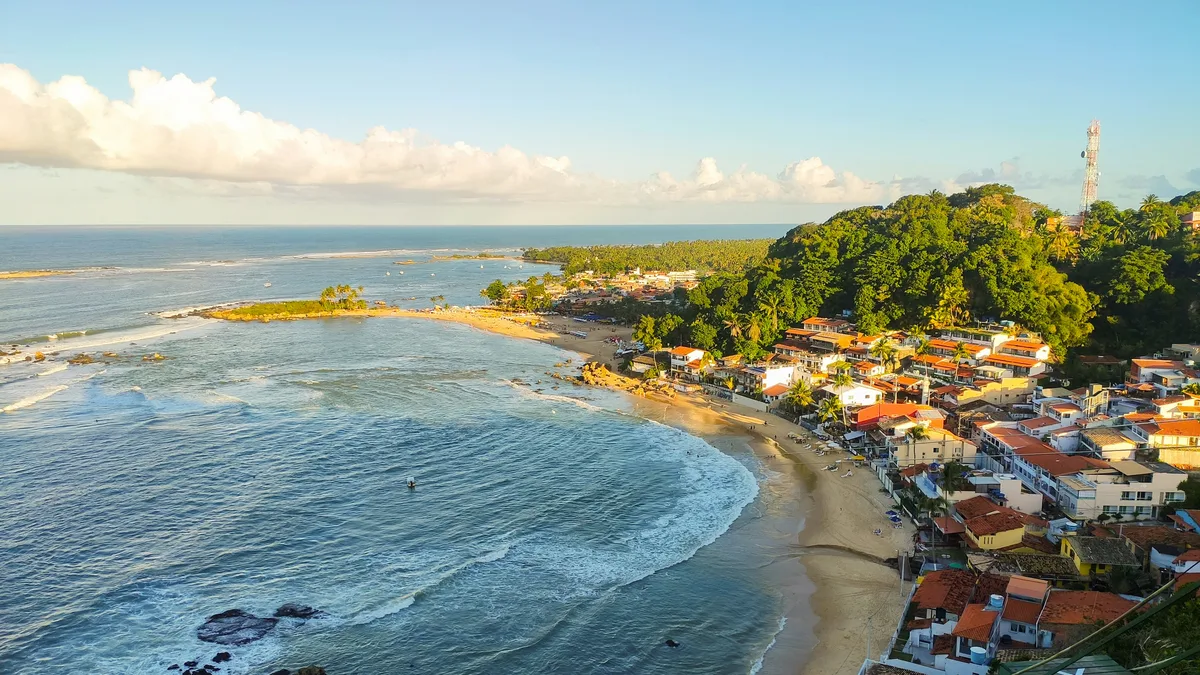
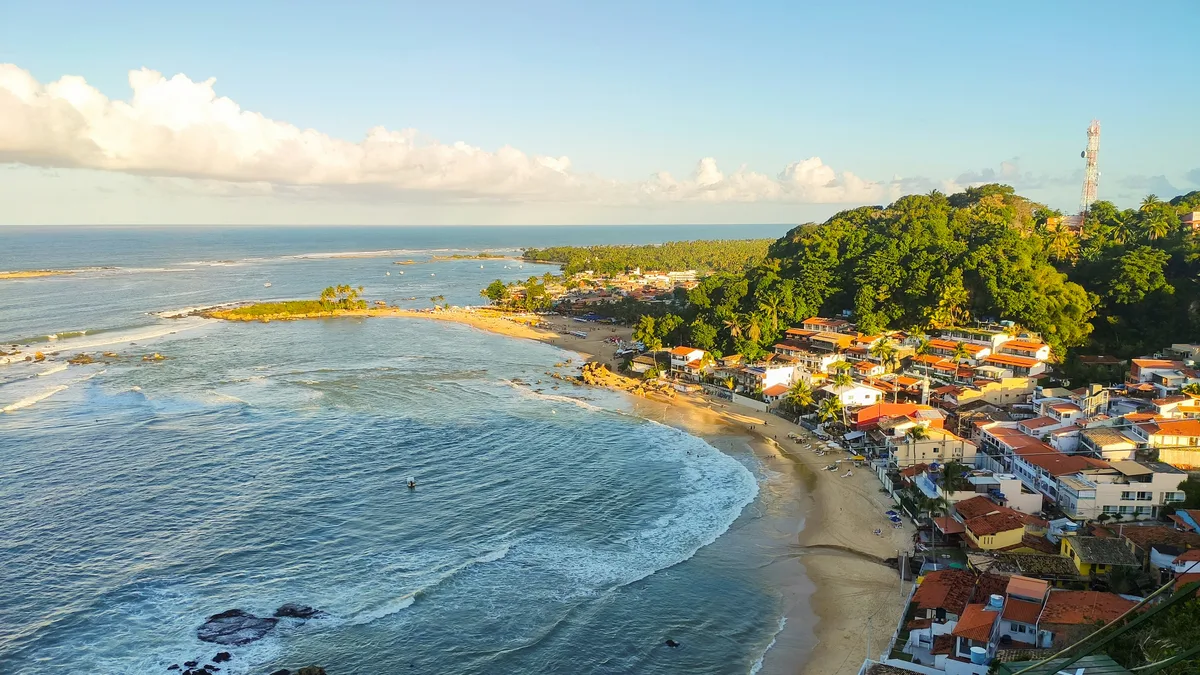
A former fishing village turned beach resort town on Bahia's Coconut Coast, known for its laid-back village streets, white-sand beach, and the Tamar Project's work protecting endangered sea turtles.
Visitor guide
Praia do Forte is a beach village in the municipality of Mata de Sao Joao, on Bahia's northern coast about 80 kilometres from Salvador, Brazil. It is known for its white sand, natural pools, the Tamar sea turtle project and the ruins of the Garcia d'Avila castle.
Bahia.ws describes Praia do Forte as a small fishing village before it became a tourist destination, with some residents working as sailors ferrying people across the Pojuca River and others fishing. Coconut saplings brought from Asia by the Portuguese drew families who planted and harvested them, and the area lies on the Costa dos Coqueiros, the Coconut Coast. Wikipedia gives a population of about 1,800 in 2014 and says the village has a tropical rainforest climate with no dry season, with the wettest months from April to June and September the driest.
The Casa da Torre, or Garcia d'Avila Castle, is a 16th and 17th-century complex of tower, castle and chapel on a hilltop about 1,200 metres from a small natural harbor, with its ruins around 2.5 kilometres from the coast. Construction is usually dated to 1551, under Garcia d'Avila, who arrived with the first governor-general Tome de Sousa; Wikipedia says Tome de Sousa appointed his son Garcia de Sousa d'Avila to build a fortress on the Bahia coast, while other sources describe Garcia d'Avila as an associate of the governor-general. The chapel of Sao Pedro dos Rates is the oldest part, finished in 1624.
The tower served as a lookout, with torch signals warning Salvador of approaching ships, and it was the core of a vast family estate that grew over 250 years to hundreds of leagues in the northeast, an expansion Wikipedia links to wars against Indigenous peoples and to enslaved labor on sugar plantations. IPHAN listed it as heritage in 1938. It was abandoned in 1835 according to some sources; sources differ on when restoration began, with one saying the 1980s and another the late 1990s. It is now part of the Garcia d'Avila Historical and Cultural Park.
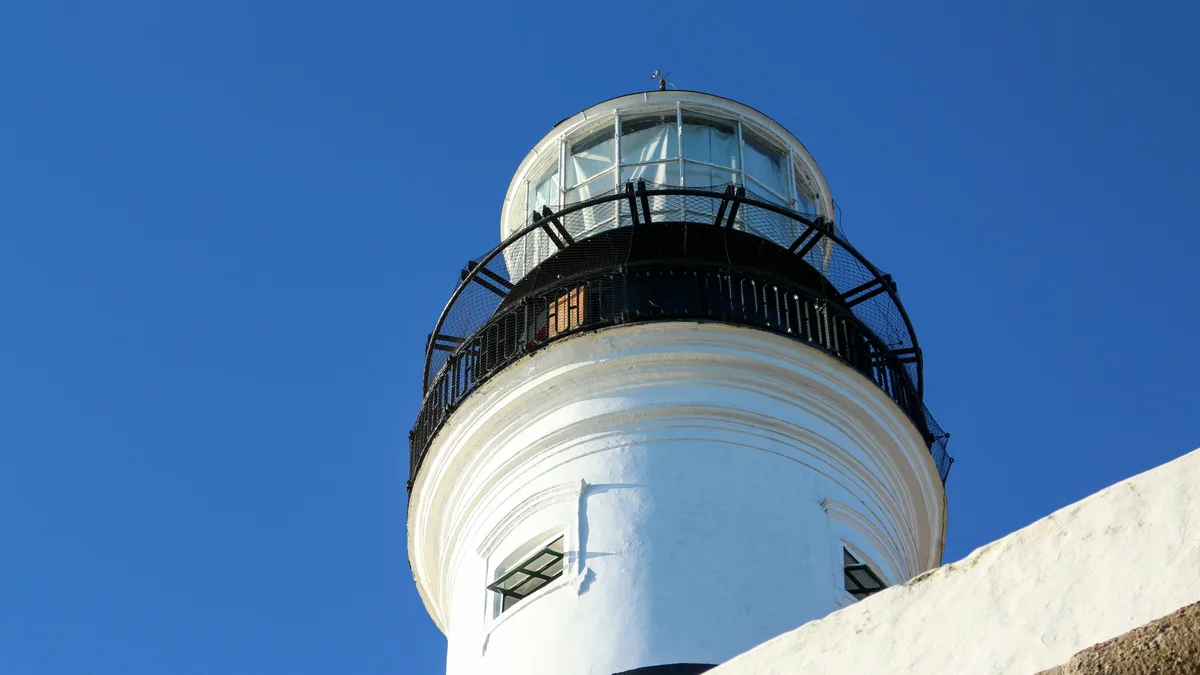
Projeto Tamar, whose name combines Tartaruga Marinha, is a Brazilian non-profit working to protect sea turtles. Sources say it was founded in 1980, with Praia do Forte chosen as national headquarters because it is one of the most important nesting sites in Brazil. Bahia.ws says four of the world's seven sea turtle species nest in the region, mostly from September to May, and the Tamar station sits on the beach next to the church and lighthouse, according to Wikipedia. Praia do Forte is also home to the Humpback Whale Institute, founded in 2000, and humpbacks visit from July to October.
Wikipedia notes the beach's clear waters, white sand and natural pools. Praia do Papa-Gente has natural pools suited to snorkelling, and Praia do Lord forms a large natural pool at low tide. The Sapiranga Ecological Reserve, roughly 600 hectares of Atlantic Forest about 6 kilometres from the village, offers trails, birdwatching and swimming in the Pojuca River.
The village is reached by road, usually via the Estrada do Coco and the Linha Verde (BA-099), and the seasonal calendar affects turtle activity and whale watching. A private tour from Salvador suits a day of mixed sights.
See every tour and attraction we cover in Salvador.