TorontoOntario · 36 tours
 Niagara FallsOntario · 25 tours
 New York CityNew York · 30 tours
 Las VegasNevada · 8 tours
 San FranciscoCalifornia · 16 tours
 VancouverBritish Columbia · 17 tours
 DubaiUAE · 54 tours
 Abu DhabiUAE · 5 tours
 Buenos AiresArgentina · 23 tours
 AthensGreece · 31 tours
 AucklandNew Zealand · 38 tours
 CancunMexico · 54 tours
No destinations match “”. Try searching all tours instead — that search understands full questions, not just place names.
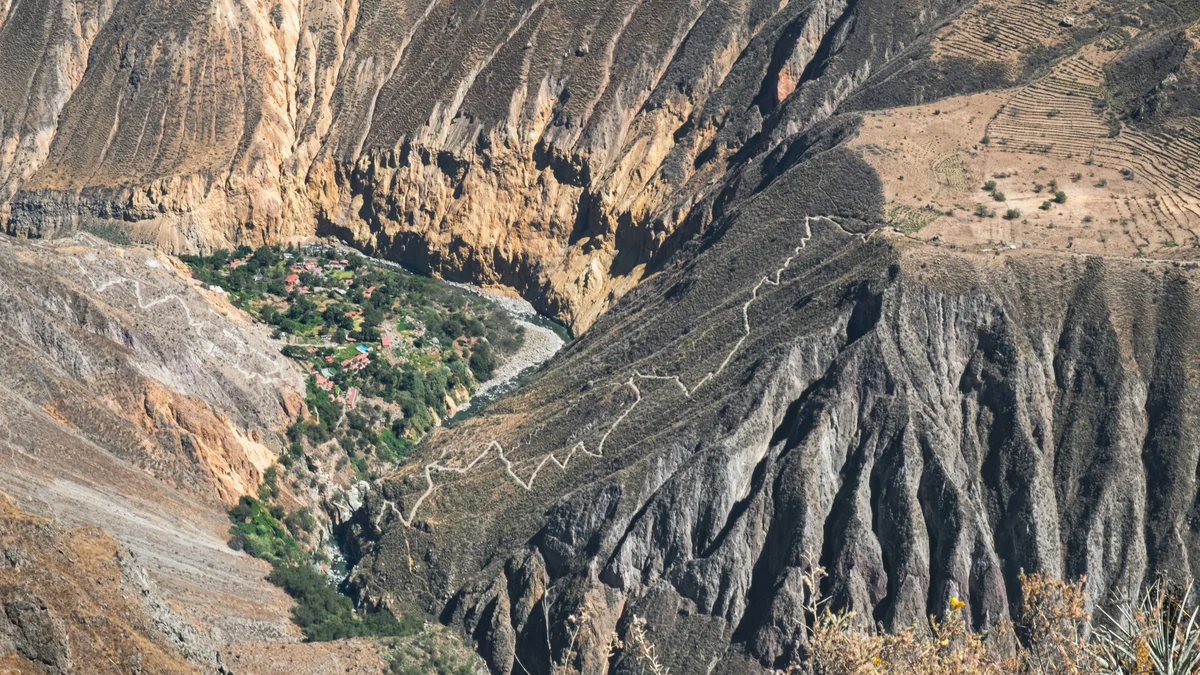
Among the deepest canyons in the world, with published depths ranging from about 3,270 to 4,160 metres depending on the source, well over the roughly 1,800-metre depth of the USA's Grand Canyon. Traditional highland villages line its terraced slopes, and the Cruz del Cóndor viewpoint offers real chances to watch Andean condors ride the morning thermals.
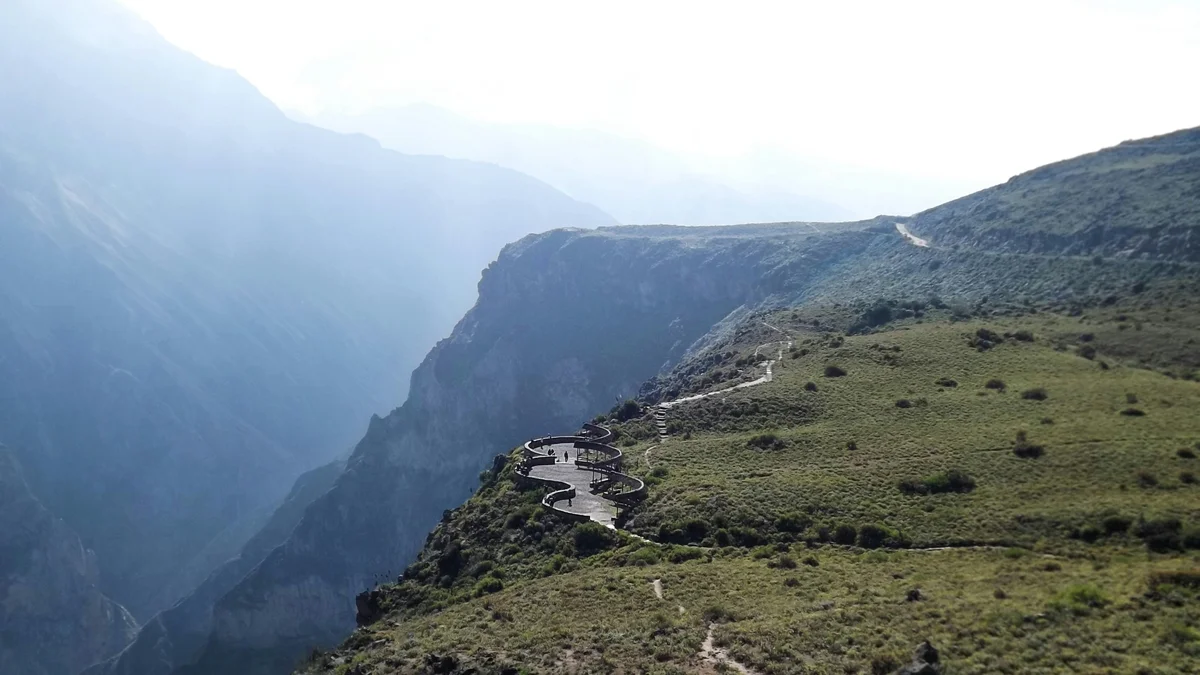 Private Tours Popular Pick
Your family or group travels alone in an exclusive minivan with a licensed local guide and a separate driver on this full private day trip to Colca Canyon, including buffet breakfast, lunch, and the Colca Valley tourist ticket.
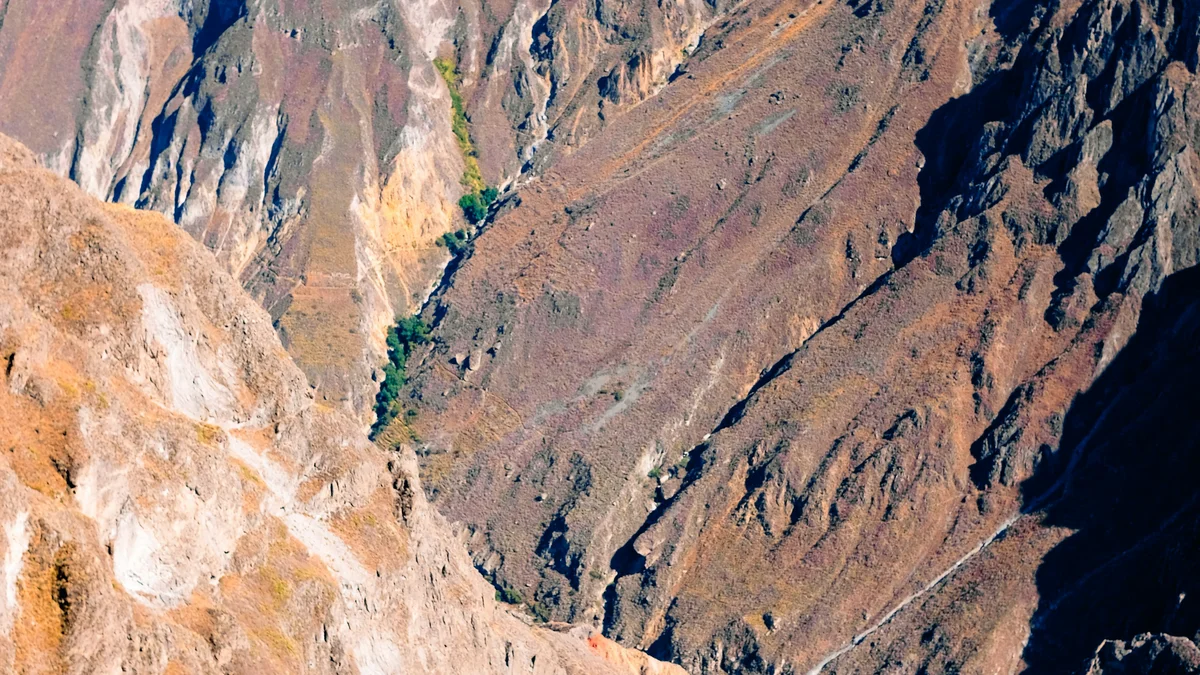 Private Tours
A private 2-day hiking trip from Arequipa into part of the Colca Canyon, exploring real trails, spotting Andean condors, meeting locals, and soaking in natural hot springs along the way.
Visitor guide
Colca Canyon is a deep Andean canyon carved by the Colca River in southern Peru, about 160 kilometres northwest of Arequipa. It is known for terraced farming villages, volcano views and the Andean condor, which draws visitors to the Cruz del Condor viewpoint. In 2019, according to Spanish-language Wikipedia, UNESCO designated the Colca Canyon and Andagua Volcanoes as a global geopark.
English Wikipedia gives a depth of about 3,270 metres and a length of about 70 kilometres in its introduction, but another section gives 100 kilometres and 3,400 metres, and the Spanish article cites a 2005 Polish-led survey reporting up to 4,160 metres near Huambo, so published figures are inconsistent and best read as approximate. The articles agree that it is among the deepest canyons in the world. A Polish expedition made the first descent of the river below Cabanaconde in 1981, and the Guinness Book of Records recognised the claim in 1984. The canyon base lies at about 2,000 metres and the rim at roughly 3,000 to 4,000 metres. Chivay is the midpoint of the valley, and Cabanaconde lies downstream. The snow-capped extinct volcano Ampato, 6,288 metres high, rises about 24 kilometres southeast of Cabanaconde.
The Spanish article says the canyon began to form roughly 10 million years ago, with its present shape probably dating to the last million years. It attributes the deepening to the rise of the Andes, glacial retreat in the Quaternary and erosion by the Colca River, and says volcanic deposits from Sabancaya and Hualca Hualca once dammed the river, creating a lake from Madrigal to Yanque, before the dam broke and the river cut deeper.
Pre-Inca inhabitants included the Quechua-speaking Cabanas and the Aymara-speaking Collaguas, according to English Wikipedia, and the name Colca is said to come from the names of these two groups. The Incas arrived around 1320 and are said to have established control mainly through marriage rather than war. The Spanish arrived in 1540 under Gonzalo Pizarro, and in the 1570s Viceroy Francisco de Toledo ordered residents into central settlements that remain the valley's main towns. Franciscan missionaries built the first chapel in 1565 and the first church in 1569. The Spanish article describes the valley's churches as a mestizo Baroque style with influences from Arequipa and Cusco, some built entirely of sillar.
Pre-Inca andenes, or stepped terraces, are still farmed today. No passable road linked Arequipa and Chivay until the 1940s, and later roads in the 1970s and 1980s were tied to the Majes Hydroelectric Project, which diverts river water for irrigation. The valley is also known for baby alpaca knitwear and the embroidery that decorates skirts and hats. Caves in the valley hold rock paintings and carvings said to be more than 6,000 to 7,000 years old.
The Andean condor is the main attraction, and Cruz del Condor is a popular viewpoint where the canyon floor is about 1,200 metres below the rim. Other wildlife includes the giant hummingbird, Andean goose, Chilean flamingo, vicuna and vizcacha. Spanish Wikipedia notes that residents say condors were more frequent in the past.
The La Calera hot springs are at Chivay, with other springs through the valley. Archaeological sites include the Caves of Mollepunko, with rock art said to depict alpaca domestication, and the reconstructed hilltop Fortaleza de Chimpa. The Wititi dance festival in Chivay is recognised as Peruvian cultural heritage. Because the journey from Arequipa crosses high passes, a private guided visit with a driver lets the group plan stops and condor viewing around the conditions of the day.
See every tour and attraction we cover in Arequipa.