TorontoOntario · 36 tours
 Niagara FallsOntario · 25 tours
 New York CityNew York · 30 tours
 Las VegasNevada · 8 tours
 San FranciscoCalifornia · 16 tours
 VancouverBritish Columbia · 17 tours
 DubaiUAE · 54 tours
 Abu DhabiUAE · 5 tours
 Buenos AiresArgentina · 23 tours
 AthensGreece · 31 tours
 AucklandNew Zealand · 38 tours
 CancunMexico · 54 tours
No destinations match “”. Try searching all tours instead — that search understands full questions, not just place names.
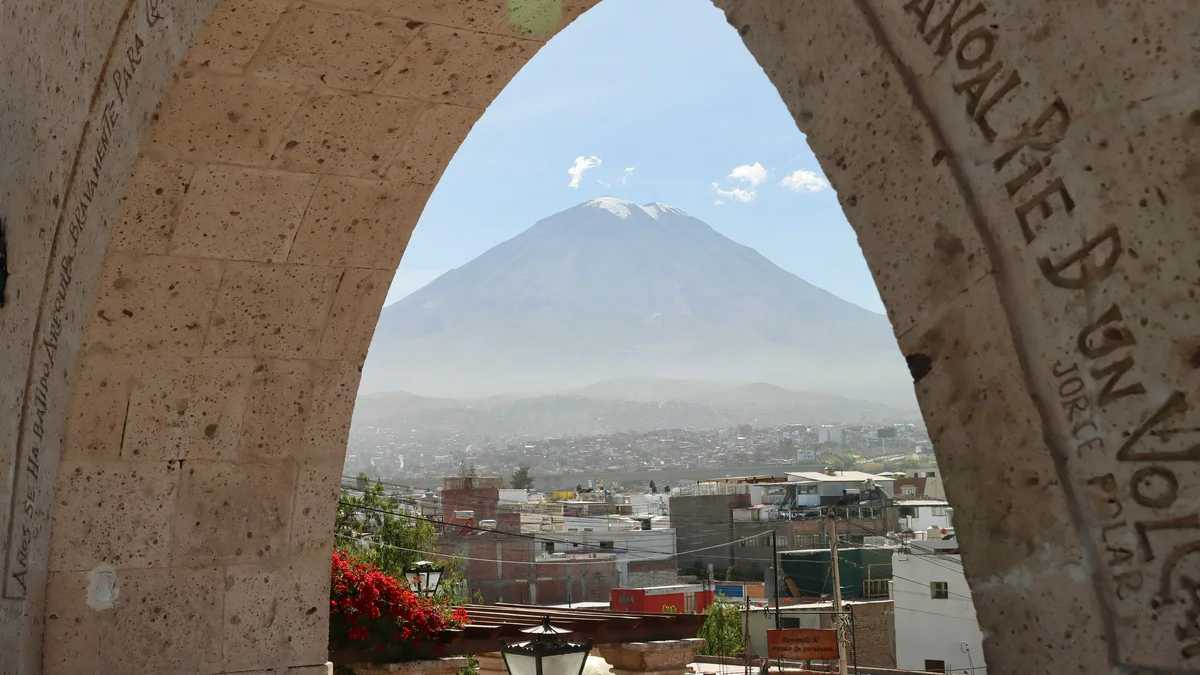
Home to Juanita, the preserved Inca 'Ice Maiden' mummy discovered on the summit of nearby Ampato volcano in 1995. Believed to have been a ritual offering roughly 500 years ago, her remains and the artifacts found with her are displayed alongside exhibits on Inca high-altitude ceremonial sites.
Visitor guide
The Museo Santuarios Andinos, known as the Juanita Museum, is an archaeological museum of the Catholic University of Santa Maria in Arequipa, Peru. It is best known for exhibiting Juanita, also called the Ice Maiden or Lady of Ampato, an Inca girl who was sacrificed and later found frozen on Mount Ampato.
English Wikipedia says the museum was founded in 1996 by university resolution to conserve the archaeological finds of the Santuarios de Altura del Sur Andino project, begun in 1980 in the mountains of southern Peru by the archaeologists Jose Chavez and Johan Reinhard. The Spanish-language article gives the creation date as 5 December 1996 and says the museum, known as MUSA, shows in five rooms material connected with the Inca capacocha rituals, with more than 70 ceramic, organic, textile, metal and bioarchaeological objects. In November 2020 the Ministry of Culture declared the museum a National Cultural Heritage site, according to English Wikipedia.
Johan Reinhard and the Peruvian mountaineer Miguel Zarate found Juanita in September 1995 while investigating an Inca ceremonial site near the summit of Ampato, a volcano of about 6,300 metres. Melting ice and erosion had exposed the burial bundle and caused it to fall into a crater below. Her remains and the objects buried with her were taken to Arequipa to prevent thawing. In October 1995 a further expedition led by Reinhard and Chavez recovered two more frozen child mummies, a girl and a boy, and a third female mummy was recovered in December 1997.
Her body is thought to date from about 1440 to 1480, and estimates of her age range from about 12 to 15 years, with recent research favouring 14 to 15. She was sacrificed in a capacocha ceremony, an Inca ritual that often involved children selected for sacrifice at sacred mountain sites. Wikipedia says she wore a shawl fastened with a silver clasp and a headdress of red macaw feathers, and was wrapped in a brightly coloured textile, with garments resembling fine cloth worn by the elite of Cusco. Grave goods included llama bones, pottery, maize, miniature figurines and Spondylus shells from the Pacific coast of present-day Ecuador, which the Inca valued for ritual offerings.
Because Juanita was preserved by freezing rather than drying, her soft tissues, hair, skin, blood and stomach contents survived. Wikipedia reports that she was taken to Johns Hopkins Hospital in 1996 for CT scans, that genetic testing placed her in mitochondrial haplogroup A2, and that her stomach held a vegetable meal eaten some six to eight hours before death. Examination indicates she died from a blow to the head. Researchers such as Reinhard have linked sacrifices on Ampato to drought or volcanic eruptions, while others see capacocha as a political practice reinforcing imperial authority.
Beyond Juanita, the museum holds the Urpicha mummy and the Sarita mummy, found on the Sara Sara volcano, along with polychrome ceramics, textiles, wooden qirus, Inca aryballus jars and small copper, silver and gold figurines. Juanita has been exhibited almost continuously at the museum since 1996, and was shown at the National Geographic Society in Washington in 1996 and in Japan in 1999. In 2020 Peru's Ministry of Culture designated her a movable cultural heritage object, and a forensic facial reconstruction by the Swedish sculptor Oscar Nilsson was unveiled in Arequipa in 2023.
Because the displays concern human burials, they are handled with care and arrangements may change. A private guided visit with a driver and a guide can fit the museum together with the nearby Plaza de Armas and Santa Catalina Monastery.
See every tour and attraction we cover in Arequipa.