TorontoOntario · 36 tours
 Niagara FallsOntario · 25 tours
 New York CityNew York · 30 tours
 Las VegasNevada · 8 tours
 San FranciscoCalifornia · 16 tours
 VancouverBritish Columbia · 17 tours
 DubaiUAE · 54 tours
 Abu DhabiUAE · 5 tours
 Buenos AiresArgentina · 23 tours
 AthensGreece · 31 tours
 AucklandNew Zealand · 38 tours
 CancunMexico · 54 tours
No destinations match “”. Try searching all tours instead — that search understands full questions, not just place names.
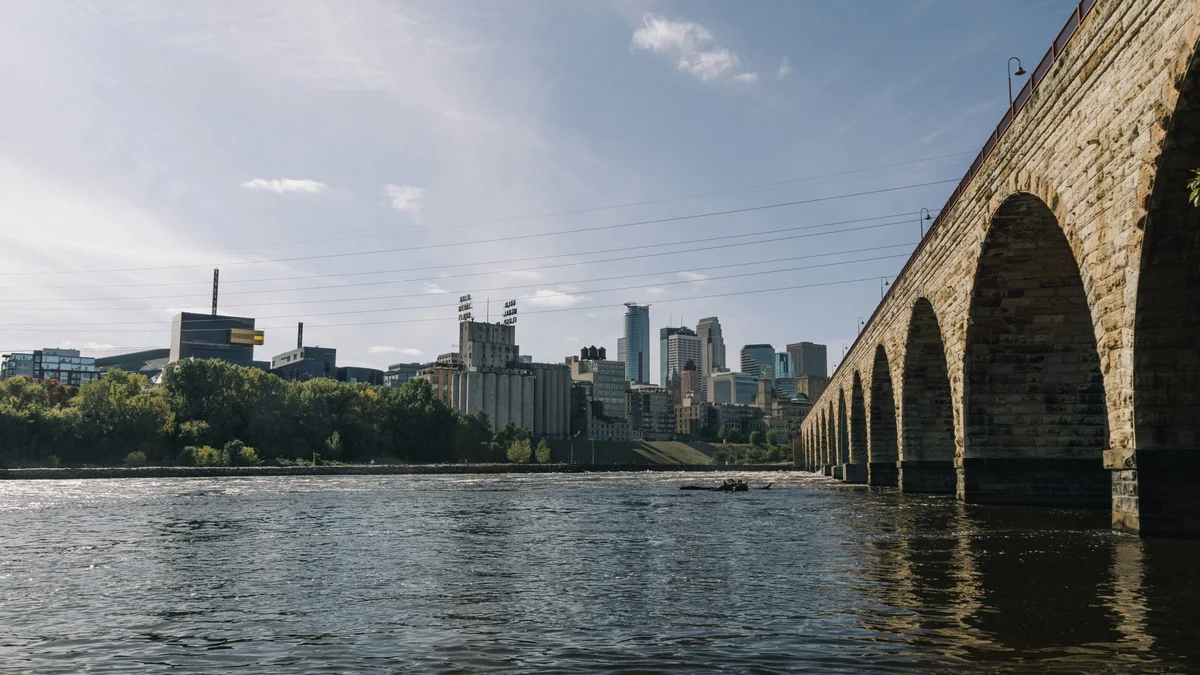
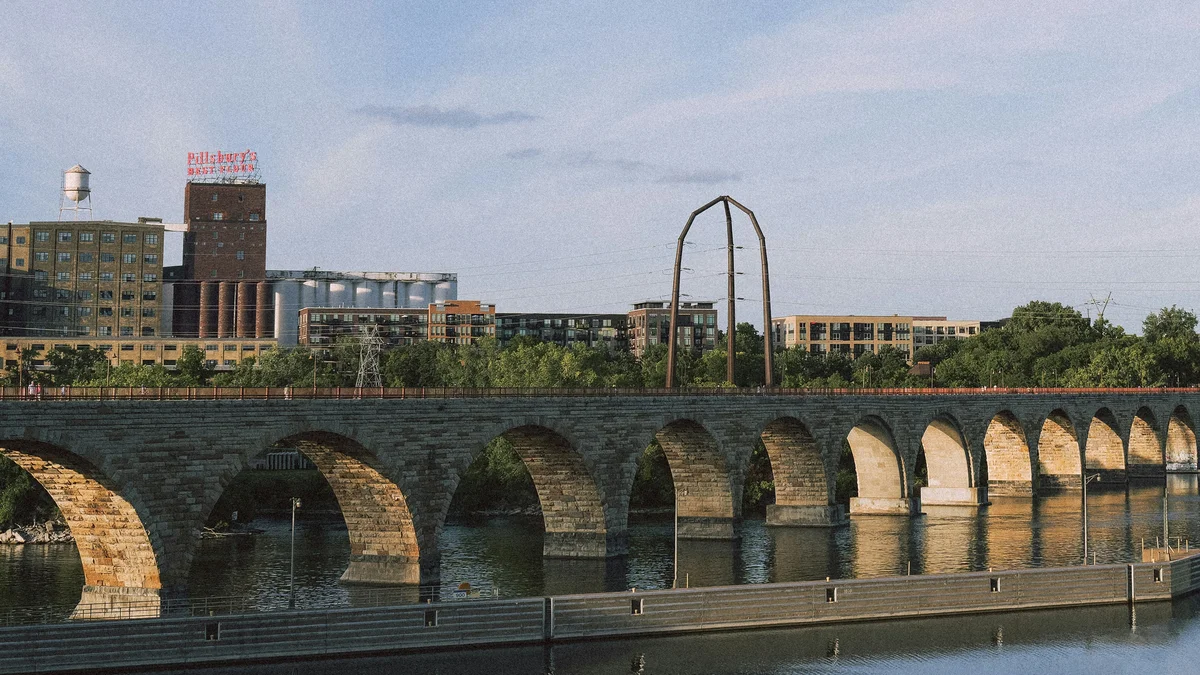
Built in 1883 by railroad magnate James J. Hill, this graceful curved bridge of granite and limestone arches once carried Great Northern Railway trains across the Mississippi River at St. Anthony Falls. It's now a pedestrian and bicycle bridge offering close-up views of the falls, the historic Mill District, and the downtown Minneapolis skyline, with the old Gold Medal Flour sign still visible on the riverbank. It remains one of the few surviving stone arch railroad bridges of its kind in the United States.
 Private Tours Popular Pick
A privately guided tour for your group only, in a premium town car or Cadillac Escalade SUV — real stops spanning both Minneapolis and Saint Paul, from the Chain of Lakes to the Minnesota State Capitol.
 Private Tours
A private tour just for your group — you won't be sharing your guide with a large group — through Minneapolis's real milling-era riverfront district.
Visitor guide
The Stone Arch Bridge carries a curving line of granite and limestone arches across the Mississippi River just below Saint Anthony Falls in Minneapolis. Completed in 1883 for James J. Hill's railway, it was converted in the 1990s into a path for walkers and cyclists and is now the centerpiece of the Saint Anthony Falls Heritage Trail.
James J. Hill commissioned the bridge for his railway enterprise, which became the Great Northern. Wikipedia credits Charles C. Smith as head engineer and gives the construction years as 1882 to 1883; other sources say it was begun a year earlier, so the start date varies by source. The American Society of Civil Engineers, which designated it a landmark, gives 1883 as its completion date and calls it one of the finest stone viaducts in the world.
The numbers are impressive. The ASCE records a length of 2,100 feet and 23 circular stone arch spans, built as a double-track structure and requiring about 100,000 tons of stone. The Minnesota Historical Society gives the width as 28 feet, enough for two tracks side by side, and says the 23 arches vary from forty to 100 feet wide; granite from Sauk Rapids went into the piers, with limestone from Mankato and Iowa used for the facing. The bridge's gentle curve is often called its most striking feature. The cost is reported as $650,000 at the time. Early critics nicknamed it "Hill's Folly" until its value as a rail link became clear.
The ASCE describes it as believed to be the oldest mainline railroad bridge over the Mississippi, a claim worth treating as the society's own wording.
Wikipedia reports that two arches were replaced by a steel truss of about 200 feet during construction of the lock and dam in the early 1960s, and that a 1965 flood caused a pier to settle. Sources disagree on when trains stopped: accounts variously cite 1978, 1982 and 1983. Burlington Northern later sold the bridge to Hennepin County in 1989, and ownership passed to the Minnesota Department of Transportation in 1993. With federal help, the state and the park board then converted it to a pedestrian and bicycle path. The ASCE and other sources date the conversion to 1994, while one account says it officially opened in 1995.
The bridge was added to the National Register of Historic Places in 1971 as part of the Saint Anthony Falls Historic District, and was designated a National Historic Civil Engineering Landmark in 1974.
Walking across, you look upstream toward Saint Anthony Falls, which powered the milling district that grew up around it, and the converted mill buildings on the riverbanks. The heritage trail it anchors connects the sites of that industrial history. Because the surface is a shared path for people on foot and on bikes, expect to move at the pace of the crowd.
Conditions on and around the bridge can change, so check the Minneapolis Park and Recreation Board and the Saint Anthony Falls Heritage Trail resources for current access. On a Voyzo private tour of Minneapolis-Saint Paul, your driver can drop you near the river and collect you at the other end of the trail, so you only walk the route one way.
See every tour and attraction we cover in Minneapolis-Saint Paul.