TorontoOntario · 36 tours
 Niagara FallsOntario · 25 tours
 New York CityNew York · 30 tours
 Las VegasNevada · 8 tours
 San FranciscoCalifornia · 16 tours
 VancouverBritish Columbia · 17 tours
 DubaiUAE · 54 tours
 Abu DhabiUAE · 5 tours
 Buenos AiresArgentina · 23 tours
 AthensGreece · 31 tours
 AucklandNew Zealand · 38 tours
 CancunMexico · 54 tours
No destinations match “”. Try searching all tours instead — that search understands full questions, not just place names.
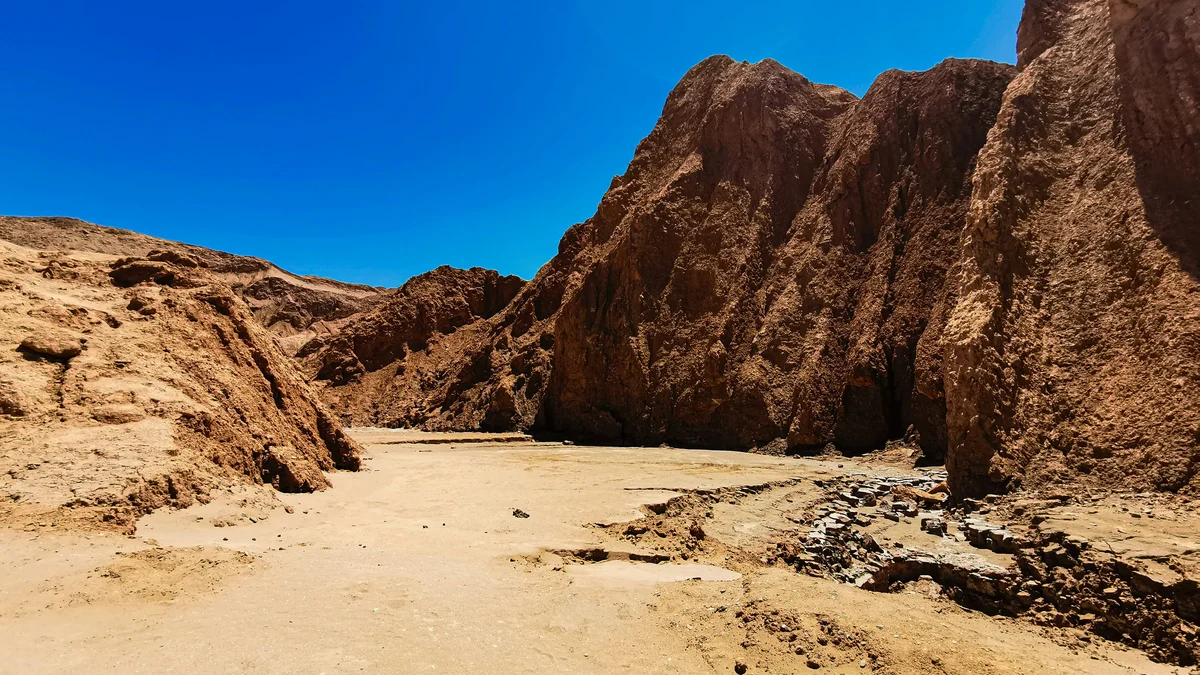
A real pre-Columbian hilltop fortress built around the 12th century by the Atacameño people to defend the San Pedro valley below. Its stone ruins climb the hillside just outside town and remain a genuine archaeological site tied to the region's Indigenous history, predating Spanish colonization by centuries.
Visitor guide
Pukara de Quitor is a pre-Columbian stone fortress in northern Chile, about 3 kilometres northwest of San Pedro de Atacama. Wikipedia describes it as overlooking the valley of the San Pedro River and notes that it was declared a national monument in 1982.
The settlement was built by the Atacameno, or Likan Antai, people. Its construction date is uncertain: Spanish Wikipedia places it in the twelfth century, while a university study and other sources place it around 1300. Its role was defensive, protecting the oasis and nearby settlements, and tourism sources say its walls were built to withstand long sieges. The word pukara itself is a Quechua term for fortress. Spanish Wikipedia says it was built against neighbouring peoples, mainly the Aymara, and that it also protected trade routes. In peacetime local leaders used it to assert authority over nearby villages.
One Spanish-language source says the Inca invaded around 1450 and incorporated the area into the Tawantinsuyo, while another calls the settlement pre-Inca. Sources therefore disagree on how it fits into the Inca period.
The fortress climbs a steep hillside on a bend of the San Pedro gorge in the Cordillera de la Sal, with the hill rising about 80 metres. A winding perimeter wall served as the first line of defence. Buildings were made of local stone, mostly unhewn, quarried from the rhyolite outcrop the site sits on. Roofs were flat or single-pitched, made of chanar or algarrobo beams, branches, straw and mud. Dwellings were mostly circular or square single rooms, many with a small attached silo for maize and other stores, laid out in terraces. Watchtowers and grain stores were attached to the perimeter wall, and larger enclosures were probably plazas or corrals.
Spanish Wikipedia gives two different counts, about 160 structures on 2.9 hectares in one passage and about 200 structures across roughly 24,000 square metres in another. The Quitor community farmed fields at the base of the hill, and the local economy included gathering chanar and algarrobo fruit, herding, pottery, copper metalwork, textiles and basketry.
Lonely Planet describes the fortress as one of the last bastions against the Spanish conquerors in northern Chile. The chronicler Geronimo de Bibar, who took part in Pedro de Valdivia's expedition, is the first written source for Quitor, in 1558. According to him, Francisco de Aguirre, with about thirty Spanish soldiers and Indigenous auxiliaries, forced the surrender of a site defended by some 1,000 Atacameno. Accounts agree on a Spanish capture in about 1540, although they differ on details and one account suggests the conquest took up to twenty years. A grim tradition says defenders were beheaded, a claim tied to the nickname town of heads, and some sources give a figure of about 300. Treat this detail as local tradition rather than firm history.
After the conquest the settlement was abandoned and gradually fell into ruin.
The ruins sit on a rocky hillside above the river valley, and visitors can reach a lookout over the oasis. The terrain is dry, rocky and exposed, so sun protection and sturdy shoes are advisable. Spanish Wikipedia says the site is more than 700 years old and was declared a Monumento Nacional in 1982.
Pukara de Quitor is often visited together with San Pedro's Le Paige Archaeological Museum. A private guided visit with a dedicated vehicle and driver can add context on the Atacameno and the Spanish arrival.
See every tour and attraction we cover in San Pedro de Atacama.