TorontoOntario · 36 tours
 Niagara FallsOntario · 25 tours
 New York CityNew York · 30 tours
 Las VegasNevada · 8 tours
 San FranciscoCalifornia · 16 tours
 VancouverBritish Columbia · 17 tours
 DubaiUAE · 54 tours
 Abu DhabiUAE · 5 tours
 Buenos AiresArgentina · 23 tours
 AthensGreece · 31 tours
 AucklandNew Zealand · 38 tours
 CancunMexico · 54 tours
No destinations match “”. Try searching all tours instead — that search understands full questions, not just place names.
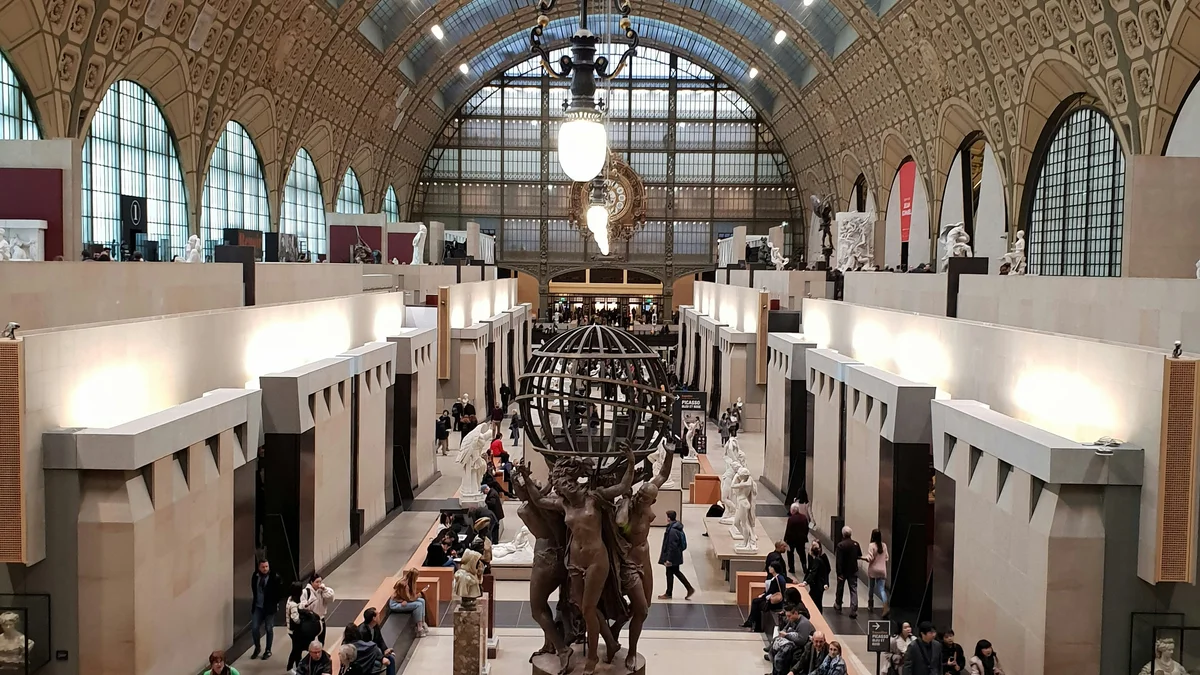
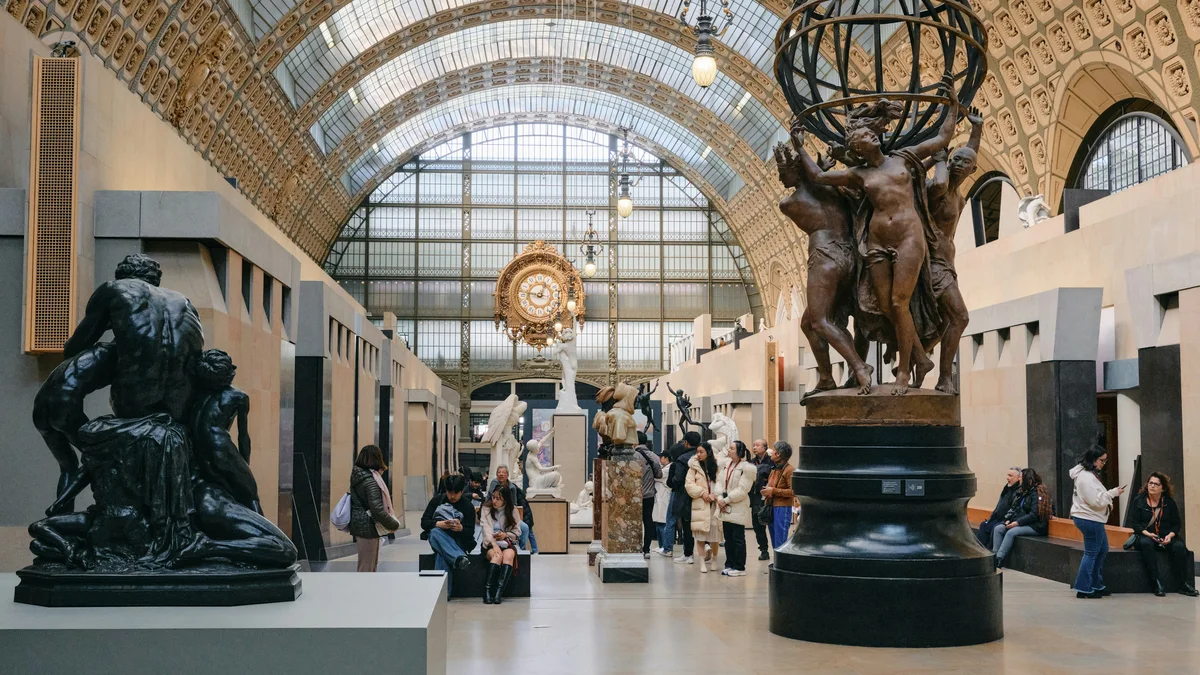
Once the Gare d'Orsay railway station, this Beaux-Arts building was converted into a museum and opened in 1986, keeping its grand glass-vaulted hall and ornate station clock. It now holds the world's largest collection of Impressionist and Post-Impressionist masterpieces, with major works by Monet, Van Gogh, Degas, and Renoir. The building's architecture is as much a draw as the art inside it.
Visitor guide
The Musee d'Orsay is an art museum on the Left Bank of the Seine in Paris, France, housed in the former Gare d'Orsay, a Beaux-Arts railway station built between 1898 and 1900. It holds mainly French art from 1848 to 1914 and is known for its Impressionist and Post-Impressionist masterpieces.
The Gare d'Orsay was built for the Paris-Orleans railway company, finished in time for the 1900 Exposition Universelle, after the railway company consulted three architects, Lucien Magne, Emile Benard and Victor Laloux, and chose Laloux in 1898. Wikipedia calls the design something of an anachronism, using nineteenth-century aesthetics to serve modern needs. The station later declined, and in the 1970s permission was granted to demolish it, but the culture minister ruled against building a hotel in its place. According to the museum, it was added to the supplementary inventory of historic monuments in 1973 and classified as a historic monument in 1978.
The idea of a museum bridging the Louvre and the National Museum of Modern Art at the Pompidou Centre was accepted by Georges Pompidou, and a competition in 1978 was won by ACT Architecture. Italian architect Gae Aulenti designed the interior. The museum was officially opened in December 1986 by President Francois Mitterrand.
The museum collects paintings, sculpture, furniture and photography from 1848 to 1914. Wikipedia describes it as housing the largest collection of Impressionist and Post-Impressionist masterpieces in the world, with works by Monet, Manet, Degas, Renoir, Cezanne, Seurat, Sisley, Gauguin, van Gogh and Berthe Morisot. Many of these works were previously at the Galerie nationale du Jeu de Paume. About 3,000 pieces are on display at any time.
Other highlights include a 1:100 scale model of the Paris Opera district beneath a glass floor, and the Marlene and Spencer Hays Collection of about 600 works, which favours Post-Impressionist artists such as Bonnard, Vuillard and Redon. Outside, a row of six bronze allegorical sculpture groups representing continents stands on the adjoining square.
The museum's holdings reflect its place in the national collections. Many of its works were held at the Galerie nationale du Jeu de Paume before the Orsay opened in 1986, and the museum fills a gap between the older collections of the Louvre and the modern collections of the Pompidou Centre. Wikipedia also records plans for a long transformation project, called Orsay Grand Ouvert, to add new galleries and education spaces; details of any work should be checked before visiting.
The great barrel-vaulted hall that once sheltered train platforms is now a long central nave lined with sculpture and galleries. The interior therefore feels quite different from a traditional palace museum.
The museum is close to the Seine and within walking distance of the Louvre across the river. Wikipedia records 3.2 million visitors in 2022, making it the second-most-visited art museum in France after the Louvre. A private guided visit can help a group concentrate on the Impressionist galleries and combine the museum with other nearby Paris sights.
See every tour and attraction we cover in Paris.