TorontoOntario · 36 tours
 Niagara FallsOntario · 25 tours
 New York CityNew York · 30 tours
 Las VegasNevada · 8 tours
 San FranciscoCalifornia · 16 tours
 VancouverBritish Columbia · 17 tours
 DubaiUAE · 54 tours
 Abu DhabiUAE · 5 tours
 Buenos AiresArgentina · 23 tours
 AthensGreece · 31 tours
 AucklandNew Zealand · 38 tours
 CancunMexico · 54 tours
No destinations match “”. Try searching all tours instead — that search understands full questions, not just place names.
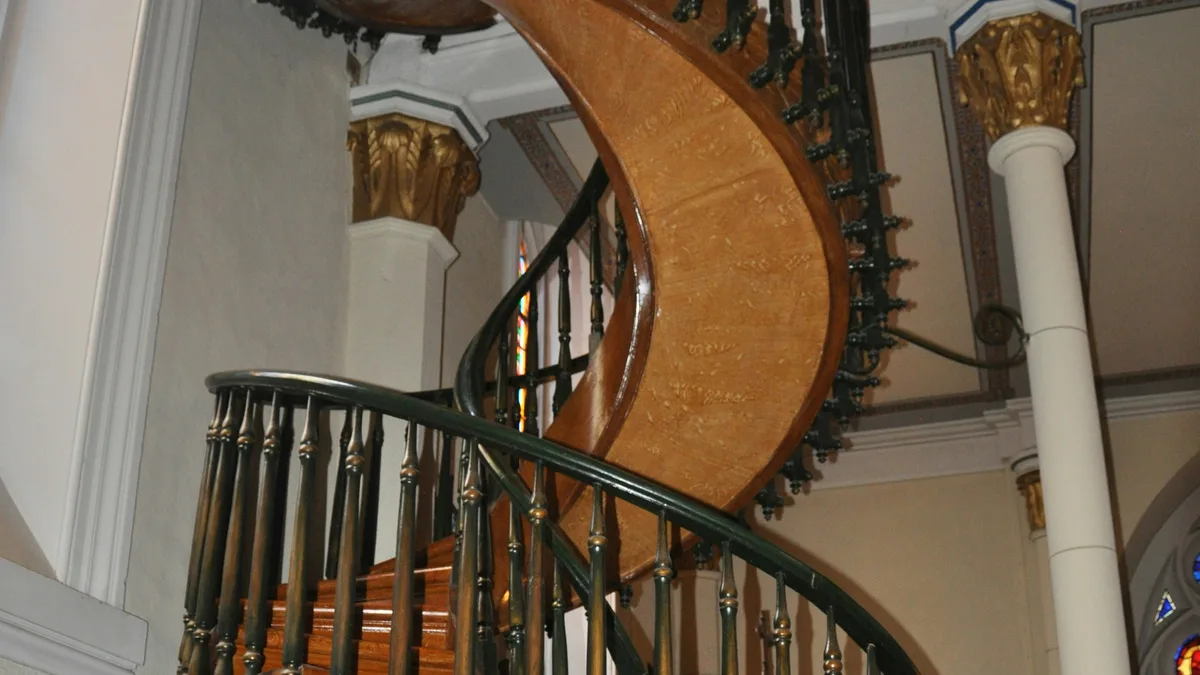
A Gothic Revival chapel completed in 1878, famous for its "Miraculous Staircase" — a wooden spiral staircase that makes two full 360-degree turns with no central support pole and, according to local legend, was built by a mysterious carpenter who disappeared without payment.
 Private Tours
A fully customizable private walking tour through Santa Fe's historic Old Town, where your personal historian guide tailors the route and stops to your interests — including a choice between two of the city's most distinctive chapels and the New Mexico State Capitol.
 Private Tours
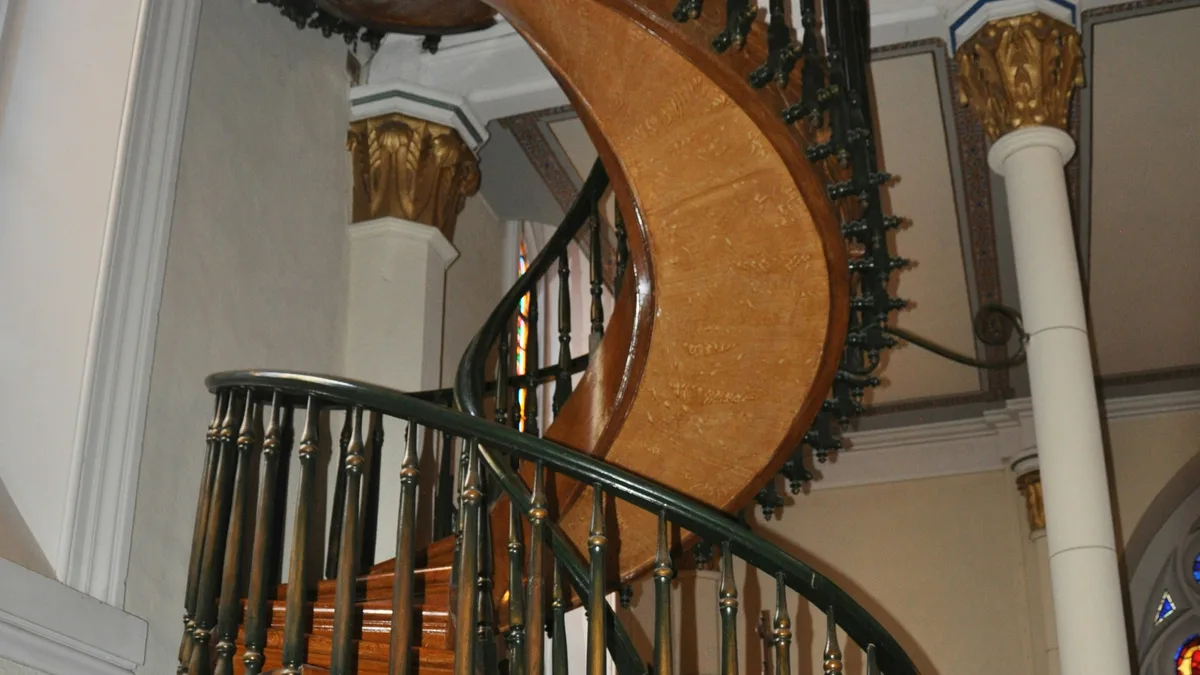
A private walking tour of Santa Fe's Old Town, exploring the New Mexico History Museum, Canyon Road's gallery district, the Loretto Chapel and its famous spiral staircase, and the city's signature adobe architecture.
Visitor guide
Loretto Chapel is a small Gothic Revival chapel in downtown Santa Fe, built in the 1870s for the Sisters of Loretto's girls' school, Loretto Academy. It is best known for its helix-shaped "Miraculous Staircase," which climbs to the choir loft in two full turns with no central pole, and for the story told about who built it.
The Sisters of Loretto commissioned the chapel in 1873 for Loretto Academy, which was founded in 1853 and operated until 1968. Archbishop Jean-Baptiste Lamy suggested the Sisters use the French architects Antoine Mouly and his son Projectus, who were then working on St. Francis Cathedral; Projectus Mouly was the main architect. The Gothic Revival design was modeled on the Sainte-Chapelle in Paris, and the building is made of locally quarried sandstone with stained glass imported from France and carried over the Santa Fe Trail. Construction took about five years, and the NPS dates the chapel's completion to 1878.
Students and nuns used the chapel daily until the academy closed. Afterward the rest of the campus was demolished, and the chapel survives today as a privately owned museum and wedding venue on the Old Santa Fe Trail.
The chapel was built without a way up to its choir loft. Under the traditional account kept by the Sisters, they prayed a nine-day novena to St. Joseph, the patron saint of carpenters, and a stranger arrived, built the stairs and disappeared before he could be paid or named. That is a legend, and the Sisters credit St. Joseph.
The physical facts are better documented. The stair rises about 20 feet in two full 360-degree turns, has 33 steps, and is held together with wooden pegs rather than nails or glue. It is made mostly of spruce, probably not native to New Mexico. Its inner stringer has seven segments and its outer stringer nine. One account puts construction between 1877 and 1881, and Projectus Mouly's death in 1879 may have delayed the work. Handrails and an iron support bracket were added in 1887 by Phillip August Hesch.
The builder has never been proven. Santa Fe historian Mary Jean Cook proposed in her 1984 book that he was a French carpenter, Francois-Jean "Frank" Rochas (1843-1894), though another researcher disputes that identification.
The chapel was placed on the New Mexico State Register of Cultural Properties on June 20, 1971, and is a contributing property to the Santa Fe Historic District on the National Register of Historic Places, designated July 23, 1973.
The chapel is small, so a visit is typically short and pairs easily with the nearby Plaza district. Check the operator for current hours, admission, event closures and access, as the building is also used for weddings.
For a Voyzo private tour, your private vehicle and driver provide door-to-door pickup, so the chapel can be one stop in a relaxed Santa Fe day without worrying about parking in the historic center. We do not set a fixed itinerary here; your plan is built around your preferences.
See every tour and attraction we cover in Santa Fe.