TorontoOntario · 36 tours
 Niagara FallsOntario · 25 tours
 New York CityNew York · 30 tours
 Las VegasNevada · 8 tours
 San FranciscoCalifornia · 16 tours
 VancouverBritish Columbia · 17 tours
 DubaiUAE · 54 tours
 Abu DhabiUAE · 5 tours
 Buenos AiresArgentina · 23 tours
 AthensGreece · 31 tours
 AucklandNew Zealand · 38 tours
 CancunMexico · 54 tours
No destinations match “”. Try searching all tours instead — that search understands full questions, not just place names.
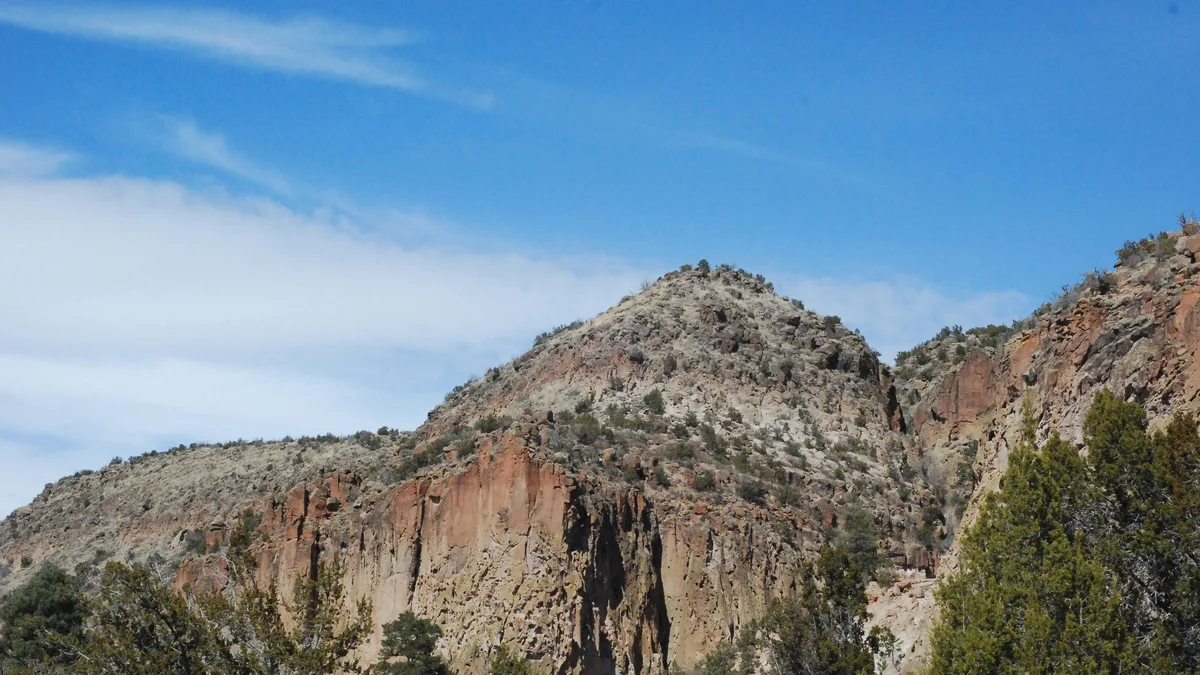
A National Park Service site roughly 45 minutes from Santa Fe, preserving Ancestral Puebloan cliff dwellings and petroglyphs carved into volcanic tuff canyon walls dating back over 11,000 years of human presence. Visitors can walk the Main Loop Trail and climb wooden ladders into cavate dwellings carved directly into the rock.
Visitor guide
Bandelier National Monument protects more than 33,000 acres of canyon and mesa country on the Pajarito Plateau in northern New Mexico, near Los Alamos. It is best known for the homes Ancestral Pueblo people built in and against the volcanic cliffs of Frijoles Canyon, and it preserves part of the ancestral and traditional lands of at least 23 tribal nations.
The monument was proclaimed by President Woodrow Wilson on February 11, 1916, and is named for the anthropologist Adolph Bandelier, who documented Pueblo culture in the region from 1880. It covers about 33,677 acres, around 50 square miles, and the Bandelier Wilderness takes in roughly two-thirds to 70 percent of that area, depending on the source. Administration passed from the U.S. Forest Service to the National Park Service in 1932.
The National Park Service describes Ancestral Pueblo people making Bandelier their home from about 1100 to 1550 CE. Wikipedia dates permanent settlement to about 1150 and says the pueblos were abandoned by 1600, so the exact limits vary by source. More than 400 years of occupation by these people and their descendants left a dense and varied archaeological record. Tree-ring dates from ceiling beams at Tyuonyi fall between 1383 and 1466, and basalt and obsidian artifacts show the residents belonged to a trade network that reached far beyond the plateau. Wikipedia reports that the inhabitants moved to Rio Grande pueblos including Cochiti and San Ildefonso, which have been occupied ever since, and descendant communities continue to maintain ties to the area.
The setting is volcanic. According to the NPS, two eruptions about 1.6 and 1.4 million years ago formed the Pajarito Plateau, and their ash became the Bandelier Tuff. Ancestral Pueblo builders broke the firmer rock into blocks for walls and carved rooms into the softer tuff, producing cavates, which are excavated caves in the cliff face. The NPS notes that few places in the world hold such resources. Elevation runs from about 5,340 feet at the Rio Grande to about 10,199 feet at Cerro Grande, on the rim of the Valles Caldera. That range supports varied wildlife: Wikipedia lists deer, Abert's squirrels and wild turkeys as commonly seen, with black bears and mountain lions also present and elk moving down from the Jemez Mountains in winter.
The main concentration of sites is in Frijoles Canyon, where the Main Loop Trail passes the village of Tyuonyi, the Long House dwellings and rock-cut cavates, along with petroglyphs and standing masonry walls. Tyuonyi is a circular pueblo with about 245 ground-level rooms, according to the NPS, and Long House was built along the canyon wall beside it. The visitor center displays Ancestral Pueblo artifacts and shows an introductory film, according to Wikipedia.
Alcove House sits about 140 feet above the canyon floor and is reached by a series of wooden ladders and stone stairs. Conditions on this route change, so check the NPS for current access.
A detached unit called Tsankawi lies along State Highway 4, about 12 miles from the Frijoles Canyon visitor center. Its centerpiece is a mesa-top walk of roughly 1.5 miles past cavates and petroglyphs to the remains of an Ancestral Pueblo village that the NPS says held about 275 ground-floor rooms around a central plaza, mostly two stories tall. The unit holds more than 150 Ancestral Pueblo sites. The NPS notes that Spanish sheepherders also carved images into the soft rock, that the meaning of many carvings is unknown, and that the petroglyphs remain significant to modern Pueblo people. The route uses ladders and is exposed to weather, so check the NPS for current trail conditions.
Park buildings from the 1930s were built by Civilian Conservation Corps crews in the National Park Service Rustic style. The NPS says enrollees were men aged 17 to 26 paid a dollar a day, trained by older local craftsmen in masonry, carpentry, tinwork and carving. Under the guidance of Park Service architect Lyle Bennett, they built 31 stone buildings over eight years, using local materials, and the NPS notes that one tuff boulder was cut in half by hand with a saw. The camp left Frijoles Canyon in late 1941. Those structures (NPS materials give counts of 31 and 32) form a National Historic Landmark District designated in 1987.
During World War II the CCC-built Frijoles Canyon Lodge was requisitioned to ease a housing shortage for the secret Los Alamos project. According to the NPS, J. Robert Oppenheimer asked in May 1943 that it be ready by mid-June, and scientists, technicians and their families stayed there that summer. The lodge was operated by concessioner Evelyn Frey, whom the NPS calls the Lady of the Canyon. According to the NPS, the lodge was returned to Frey in January 1946.
Elevation, weather and seasonal conditions vary across the monument, and permits, shuttle arrangements and trail access can change, so check the National Park Service for current information before you go.
On a Voyzo private tour, your private vehicle and driver handle door-to-door pickup from Santa Fe, so you can arrive, walk the canyon at your own pace and return without arranging parking or a rental car. We build the day around your preferences rather than a fixed schedule.
See every tour and attraction we cover in Santa Fe.