TorontoOntario · 36 tours
 Niagara FallsOntario · 25 tours
 New York CityNew York · 30 tours
 Las VegasNevada · 8 tours
 San FranciscoCalifornia · 16 tours
 VancouverBritish Columbia · 17 tours
 DubaiUAE · 54 tours
 Abu DhabiUAE · 5 tours
 Buenos AiresArgentina · 23 tours
 AthensGreece · 31 tours
 AucklandNew Zealand · 38 tours
 CancunMexico · 54 tours
No destinations match “”. Try searching all tours instead — that search understands full questions, not just place names.
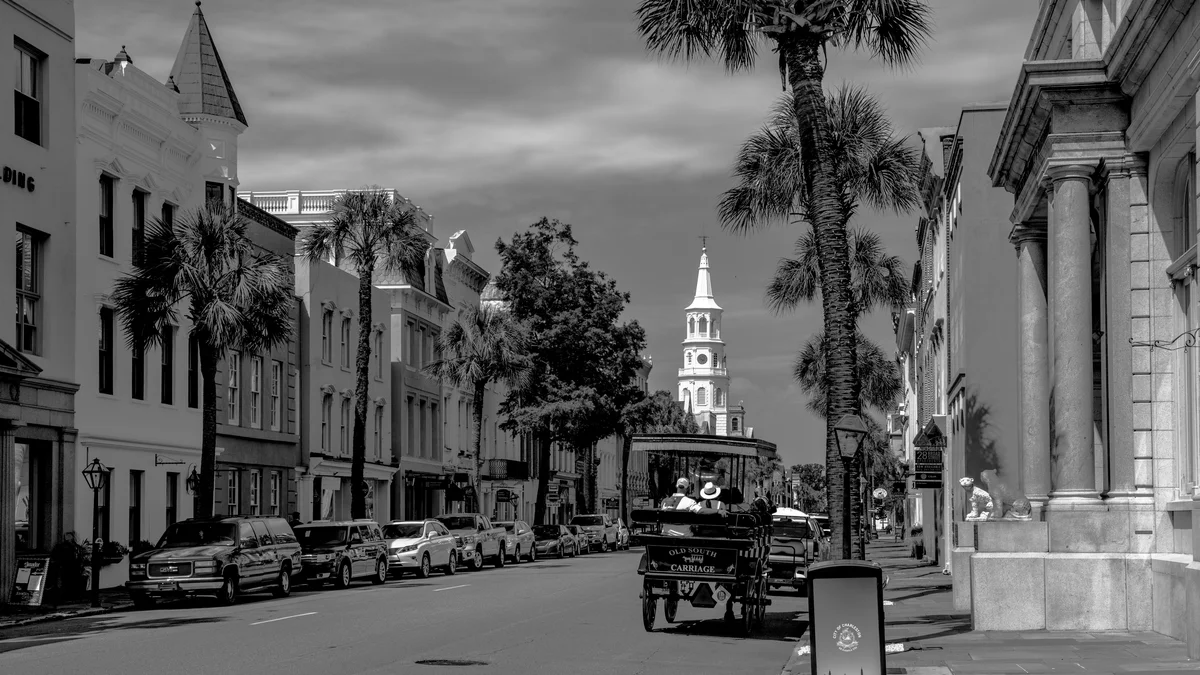
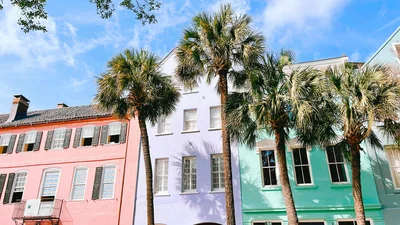
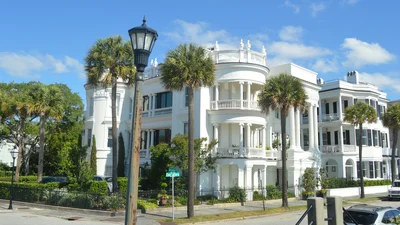
Kahal Kadosh Beth Elohim is a real, still-active synagogue in Charleston founded in 1749, making it one of the oldest Jewish congregations in the United States (the National Park Service calls it the nation's fourth oldest Jewish community). Its current Greek Revival building, completed in 1840 after a fire destroyed the original, is also recognized as the second-oldest synagogue building still standing in the country. By the end of the 18th century Charleston was home to the largest Jewish community in the United States, and this synagogue remains a living link to that history. Note: photo shown is a genuine downtown Charleston street scene used as an honest generic image, not a confirmed photo of the synagogue building itself, since no verified free photo of the exact building could be found.
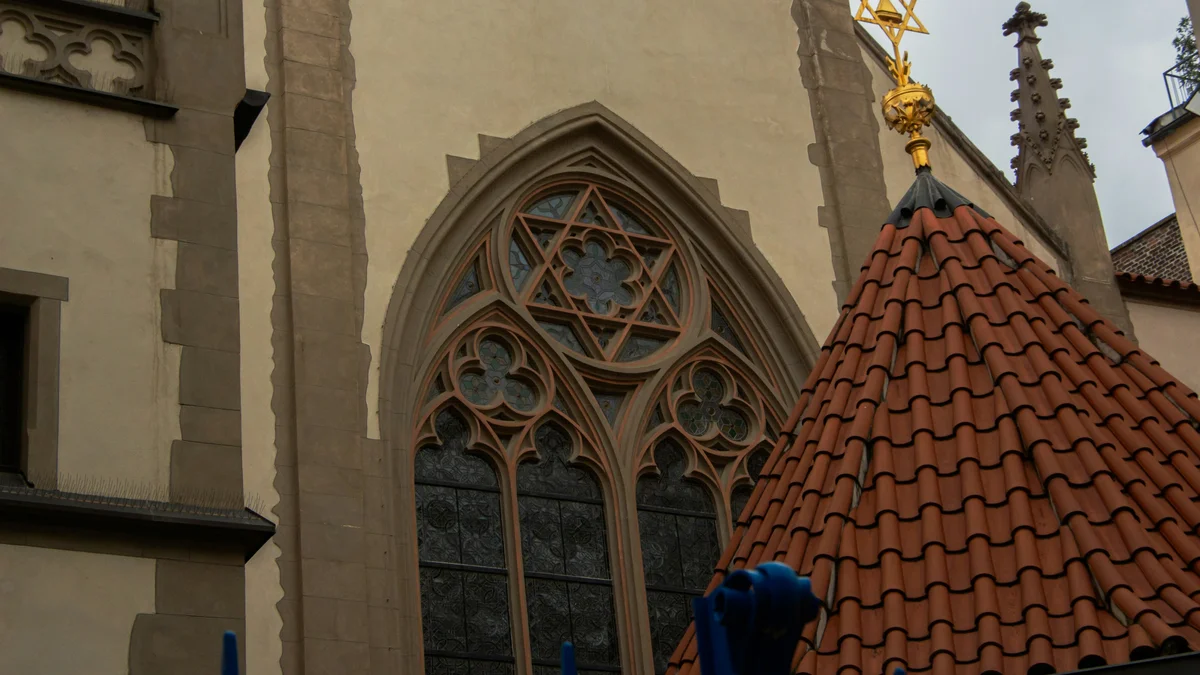 Private Tours
A private walking tour led by a real local historian, covering Charleston's genuine Jewish history — Kahal Kadosh Beth Elohim, the oldest continuously used synagogue in the United States, a real historic Jewish cemetery, and sites tied to the city's real Jewish merchant history.
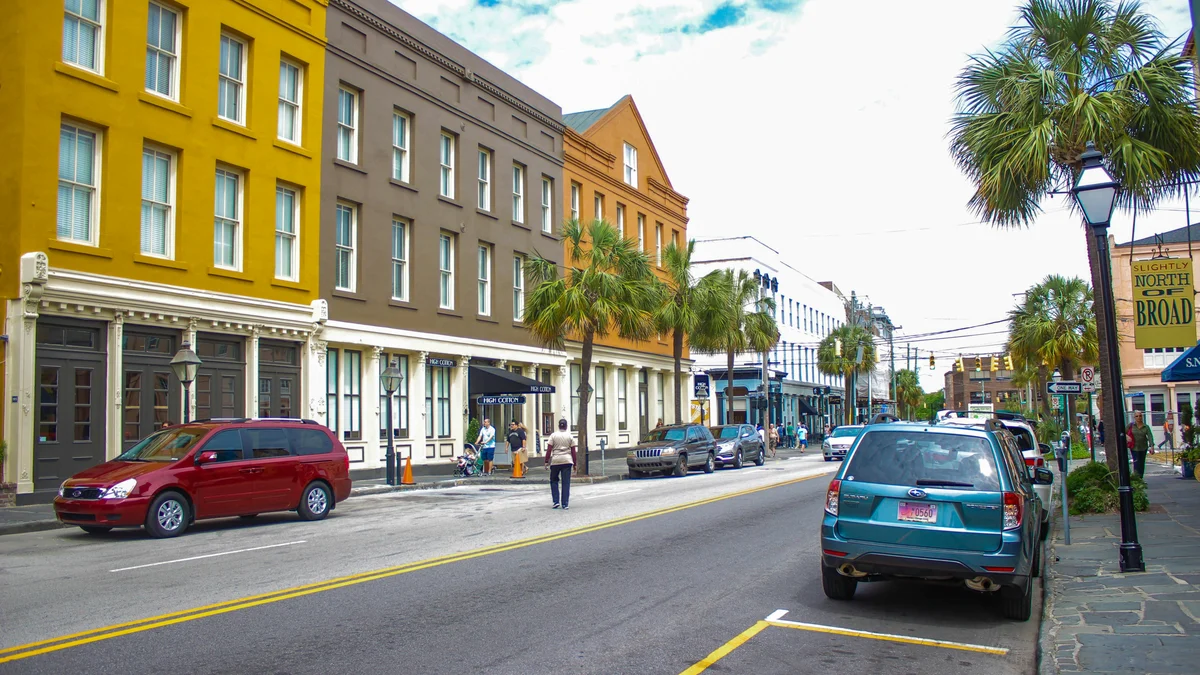 Private Tours
A private driving tour led by a real local historian, covering the same genuine Charleston Jewish history as our walking version — Kahal Kadosh Beth Elohim, a historic Jewish cemetery, and real merchant-history sites — in a comfortable private vehicle.
Visitor guide
Kahal Kadosh Beth Elohim (Holy Congregation House of God) is a Reform Jewish synagogue on Hasell Street in Charleston, South Carolina. The congregation was founded in 1749, and its Greek Revival sanctuary, completed in 1840, is a National Historic Landmark that the National Park Service describes as the country's second-oldest synagogue and the oldest in continuous use.
The congregation formed in colonial Charleston as an Orthodox community, made up largely of Sephardic Jews of Spanish and Portuguese descent. The earliest known reference to a Jew in the English settlement dates to 1695, and the congregation organised in 1749. The National Park Service notes that by the late 1700s it was the largest Jewish community in the nation, with about 500 members. The congregation established the Coming Street Cemetery in the 1760s (sources give 1754 and 1764), described as the oldest surviving Jewish burial ground in the South, and by 1775 it was meeting in an improvised synagogue next to the present grounds.
Its first purpose-built synagogue, in Georgian style, was begun in 1792 and dedicated in 1794, and was destroyed in the great Charleston fire of 1838. Members also founded the Hebrew Benevolent Society in 1784 and the Hebrew Orphan Society in 1801, which the congregation describes as the oldest Jewish charitable and orphan organisations in the country. The congregation says a letter from President George Washington to the congregation, dated 1790, is displayed in replica form in its museum.
In 1824, a group of 47 members petitioned to shorten the Hebrew portions of the service and add English. When the request was turned down, a splinter group led by Isaac Harby, Abraham Moise and David Nunes Carvalho formed the Reformed Society of Israelites, which lasted about nine years. The congregation reunited by 1833, and the first services in the new building followed modernised practice, which is why the congregation is often called the first American Reform congregation. Historians note that the broader movement was later shaped heavily by German immigrants, so claims about who started Reform Judaism are best phrased with care.
An organ was installed in the new sanctuary, and the congregation's history describes this as controversial. Members who opposed it left and formed an Orthodox congregation, Shearith Israel, which kept its own section of the Coming Street Cemetery. The two congregations reunited in 1866. In 1873 Beth Elohim was a founding member of the Union of American Hebrew Congregations, now the Union for Reform Judaism.
The 1840 sanctuary stands on the site of the burned synagogue. The National Park Service credits New York architect Cyrus L. Warner with the design, though the congregation says the design came from builders Tappan and Noble, with Warner preparing the working plans, so attribution is not entirely uniform. The builder was congregation member David Lopez Jr., and the work was carried out by enslaved laborers he owned, including artisans named Kit and George. Dates for the building vary across sources: completed in 1840, dedicated in early 1841, with one account giving a consecration in March 1843.
The single-story brick building is stuccoed and painted white and rests on a raised granite foundation. A portico of six fluted Doric columns supports a gabled pediment, drawing on the form of a classical Greek temple, and a marble tablet over the door carries the Shema in Hebrew and English. Inside, a College of Charleston study describes the original ark on the east wall as polished mahogany, supported by ten Corinthian columns, topped by a black marble frieze with gilt lettering. At the dedication, Rev. Gustavus Poznanski is recorded as saying that the synagogue was their temple, the city their Jerusalem and the land their Palestine.
Over the years the interior changed. Family pews were installed and the pulpit moved to the front in 1879, and after an 1886 earthquake the balconies were removed, the reader's platform reworked and stained-glass windows (from 1888) installed. The building was listed on the National Register of Historic Places on April 4, 1978, and designated a National Historic Landmark on June 19, 1980. The congregation has received preservation awards from a local heritage group, including one in 2003 for exterior work and one in 2020 for a sanctuary restoration.
The synagogue continues to serve a Reform congregation. A small museum holds congregation artifacts, and a monument on the site commemorates the enslaved Black laborers who built the sanctuary. Because it is an active house of worship, access for visitors is set by the congregation, so check with them for tours and any guidance.
Voyzo's Charleston Jewish history tours are private, with your own vehicle and driver and door-to-door pickup, so the synagogue can be set in the wider story of the city's Jewish community at an unhurried pace.
See every tour and attraction we cover in Charleston.