TorontoOntario · 36 tours
 Niagara FallsOntario · 25 tours
 New York CityNew York · 30 tours
 Las VegasNevada · 8 tours
 San FranciscoCalifornia · 16 tours
 VancouverBritish Columbia · 17 tours
 DubaiUAE · 54 tours
 Abu DhabiUAE · 5 tours
 Buenos AiresArgentina · 23 tours
 AthensGreece · 31 tours
 AucklandNew Zealand · 38 tours
 CancunMexico · 54 tours
No destinations match “”. Try searching all tours instead — that search understands full questions, not just place names.
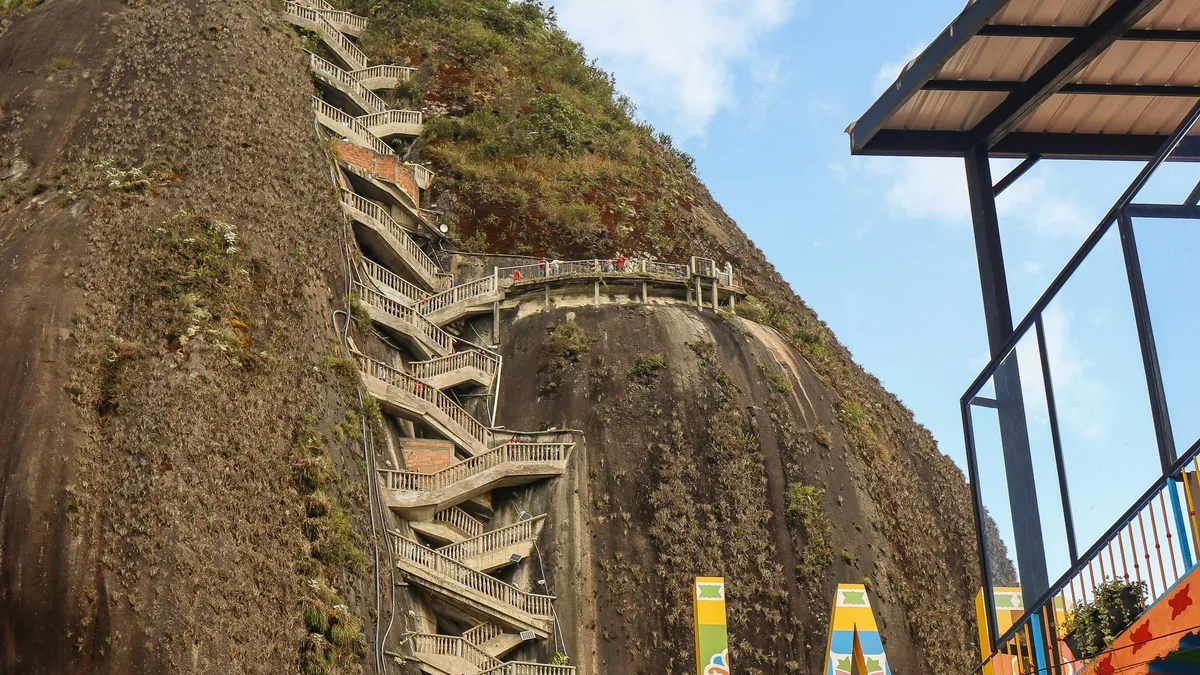
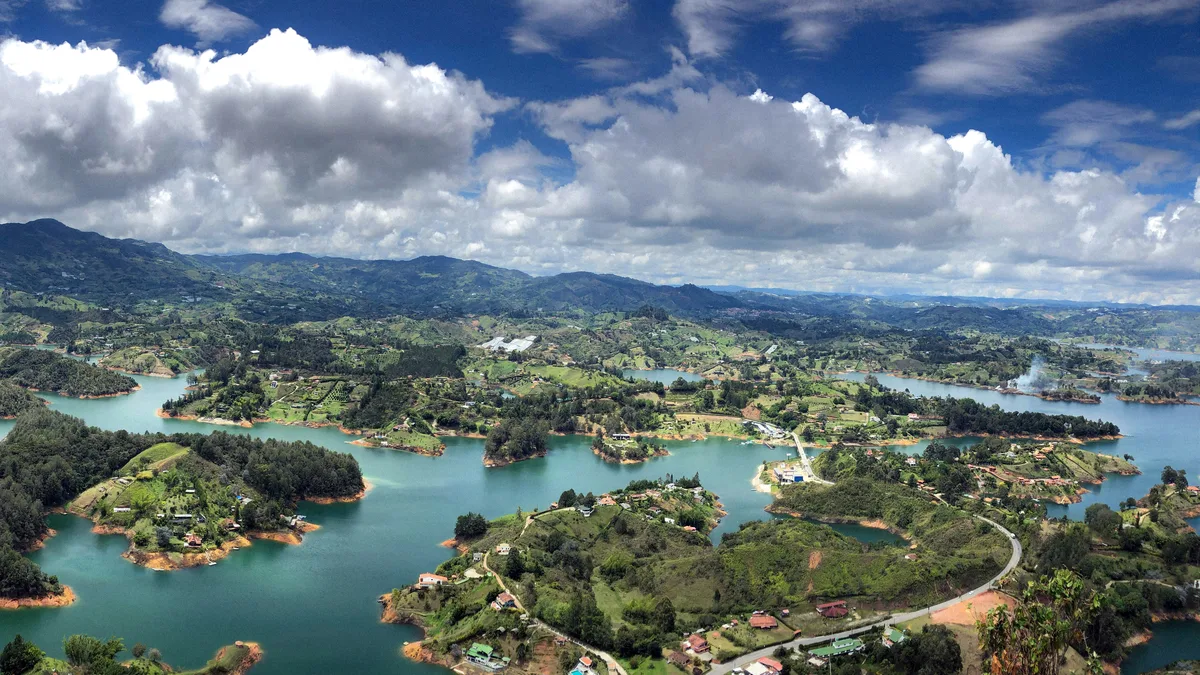
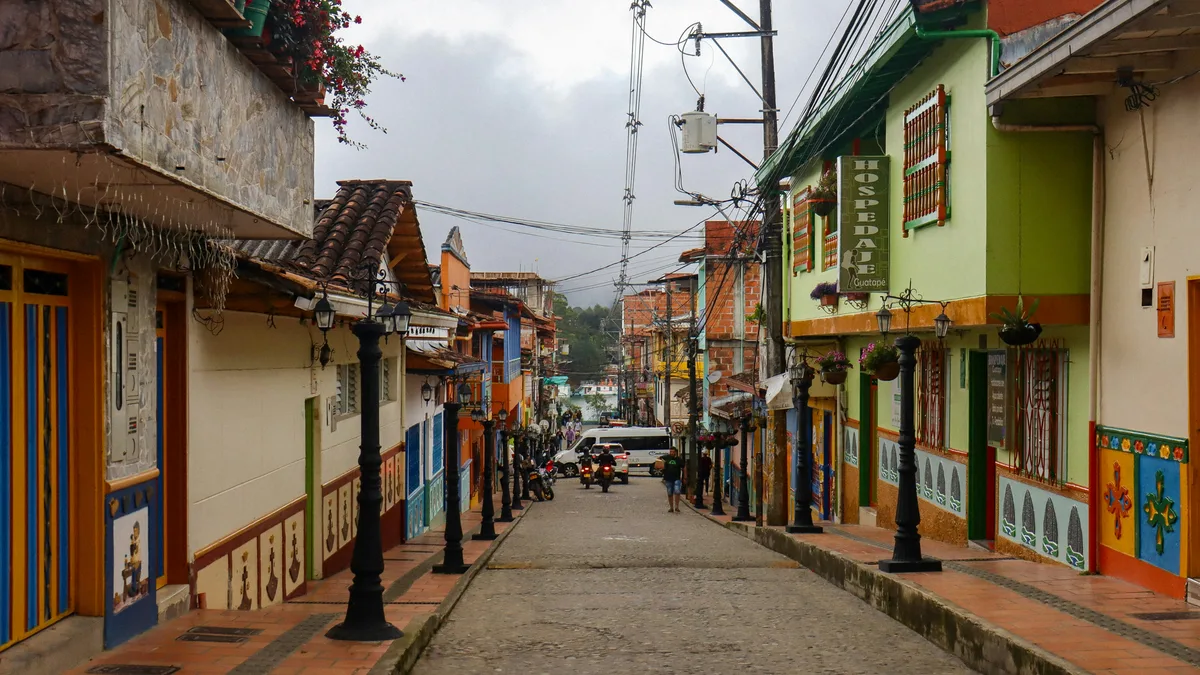
Piedra del Penol is a massive granite monolith rising from the Antioquia countryside, climbed via a 740-step staircase built into the rock for panoramic views over the region's flooded, island-dotted reservoir. Nearby Guatape town is known for its colorful streets and traditional painted zocalos, decorative friezes at the base of colonial-style buildings.
 Private Tours Popular Pick
A private full-day trip from Medellin to Guatape, including climbing Piedra del Penol's 740-step staircase, a boat ride across the reservoir, and Guatape's colorful zocalo-decorated streets, with breakfast and lunch included.
 Private Tours
A private day trip combining Guatape's Rock of El Penol and colorful zocalo-lined streets with a visit to a working coffee farm, where you'll learn the traditions behind the region's flooded history and its coffee.
 Private Tours
A private day trip covering Guatape and Piedra del Penol along with El Retiro, a real Antioquian town known for its architecture, and the Tekendamita Waterfall, with time along the way for a snack of local empanadas and cheese bread.
Visitor guide
Guatape and El Penol Rock are a pair of destinations in Antioquia, Colombia, about 79 kilometres from Medellin. Guatape is a lakeside town known for its brightly coloured relief panels, and the Peñón de Guatape, or La Piedra, is a granite monolith that visitors climb by stairway.
El Penon de Guatape is an inselberg, a granite remnant that has resisted erosion, probably because it is less fractured than the surrounding rock. It is an outcrop of the Antioquia Batholith, with geologists estimating its age at roughly 65 to 70 million years, and it rises up to about 200 metres above its base. Wikipedia gives its summit elevation as about 2,135 metres above sea level.
The Indigenous Tahami, who lived in the region, worshipped the rock and called it mojarra, meaning rock or stone. It was first officially climbed on 16 July 1954, when Luis Eduardo Villegas Lopez, Pedro Nel Ramirez and Ramon Diaz reached the top in a five-day effort using sticks fixed against the wall. Villegas later built stairs in a crack in the rock. The Colombian government declared the rock a national monument in the 1940s, according to Wikipedia.
A staircase built into a crack in the rock leads to the summit. Wikipedia gives 708 steps, though another passage mentions 740, so the exact count varies. About halfway up is a shrine to the Virgin Mary. The summit has a three-storey viewpoint tower and a seating area, overlooking the surrounding reservoir landscape. On the western face are the painted letters G and I, part of the unfinished lettering from a dispute between Guatape and the neighbouring town of El Penol over who owns the rock.
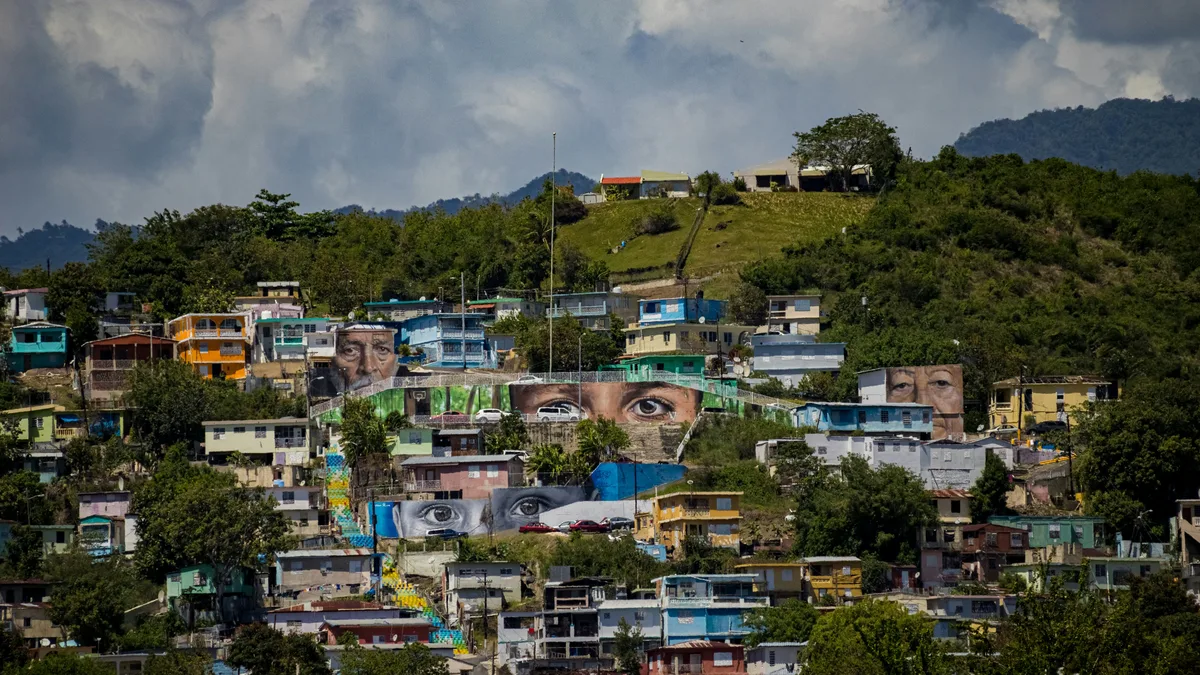
Guatape was founded on 4 October 1811, and its name is said to derive from a cacique called Guatape. The town sits at about 1,890 metres. Its most recognisable feature is the zocalos, coloured relief panels along the lower walls of buildings, often depicting the products sold inside, local beliefs or farming heritage. Calle del Recuerdo, also called Memory Lane, and the Church of Nuestra Senora del Carmen are among the town's sights.
The surrounding lake exists because Empresas Publicas de Medellin built a large hydroelectric complex here in the 1970s. The reservoir flooded the valley and the old town of El Penol, displacing thousands of residents. The town was rebuilt a few miles west of its former location. The lake now shapes the scenery around the rock, and the reservoir shoreline is visible from the summit viewpoint. The hydroelectric complex also made the area an important electricity-producing centre for the country, as Wikipedia notes.
A private day trip from Medellin allows time for the climb, the town and the lakeside, and a driver handles the road through eastern Antioquia.
See every tour and attraction we cover in Medellin.