TorontoOntario · 36 tours
 Niagara FallsOntario · 25 tours
 New York CityNew York · 30 tours
 Las VegasNevada · 8 tours
 San FranciscoCalifornia · 16 tours
 VancouverBritish Columbia · 17 tours
 DubaiUAE · 54 tours
 Abu DhabiUAE · 5 tours
 Buenos AiresArgentina · 23 tours
 AthensGreece · 31 tours
 AucklandNew Zealand · 38 tours
 CancunMexico · 54 tours
No destinations match “”. Try searching all tours instead — that search understands full questions, not just place names.
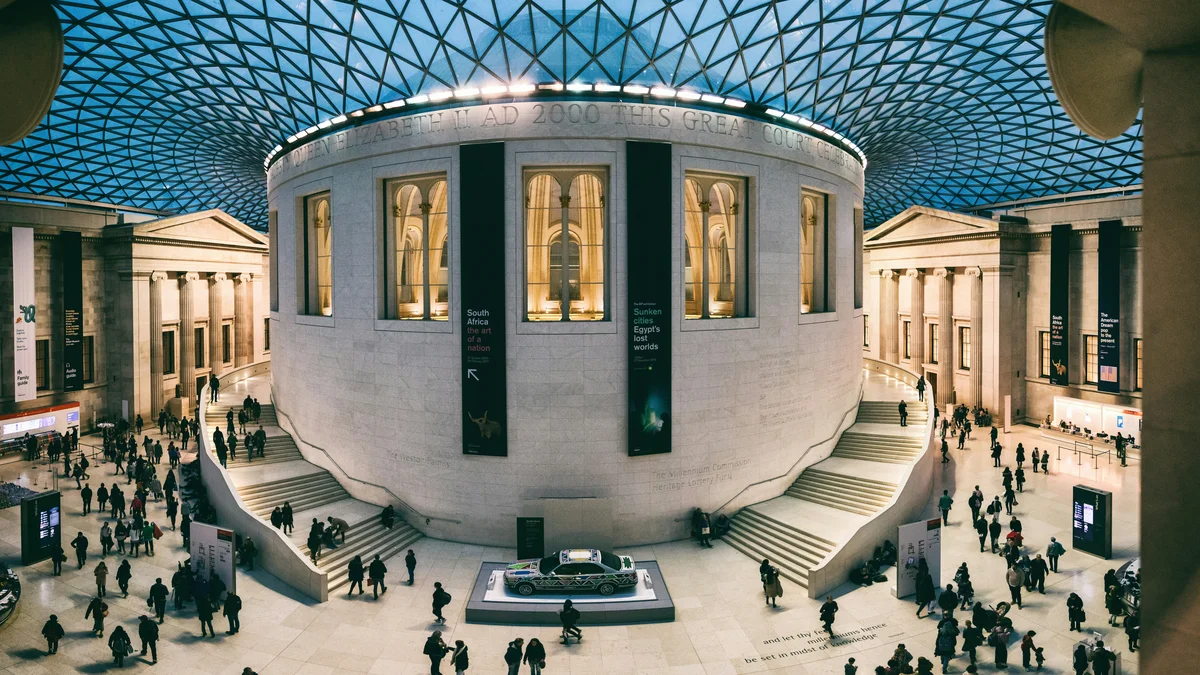
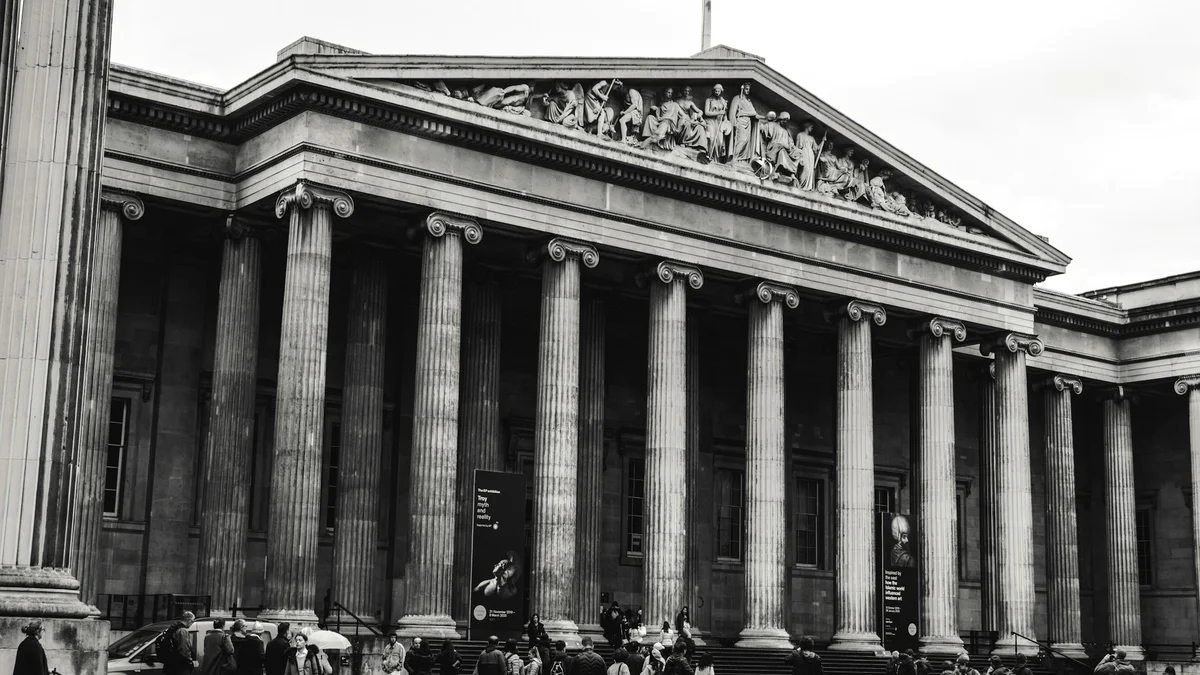
Home to a collection spanning two million years of human history, the British Museum houses treasures including the Rosetta Stone and the Parthenon Sculptures, alongside artifacts from ancient Egypt, Mesopotamia, and beyond. At its center, the Great Court, redeveloped in 2000, is Europe's largest covered public square, its glass-and-steel roof enclosing the museum's original domed Reading Room.
Visitor guide
The British Museum is a public museum of human history, art and culture in the Bloomsbury area of London. Established in 1753, it houses a permanent collection of around eight million objects.
The museum was founded mainly on the collection of the physician and naturalist Sir Hans Sloane, who left roughly 71,000 objects to the nation in return for a payment to his heirs. The founding act of 1753 added the Cotton and Harley libraries, and the Old Royal Library followed in 1757. The museum first occupied Montagu House and opened its galleries and reading room to the public on 15 January 1759.
Sir Robert Smirke designed the present neoclassical building, whose Greek Revival facade has 43 Ionic columns. The East Wing was completed by 1831 and Montagu House was demolished in 1842. Sydney Smirke's Round Reading Room opened in 1857. Collections of books were separated into the British Library under the British Library Act 1972.
The Queen Elizabeth II Great Court, designed by Foster and Partners with the engineers Buro Happold, opened in December 2000. Its glass roof covers the courtyard around the original Reading Room and is described by Wikipedia as the largest covered square in Europe. The Enlightenment Gallery now occupies the former King's Library.
The Egyptian collection exceeds 100,000 objects and includes the Rosetta Stone, presented by George III in 1802 and key to deciphering hieroglyphs, a colossal granite statue of Amenhotep III and the Tomb of Nebamun fresco. The museum also holds the Mesopotamian treasures from Ur, Assyrian reliefs from Nimrud and Nineveh, the Sutton Hoo grave goods found in 1939 and the Mildenhall Treasure of 1946. Wikipedia notes that less than one percent of the total, about 50,000 items, is on display at any time.
The Parthenon sculptures, removed from Athens by Thomas Bruce, 7th Earl of Elgin, from 1806, were acquired under the British Museum Act 1816. They are shown in the Duveen Gallery, which reopened in 1962 after bomb damage in 1940. Ownership of some of the museum's best-known objects, including these sculptures and the Rosetta Stone, is the subject of long-running disputes and repatriation claims.
The museum is a non-departmental public body sponsored by the Department for Culture, Media and Sport and is run by a board of 25 trustees. Beyond the main building it uses stores at Blythe House and elsewhere, and the World Conservation and Exhibition Centre opened in 2013 according to the museum's own history page, ahead of the 2014 Viking exhibition. Its online database held nearly 4.5 million object entries at the start of 2023, which lets visitors explore the collection before or after a visit.
The museum received about 6.4 million visitors in 2025 according to Wikipedia, and its 1972 Tutankhamun exhibition drew over 1.69 million visitors. The collection is vast, so most visitors choose a few themes. A private guided tour with a knowledgeable guide can focus on highlights such as ancient Egypt, Greece and Assyria, with a driver handling the rest of a London day.
See every tour and attraction we cover in London.