TorontoOntario · 36 tours
 Niagara FallsOntario · 25 tours
 New York CityNew York · 30 tours
 Las VegasNevada · 8 tours
 San FranciscoCalifornia · 16 tours
 VancouverBritish Columbia · 17 tours
 DubaiUAE · 54 tours
 Abu DhabiUAE · 5 tours
 Buenos AiresArgentina · 23 tours
 AthensGreece · 31 tours
 AucklandNew Zealand · 38 tours
 CancunMexico · 54 tours
No destinations match “”. Try searching all tours instead — that search understands full questions, not just place names.
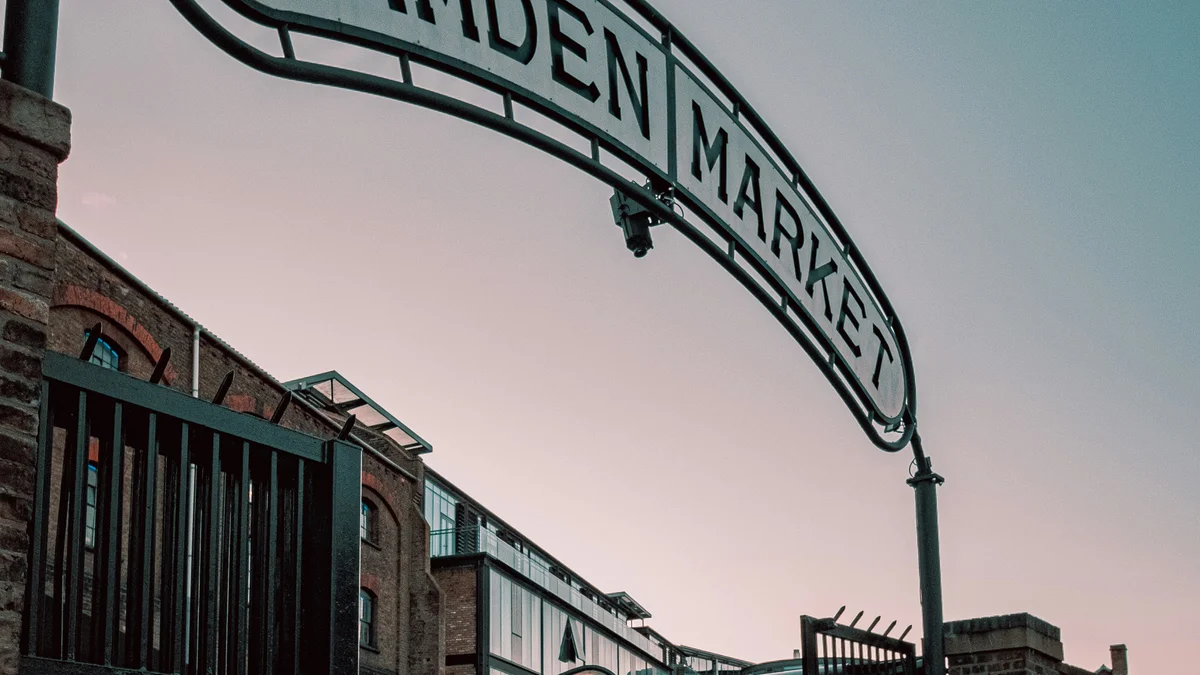
Sprawling across several interconnected market halls along the Regent's Canal, Camden Market grew out of a single crafts market in the late 1970s into one of London's largest and most eclectic shopping destinations. Its stalls and independent shops range from street food and vintage fashion to alternative and punk-era clothing, and the market's industrial-era buildings, including the old Stables Market, still carry the neighborhood's countercultural reputation.
Visitor guide
Camden Market is a group of adjoining markets in Camden Town, north London, set in former stables and canal-side buildings by the Regent's Canal near Camden Lock. Wikipedia describes the markets as selling crafts, clothing, books, bric-a-brac and street food, with a cosmopolitan and alternative image.
A small foodstuffs market has operated on Inverness Street since the early twentieth century. The larger complex grew from a small weekly crafts market near Camden Lock that began on 30 March 1974. The canal trade had ended by the early 1970s, and a planned northern urban motorway that would have cut through the site had blocked permanent redevelopment, so a temporary market was set up. The motorway plans were abandoned by 1976, and by then the market was a well-known local fixture.
The markets are now several adjoining areas. Camden Lock Market has an indoor hall designed by John Dickinson, which opened in 1991 in a three-storey brick and cast-iron industrial style. The Stables Market occupies Grade II listed buildings that were a horse hospital serving the horses that pulled Pickfords' distribution vans and canal barges. Many stalls are set in railway viaduct arches, chain stores are not permitted, and the market is a centre for furniture and for alternative clothing such as goth styles.
The Canal Market, later Camden Lock Village, was redeveloped from 2015 as Hawley Wharf, a development with a four-storey covered structure with around 60 food outlets, 150 shops, offices and homes, which began opening in 2021. Other areas include Buck Street Market and the Electric Ballroom, a nightclub since the 1950s whose weekend market closed in 2015.
Wikipedia states the markets cover about 6.5 hectares with more than 1,000 stalls, bars, shops and cafes, and it describes them as drawing about 250,000 visitors each week. In recent years the area has seen major investment and changes in ownership, and the markets were offered for sale in 2022. The site also hosts its own online radio station, CDNX.
The market's setting reflects its industrial past. Camden Lock was part of the canal trade that once carried goods through north London, and the stable buildings housed the horses that worked the canal towpath and the railway yards. Many of the brick and cast-iron structures were adapted rather than demolished, which is why the markets feel layered, with Victorian architecture, railway arches and modern food halls side by side.
Camden Market is known for its mix of street food from many cuisines, vintage fashion and independent traders, set along the towpath of the Regent's Canal. The canal lock, the old Pickfords stable buildings and the surrounding Victorian streets give the area its character. A private guided tour with a driver can combine Camden with nearby Primrose Hill and Regent's Park, saving time on a day in north London.
See every tour and attraction we cover in London.