TorontoOntario · 36 tours
 Niagara FallsOntario · 25 tours
 New York CityNew York · 30 tours
 Las VegasNevada · 8 tours
 San FranciscoCalifornia · 16 tours
 VancouverBritish Columbia · 17 tours
 DubaiUAE · 54 tours
 Abu DhabiUAE · 5 tours
 Buenos AiresArgentina · 23 tours
 AthensGreece · 31 tours
 AucklandNew Zealand · 38 tours
 CancunMexico · 54 tours
No destinations match “”. Try searching all tours instead — that search understands full questions, not just place names.
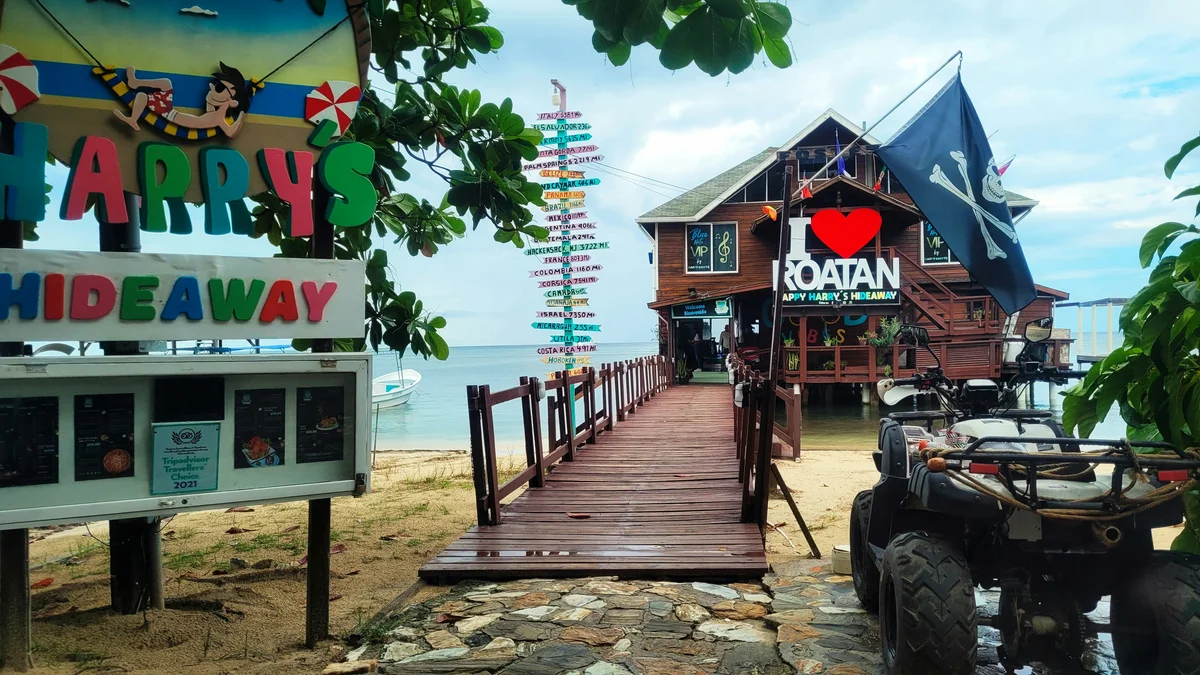
Roatán's laid-back beach town, strung along a single road behind Half Moon Bay's white sand, lined with dive shops, bars, and seafood restaurants. It's the island's main hub for independent travelers rather than cruise-day-trippers, and a common stop on island tours for its chocolate factory, craft market, and waterfront nightlife.
 Private Tours
A private tour of the Roatán Chocolate Factory in West End, including a hands-on class where you make your own chocolate bar to take home, plus a tour of how Honduran cacao becomes chocolate. Port transfers are included.
 Private Tours
A private guide pedals you between West End's own bars — Sundowners, Blue Marlin, Booty Bar, Seawiches, Eddy's on the Beach, and Happy Harry's Hideaway — on a multi-passenger pedibike, with private roundtrip land transport from the cruise port, airport, or your hotel included.
Visitor guide
West End is a small seaside village on the west coast of Roatán, the largest of the Bay Islands of Honduras. Strung along a single road beside the water, it is known as the island's tourism, social and diving hub, with dive shops, restaurants and small hotels facing the Caribbean.
Roatán is a coral island about 59 kilometres long and less than 8 kilometres wide, roughly 65 kilometres off Honduras's northern coast. According to Wikipedia, most of the island's infrastructure lies in its western half. West of the main town of Coxen Hole are the settlements of Sandy Bay, West End and West Bay on the north coast. West End and West Bay are different places even though their names are similar: West End is the paved road lined with shops and small hotels, while West Bay is the beach area just beyond it.
Wikipedia also describes West End as the island's tourism, social and diving hub, and notes that a modern sewer and drainage system was built there to serve the village. It adds that sanitation in the past relied on outhouses at the ends of short boardwalks over the water, a sign of how quickly the village has changed from a small waterside settlement to a tourist centre.
The reason for the village's role in diving is its position on the Mesoamerican Barrier Reef System, which Wikipedia calls the second-largest barrier reef in the world. Roatán sits on the system's southern edge, and the island's steep drop toward the Cayman Trench brings nutrient-rich water that supports reefs and wall-diving sites along the north shore. The Sandy Bay-West End Marine Reserve, near the village, was the first focus of the Roatán Marine Park, a community organisation formed in January 2005 by dive operators and local businesses to patrol the reserve and discourage unsustainable fishing. Tourism sources mention Half Moon Bay and nearby sites for diving and snorkelling, although sources differ on details such as wall depths, so local operators are the best source for conditions.
Roatán has an English-speaking heritage that sets the Bay Islands apart from mainland Honduras. Wikipedia says the main permanent population descends largely from settlers who arrived from the Cayman Islands in the 1830s and 1840s, and that residents speak Bay Island English. Visitors to West End will hear this alongside Spanish and the many languages of expatriates who work in the diving and hospitality trades.
The village is compact and laid out along its main waterfront road, so it is easy to explore by wandering between cafes, shops and the shoreline. Because it sits close to West Bay Beach, Gumbalimba Park and other west-end stops, it fits naturally into a day trip around the island. A private tour with a driver allows these stops to be linked without handling separate transport, and a guide can add context on the island's history and reef.
See every tour and attraction we cover in Roatan.