TorontoOntario · 36 tours
 Niagara FallsOntario · 25 tours
 New York CityNew York · 30 tours
 Las VegasNevada · 8 tours
 San FranciscoCalifornia · 16 tours
 VancouverBritish Columbia · 17 tours
 DubaiUAE · 54 tours
 Abu DhabiUAE · 5 tours
 Buenos AiresArgentina · 23 tours
 AthensGreece · 31 tours
 AucklandNew Zealand · 38 tours
 CancunMexico · 54 tours
No destinations match “”. Try searching all tours instead — that search understands full questions, not just place names.
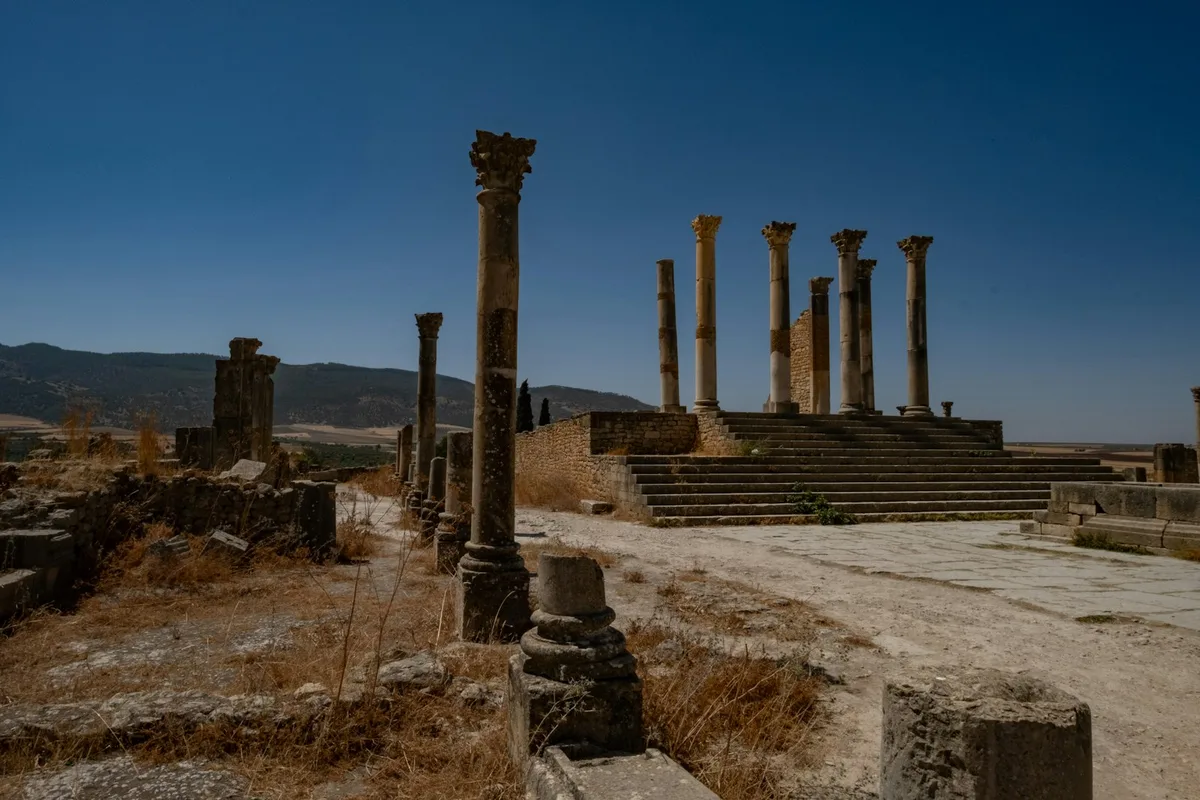
A UNESCO World Heritage Roman archaeological site near Meknes, with well-preserved mosaic floors, a triumphal arch, and the ruins of a city that thrived as a Roman provincial capital until the 3rd century AD.
 Multi-Day Tours
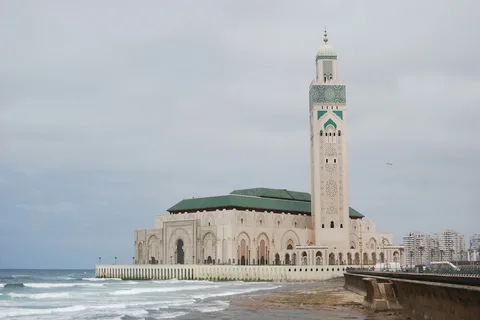
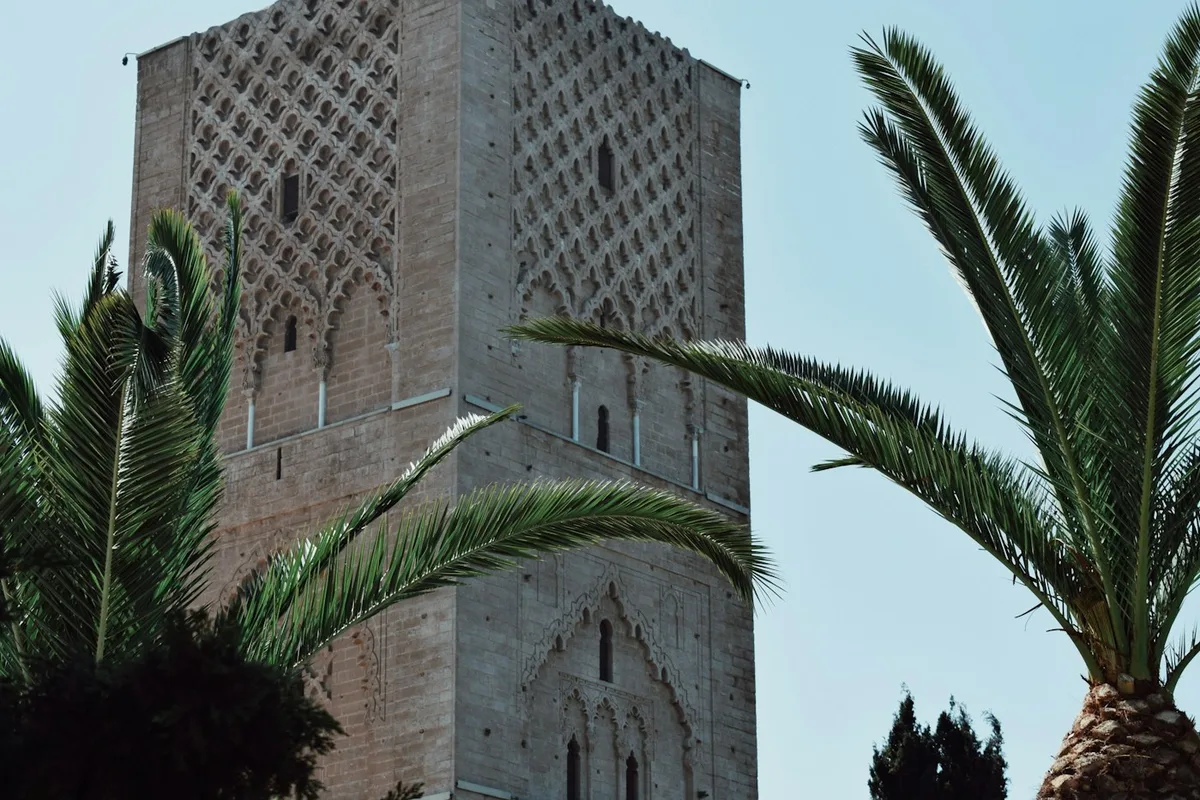
An 8-day circuit of Morocco's four imperial cities — Marrakech, Rabat, Fes and Meknes — plus the Roman ruins of Volubilis and the Hassan II Mosque in Casablanca.
 Multi-Day Tours
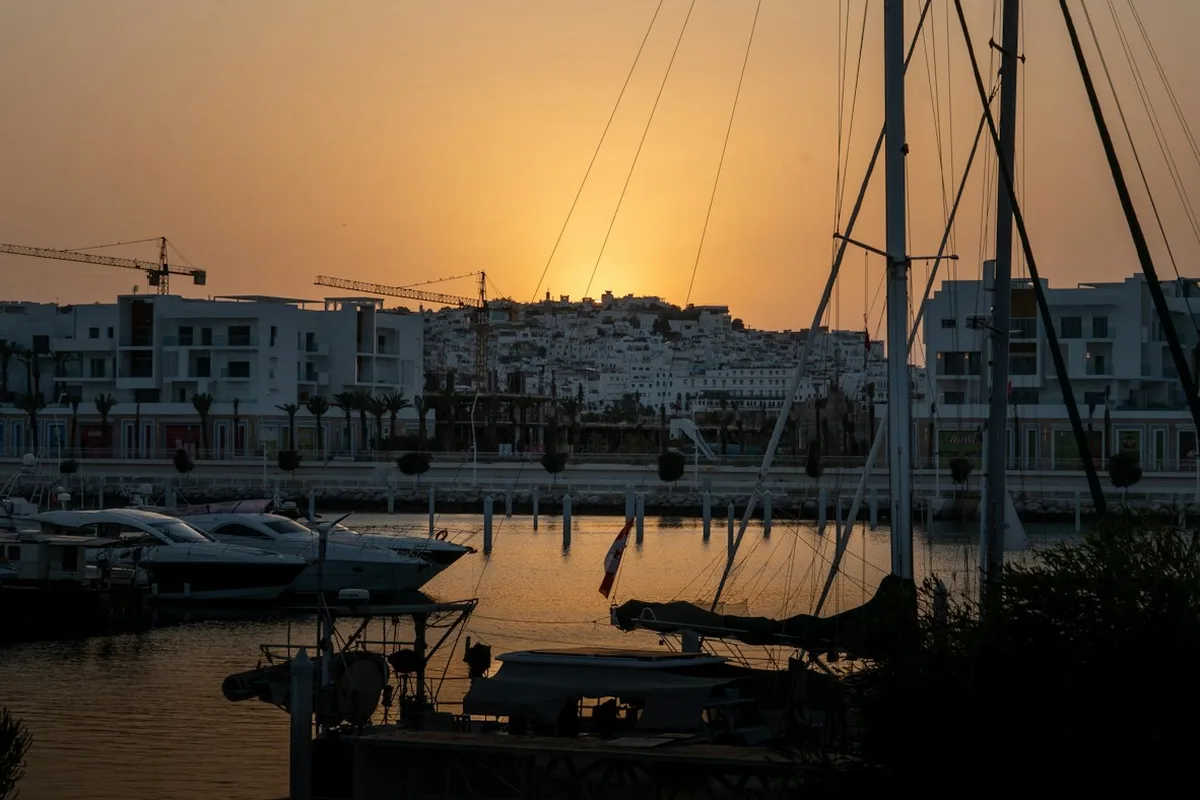
Adapted from a guided rail itinerary, where travelers cover Casablanca, Tangier, Meknes, Fes, Rabat and Marrakech by intercity train with a guide alongside them — Voyzo runs this same route with your own private driver and vehicle instead of the train legs.
Visitor guide
Volubilis is a partly excavated Berber-Roman city in Morocco, near the city of Meknes, and a UNESCO World Heritage Site. It may have served as the capital of the Kingdom of Mauretania, at least from the time of King Juba II, and under Roman rule it grew into a prosperous provincial town known for its olive oil and fine town houses. UNESCO describes it as an exceptionally well preserved example of a large Roman colonial town on the fringes of the empire.
According to Wikipedia, the area around Volubilis has been inhabited for roughly 5,000 years, and the Carthaginians were present by the third century BC, as shown by the remains of a temple to the god Baal. After Mauretania became a Roman client state, Augustus placed Juba II on its throne in 25 BC, and the Romanised king turned his attention to building a second capital at Volubilis. After the emperor Claudius annexed Mauretania in 44 AD the city grew substantially, thanks to exports of grain, olive oil and wild animals for gladiatorial shows. At its peak in the late second century it had about 20,000 inhabitants, a very large population for a Roman provincial town, and over 50 villas have been found in the surrounding region.
The city's position was always tenuous because it lay on the south-western edge of the empire. Wikipedia says it fell to local tribes around 285 and was never retaken by Rome, but it continued to be inhabited for at least 700 more years, first as a Latinised Christian community and then as an early Islamic settlement. In the late eighth century it became the seat of Idris ibn Abdallah, founder of the Idrisid dynasty, and by the 11th century it had been abandoned as power shifted to Fes. Much of the local population moved to the nearby town of Moulay Idriss Zerhoun.
Only about half of the city has been excavated, but several prominent public buildings are still visible. At the centre stand the basilica, completed in the early third century and described by Wikipedia as one of the finest Roman basilicas in Africa, and the Capitoline Temple, dedicated to Jupiter, Juno and Minerva and reached by a flight of steps. The Arch of Caracalla, built in 217 at the end of the main street, honours the emperor Caracalla and his mother Julia Domna. It was reconstructed by the French between 1930 and 1934, though Wikipedia notes the restoration is incomplete and its accuracy disputed. The city also had at least three sets of public baths.
Volubilis is especially known for the mosaic floors found in the houses of its elite, many of them still in place where they were laid. The House of Orpheus takes its name from a large mosaic showing Orpheus playing the harp to an audience of animals, and elsewhere in the same house are mosaics of Amphitrite in a sea-horse chariot and of a dolphin. The House of the Athlete contains a humorous mosaic of an acrobat riding a donkey backwards, and the House of the Ephebe and the House of the Knight both feature scenes of the god Bacchus. Buildings were mostly made from local grey-blue limestone.
The ruins remained largely intact until an earthquake in 1755, after which they were looted by Moroccan rulers seeking stone for building Meknes. The site was definitively identified in the late 19th century, and much of the excavation took place under French rule between 1912 and 1955. Locals have long called it Qasr Fara'on, the Pharaoh's Palace. Volubilis is often visited together with Meknes and the hilltop town of Moulay Idriss, and a private guided visit with a driver can help travellers interpret the ruins, which are open-air and have limited signage.
See every tour and attraction we cover in Morocco.