TorontoOntario · 36 tours
 Niagara FallsOntario · 25 tours
 New York CityNew York · 30 tours
 Las VegasNevada · 8 tours
 San FranciscoCalifornia · 16 tours
 VancouverBritish Columbia · 17 tours
 DubaiUAE · 54 tours
 Abu DhabiUAE · 5 tours
 Buenos AiresArgentina · 23 tours
 AthensGreece · 31 tours
 AucklandNew Zealand · 38 tours
 CancunMexico · 54 tours
No destinations match “”. Try searching all tours instead — that search understands full questions, not just place names.
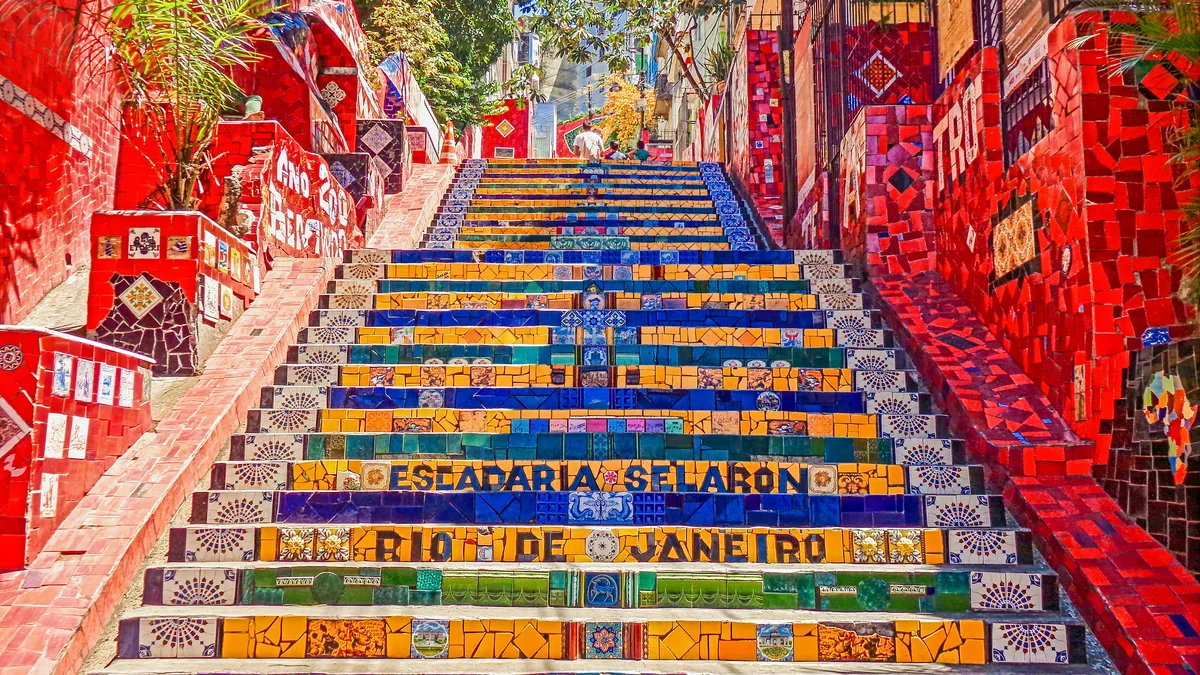
Chilean-born artist Jorge Selarón began tiling this staircase between Lapa and Santa Teresa in 1990 as a tribute to the Brazilian people, covering it with over 2,000 colorful tiles collected from more than 60 countries. Selarón worked on the steps until his death in 2013, and they remain one of Rio's most photographed landmarks.
 Private Tours
A fully customizable full-day private tour visiting the landmarks you choose most, from Christ the Redeemer to Sugarloaf Mountain and the city's famous beaches.
 Private Tours
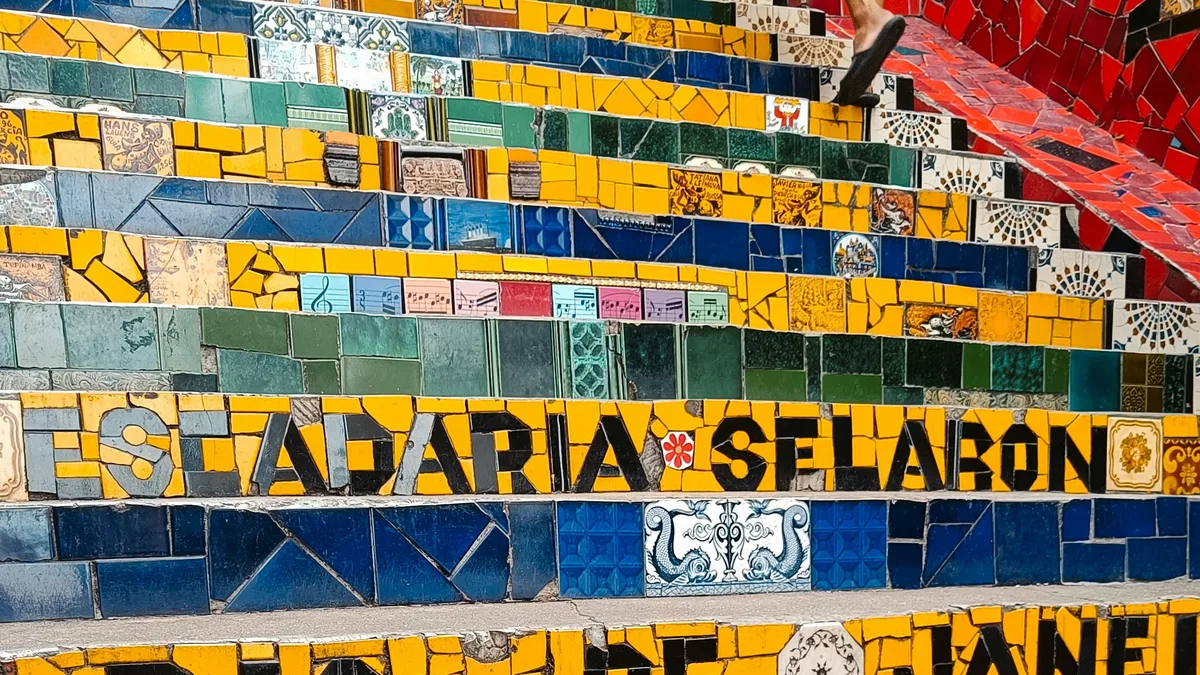
A private walking tour connecting bohemian Santa Teresa and lively Lapa, including a ride on one of the world's oldest tramways and a stop at the colorful Selarón Steps.
 Private Tours
Visit Christ the Redeemer, Maracanã Stadium, Sugarloaf Mountain, the historic Old Downtown, and the Selarón Steps in one private, fully guided day.
Visitor guide
The Selarón Steps, or Escadaria Selarón, are a famous tiled staircase in Rio de Janeiro, Brazil, created by the Chilean-born artist Jorge Selarón. The steps run between the neighbourhoods of Lapa and Santa Teresa and are covered in colourful tiles from around the world.
Wikipedia describes Selarón as a Chilean-born painter and sculptor, born in 1947, who lived and worked in more than 50 countries before settling in Rio de Janeiro in 1983. In 1990 he began renovating dilapidated steps in front of his house, calling the work his tribute to the Brazilian people. He largely funded it by selling paintings.
The staircase has 215 steps and is described as 125 metres long. It is covered with more than 2,000 tiles from over 60 countries. Early tiles were scavenged from construction sites and urban waste, and later most were donated by visitors. About 300 tiles were hand-painted by Selarón, showing a pregnant African woman.
Selarón chose blue, green and yellow, the colours of the Brazilian flag, for the initial work, a choice that his neighbours reportedly mocked. The steps run from Joaquim Silva and Pinto Martins streets, officially Manuel Carneiro Street, and the work later extended to steps at the foot of the Arcos da Lapa.
Selarón regarded the project as never complete and said it would end only on the day of his death. He was found dead on the steps on 10 January 2013. Wikipedia notes that he claimed to have sold more than 25,000 portraits since 1977, though this is unverified.
The steps have appeared in music videos including Michael Jackson's They Don't Care About Us, directed by Spike Lee, and U2's Walk On, as well as in Rio's 2016 Olympic bid video and in several editions of the television series The Amazing Race.
The staircase is less a single artwork than a long, evolving collage. Each donated tile carries a connection to a country or a visitor, so the steps work as a kind of record of the people who have passed through Rio, which is how Selarón himself framed the project. The neighbourhoods at either end add context: Lapa is known for its arches and nightlife, while Santa Teresa climbs the hill above, and the steps link the two. Because the work was always evolving, the exact appearance of any section can differ from older photographs and descriptions.
The staircase sits between Lapa, with its arches and nightlife, and the hillside neighbourhood of Santa Teresa, so it is often combined with walks in both areas. A private driver can handle the approach, and a guide can help place the steps within the neighbourhood's history.
See every tour and attraction we cover in Rio de Janeiro.