TorontoOntario · 36 tours
 Niagara FallsOntario · 25 tours
 New York CityNew York · 30 tours
 Las VegasNevada · 8 tours
 San FranciscoCalifornia · 16 tours
 VancouverBritish Columbia · 17 tours
 DubaiUAE · 54 tours
 Abu DhabiUAE · 5 tours
 Buenos AiresArgentina · 23 tours
 AthensGreece · 31 tours
 AucklandNew Zealand · 38 tours
 CancunMexico · 54 tours
No destinations match “”. Try searching all tours instead — that search understands full questions, not just place names.
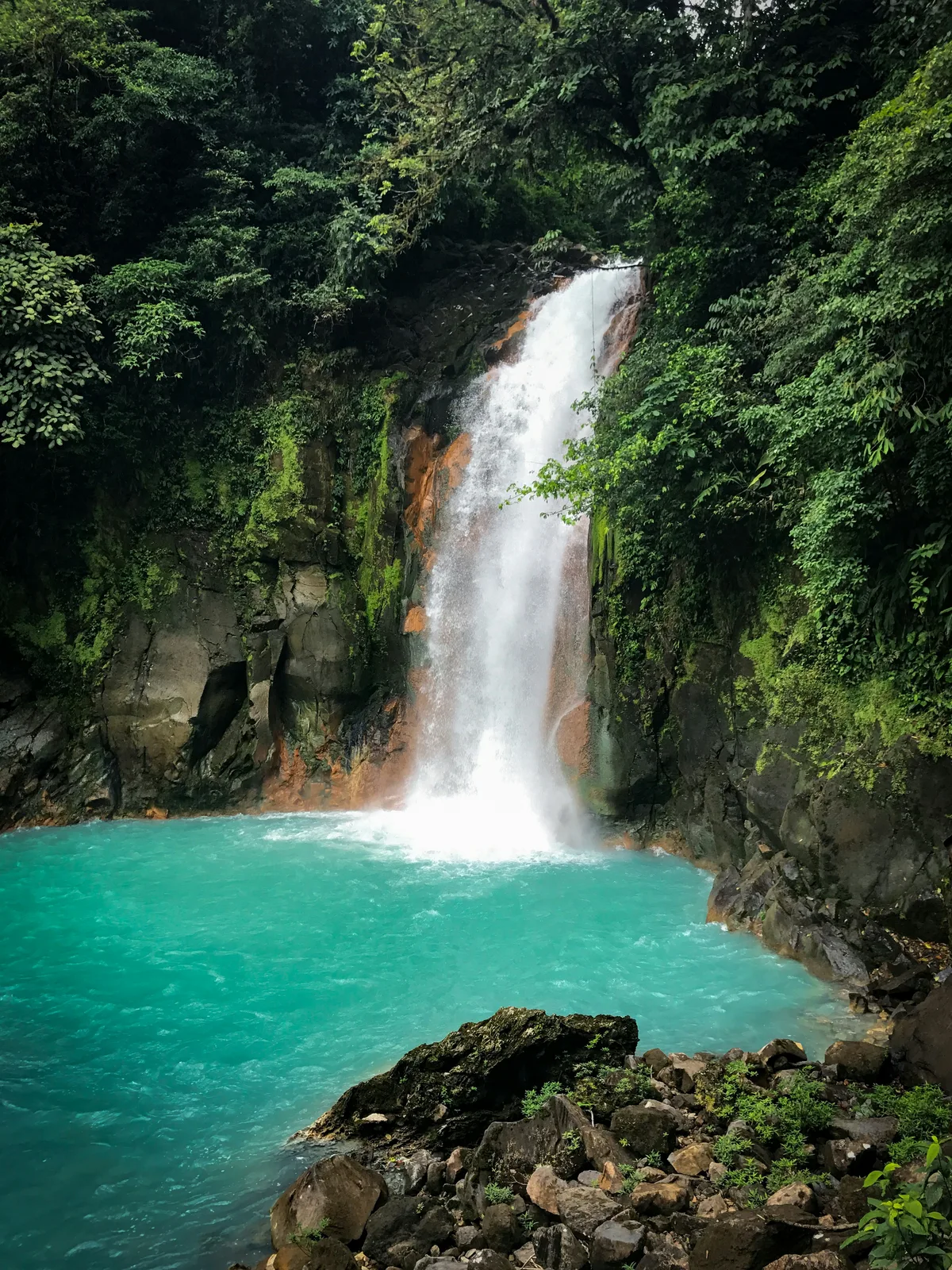
A waterfall and river running a striking turquoise-blue, caused by a mineral reaction where two clear streams meet, reached via a rainforest hiking trail in Tenorio Volcano National Park.
 Multi-Day Tours
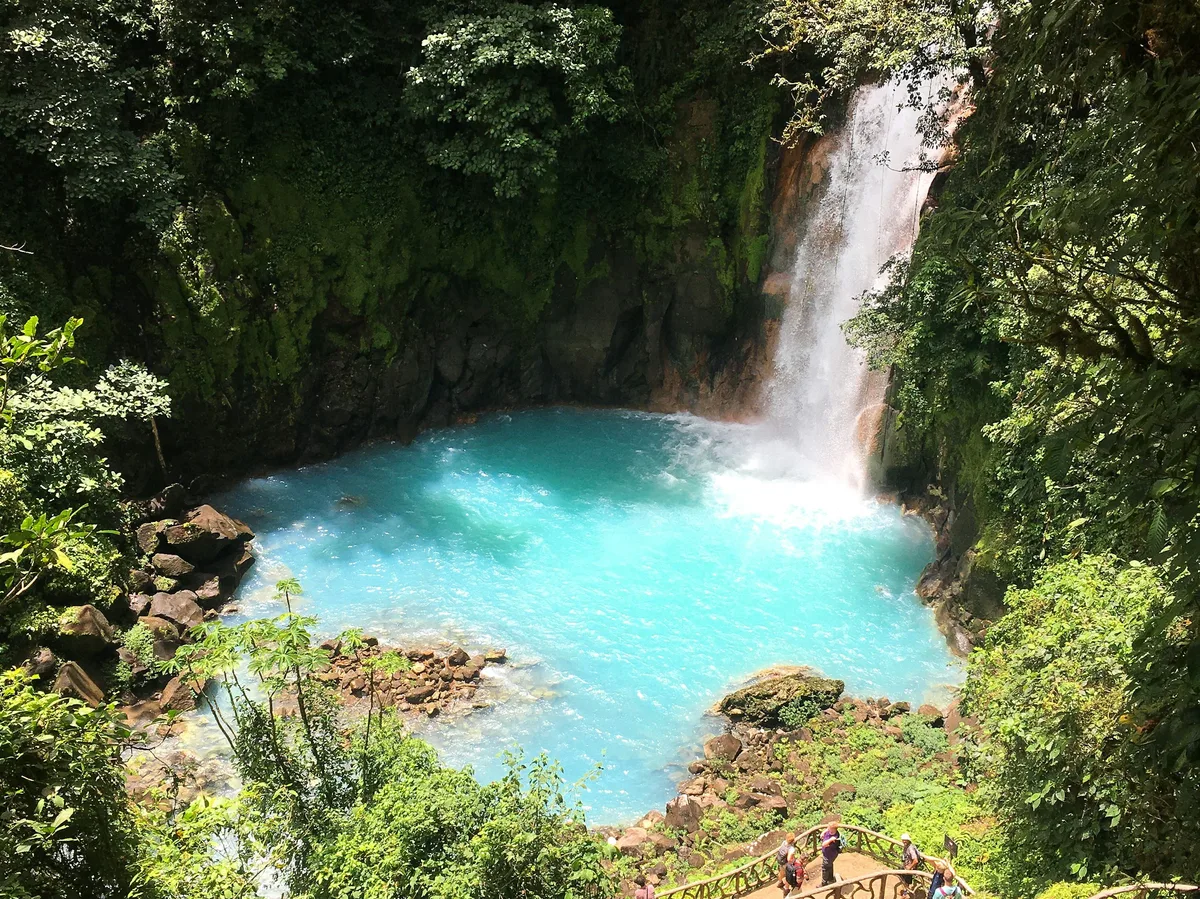
A two-week deep dive into rural Costa Rica — the turquoise Rio Celeste waterfall, cacao and coffee farms, night walks in Boca Tapada, and the quetzal country of Savegre de Aguirre.
 Multi-Day Tours
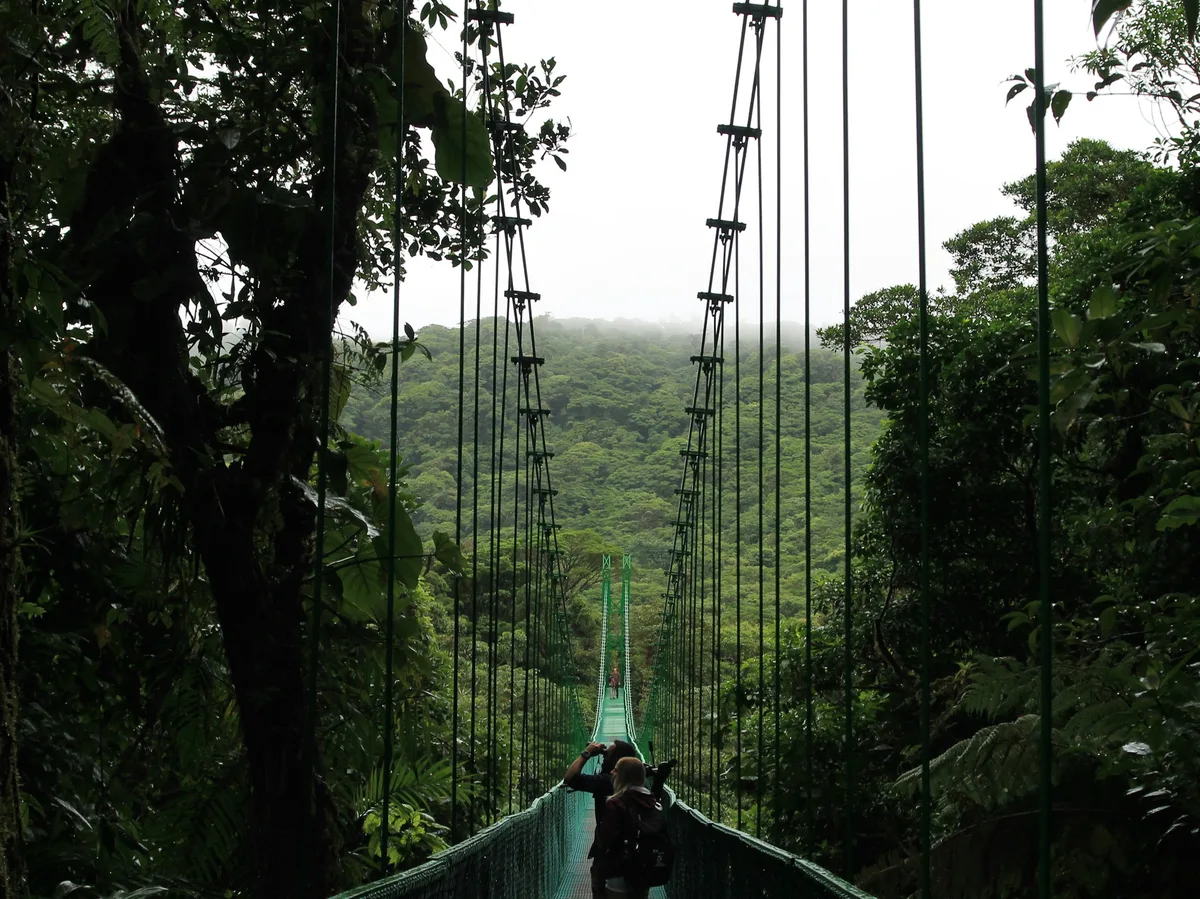
A two-week self-drive-style journey upgraded with boutique stays — Tortuguero's canals, the waterfalls of Bajos del Toro, Arenal's hot springs, Rio Celeste, and the beaches of Playa Panamá.
Visitor guide
Rio Celeste is a river in northern Costa Rica famous for its vivid sky-blue colour, flowing through Tenorio Volcano National Park in the Guanacaste region. The park, created by decree in 1995 (building on earlier forest-reserve protection from 1976), protects cloud forest and rainforest around the Tenorio volcano and is managed by the national conservation system.
The colour of the Rio Celeste is the park's signature feature. According to Wikipedia, the blue comes from a scattering of light, known as Mie scattering, off colloidal aluminosilicate particles suspended in the water. The particles aggregate after the volcanic Rio Buenavista stream mixes with the acidic Quebrada Agria, and the combined water takes on its turquoise hue.
The effect is a result of chemistry rather than a dye or a dissolved mineral colouring the water, which is why the colour can look more or less intense depending on rainfall and the amount of sediment. After heavy rain the river may look muddy and grey rather than blue, so the experience varies by day.
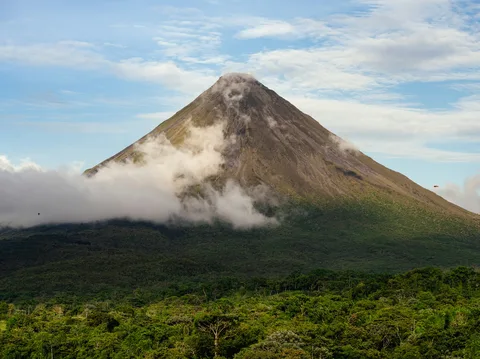
The park covers about 129 square kilometres and lies roughly 42 kilometres northeast of the town of La Fortuna, according to Wikipedia. According to SINAC, the national park was created in 1995 by executive decree, building on earlier protection that included a forest reserve established in 1976. The volcano is described as the jewel of the park, and a trail leads toward the summit through forested terrain.
The park belongs to the Arenal Tempisque Conservation Area and is classified as IUCN Category II. Within its boundaries are rivers, waterfalls, lagoons, viewpoints, and thermal springs and small geysers.
Visitors who come for the river should know it is only one part of a larger protected volcanic landscape. A ranger station at the base of the volcano provides basic visitor information, and the Lago Las Dantas trail is described by Wikipedia as the route to the summit. Conditions, closures and access rules are set by the park authority and should be checked before any visit.
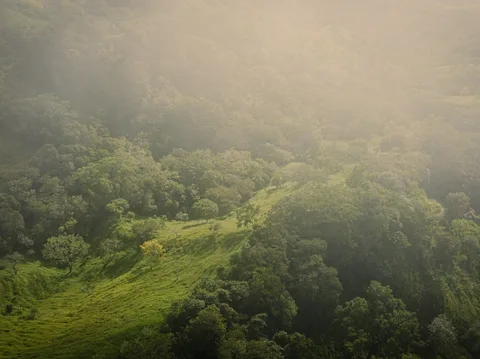
Primary cloud forest covers the upper slopes of the park, while rainforest grows in the lower regions. Tapirs live in the area, and pumas are present but rarely seen. The park borders the Tapir Valley Nature Reserve, a former cattle ranch that was rewilded beginning in 2004.
Wikipedia notes that this reserve contains a wetland of about eight hectares, which is the only known location of the Tapir Valley tree frog, Tlalocohyla celeste. The mix of cloud forest and rainforest gives birdwatchers and nature photographers varied scenery within a short distance.
Because the park spans both cloud forest and lower rainforest, the temperature and humidity change noticeably with elevation. Mist, rain and mud are normal, and the rainy months in particular can keep rivers high and trails soft, which is another reason to rely on a local guide who knows the terrain.
The usual way to see the river is by a hiking trail through the forest to the waterfall and the point where the two streams meet. Trail conditions, lengths and safety rules are set by the park authority and can change, particularly in the rainy season when trails turn muddy and slippery.
A private guided visit suits the river well because a local guide can explain the chemistry behind the colour at the confluence and watch conditions on the day. Good walking shoes and rain protection are sensible, since this is a wet volcanic landscape.
See every tour and attraction we cover in Costa Rica.