TorontoOntario · 36 tours
 Niagara FallsOntario · 25 tours
 New York CityNew York · 30 tours
 Las VegasNevada · 8 tours
 San FranciscoCalifornia · 16 tours
 VancouverBritish Columbia · 17 tours
 DubaiUAE · 54 tours
 Abu DhabiUAE · 5 tours
 Buenos AiresArgentina · 23 tours
 AthensGreece · 31 tours
 AucklandNew Zealand · 38 tours
 CancunMexico · 54 tours
No destinations match “”. Try searching all tours instead — that search understands full questions, not just place names.
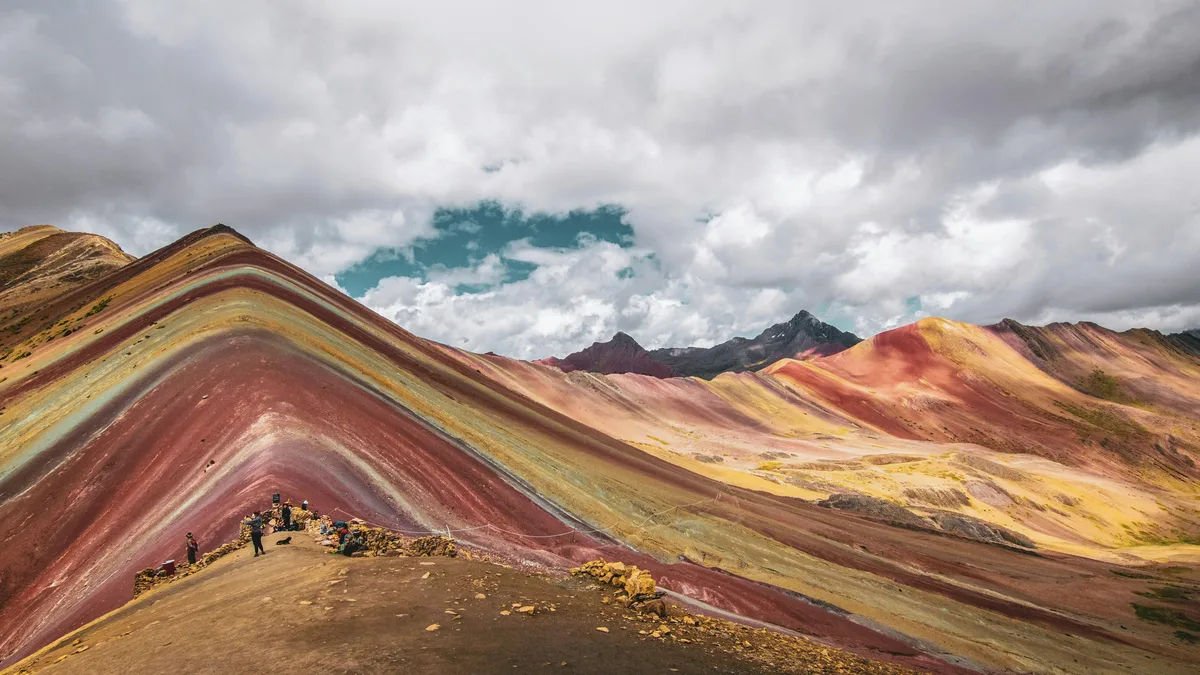
Vinicunca, better known as Rainbow Mountain, is a peak around 17,100 feet (5,200 m) in the Cusco region whose mineral-streaked slopes — reds, golds, and lavenders from iron and other minerals — were only fully exposed within roughly the last decade as surrounding snow and ice retreated. Reaching the viewpoint means a genuine high-altitude hike from the trailhead near Cusipata, so acclimatizing in Cusco for a few days beforehand is strongly recommended.
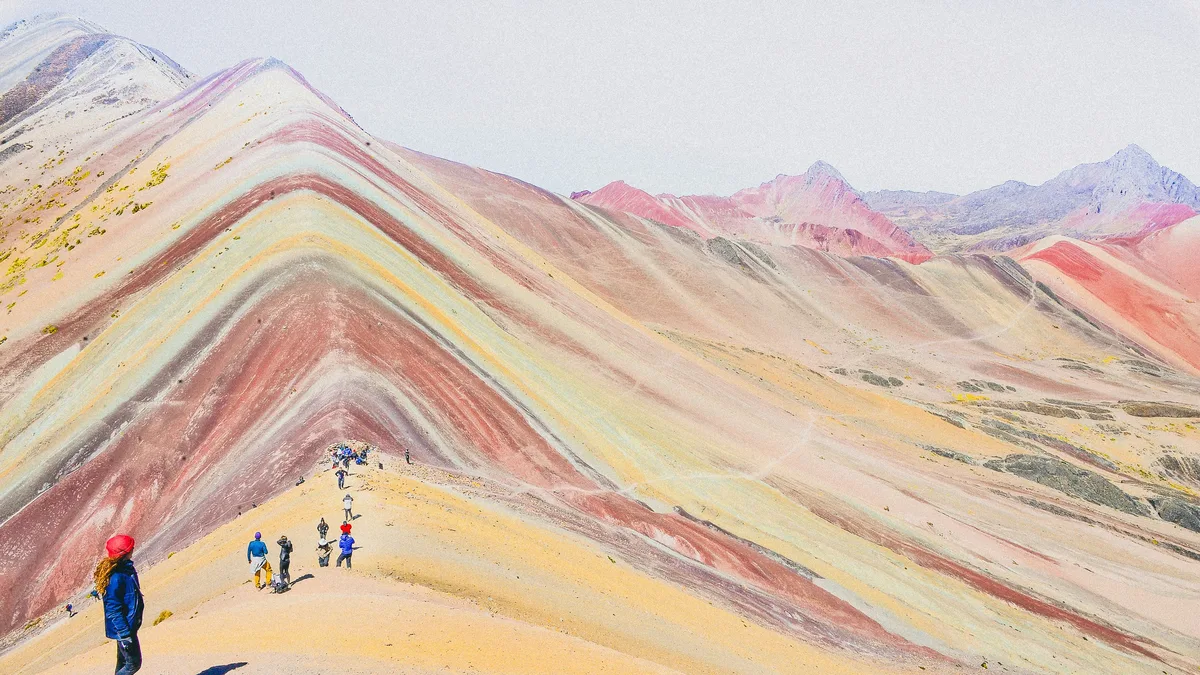 Private Tours Popular Pick
A private full-day hike to Vinicunca (Rainbow Mountain), timed with an 8am departure to reach the summit once the biggest crowds have thinned out.
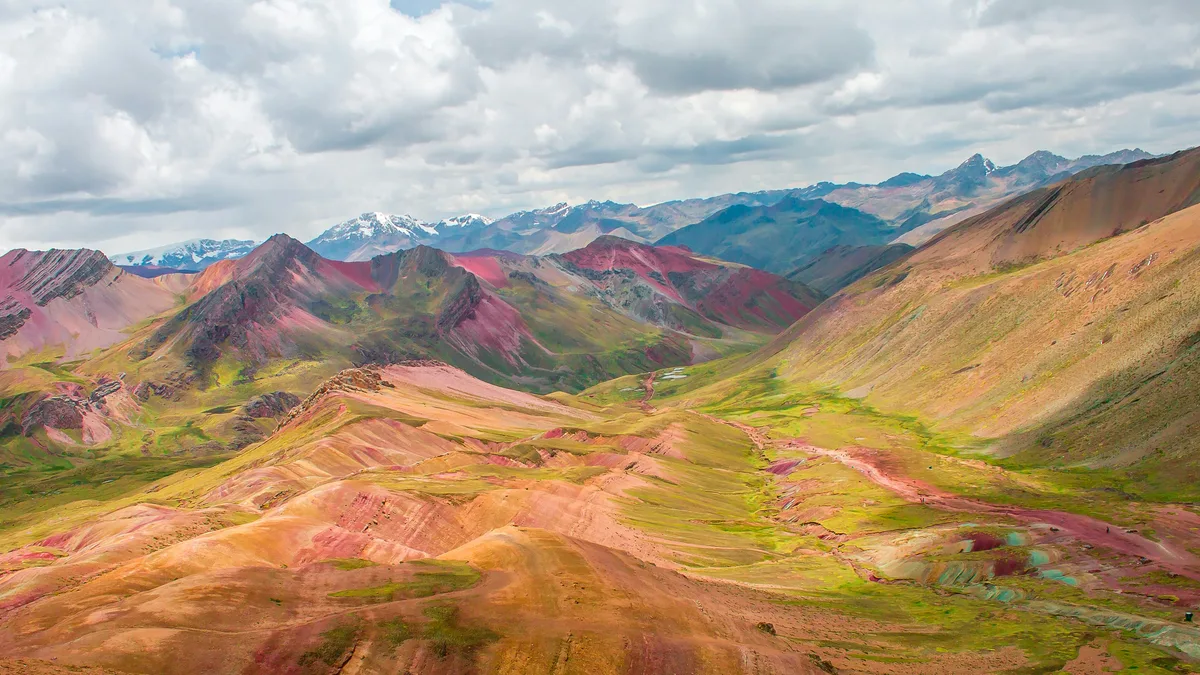 Private Tours
A private full-day hike to Rainbow Mountain that continues to a 360-degree Red Valley viewpoint, passing through remote Quechua-speaking villages.
Visitor guide
Vinicunca, widely known as Rainbow Mountain, is a striped mountain in the Andes of the Cusco Region of Peru, southeast of Cusco on the road toward Ausangate. Its bands of colour, caused by its mineral makeup, have made it a popular high-altitude destination since the mid-2010s.
Wikipedia places Vinicunca between the Cusipata District in Quispicanchi Province and the Pitumarca District in Canchis Province. The mountain is also known as Winikunka, Montana de Siete Colores, Montana de Colores and Montana Arcoiris, and Spanish Wikipedia adds that neighbours call it Cerro Colorado. It can be reached from Cusco by the southern highway toward Checacupe and then to Pitumarca, which takes about two hours, followed by a track through rural communities such as Ocefina, Japura and Hanchipacha to Pampa Chiri. From there a walk of roughly 1.5 kilometres along the Vinicunca pass leads to the mountain, and an alternative route starts from Cusipata via the Chillihuani bridle path. Wikipedia notes that as of 2019 no robust transport system to Vinicunca had been developed.
English Wikipedia gives the summit as 5,036 metres, while a later section states about 5,200 metres, so the figures in the source are inconsistent. Either way the area lies far above Cusco, and the article advises visitors to allow time to acclimatise to avoid altitude sickness. Vinicunca receives significant rainfall in December, January and February. The article says the mountain used to be covered by glacier caps that melted in 2013.
The colours come from the mineral makeup of tilted rock layers, according to the Cusco Cultural Landscape Office cited by Wikipedia. Pink bands are linked to red clay, mud and sand; whitish bands to quartz-rich sandstone and marls high in calcium carbonate; red to iron-bearing claystones and clays of the Upper Tertiary; green to phyllites and iron- and magnesium-rich clays; earthy brown to Quaternary fanglomerate with magnesium; and mustard yellow to calcareous sandstones rich in sulphurous minerals.
Wikipedia records that a mining petition covering about 400 hectares, including the whole mountain, was filed in March 2015 by a Peruvian subsidiary of a Canadian company, and that a metallic mining concession was granted on 16 March 2018. After public protests the company renounced the concession in May 2018. In November 2018 the Peruvian president issued a 12-month moratorium on mining in the area, and in December 2019 the Ausangate Regional Conservation Area was established nearby, although Peruvian reporting says Vinicunca's own lands were removed from the proposed area, so the mountain itself may not lie inside it.
The walk is at high altitude over open Andean terrain with changeable weather. The route is shaped by local rural communities that live along the track. A private guided visit with a driver and guide can help a group plan the early drive from Cusco and pace the walk to suit its members.
See every tour and attraction we cover in Cusco.