TorontoOntario · 36 tours
 Niagara FallsOntario · 25 tours
 New York CityNew York · 30 tours
 Las VegasNevada · 8 tours
 San FranciscoCalifornia · 16 tours
 VancouverBritish Columbia · 17 tours
 DubaiUAE · 54 tours
 Abu DhabiUAE · 5 tours
 Buenos AiresArgentina · 23 tours
 AthensGreece · 31 tours
 AucklandNew Zealand · 38 tours
 CancunMexico · 54 tours
No destinations match “”. Try searching all tours instead — that search understands full questions, not just place names.
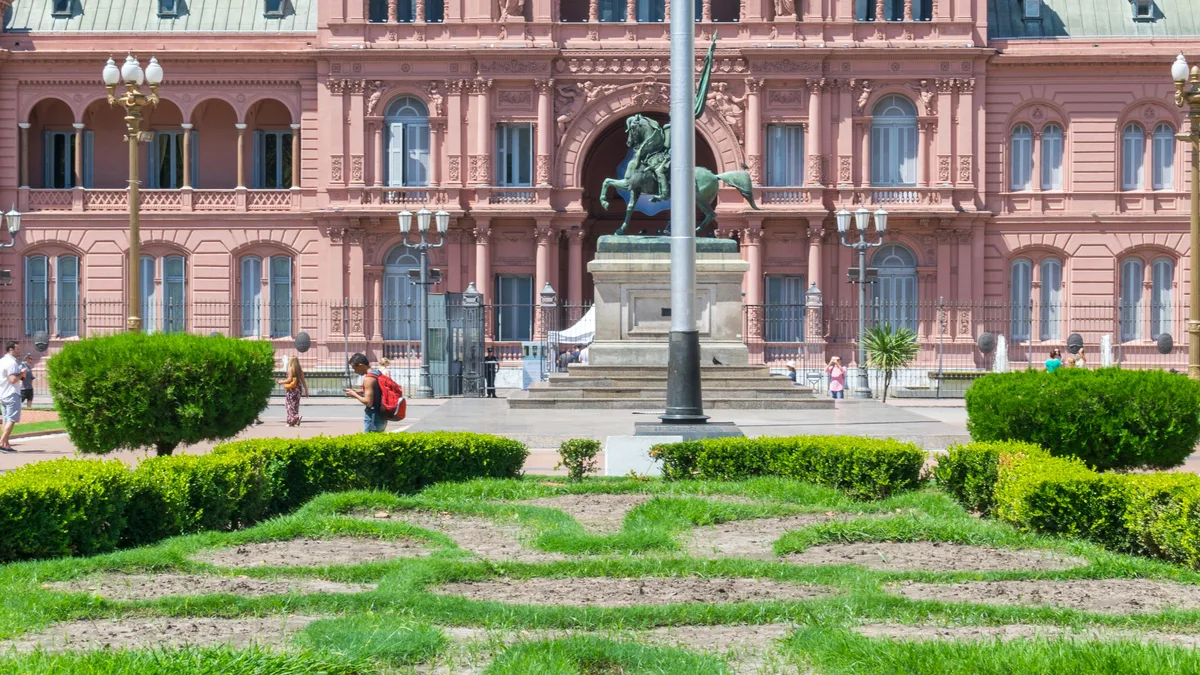
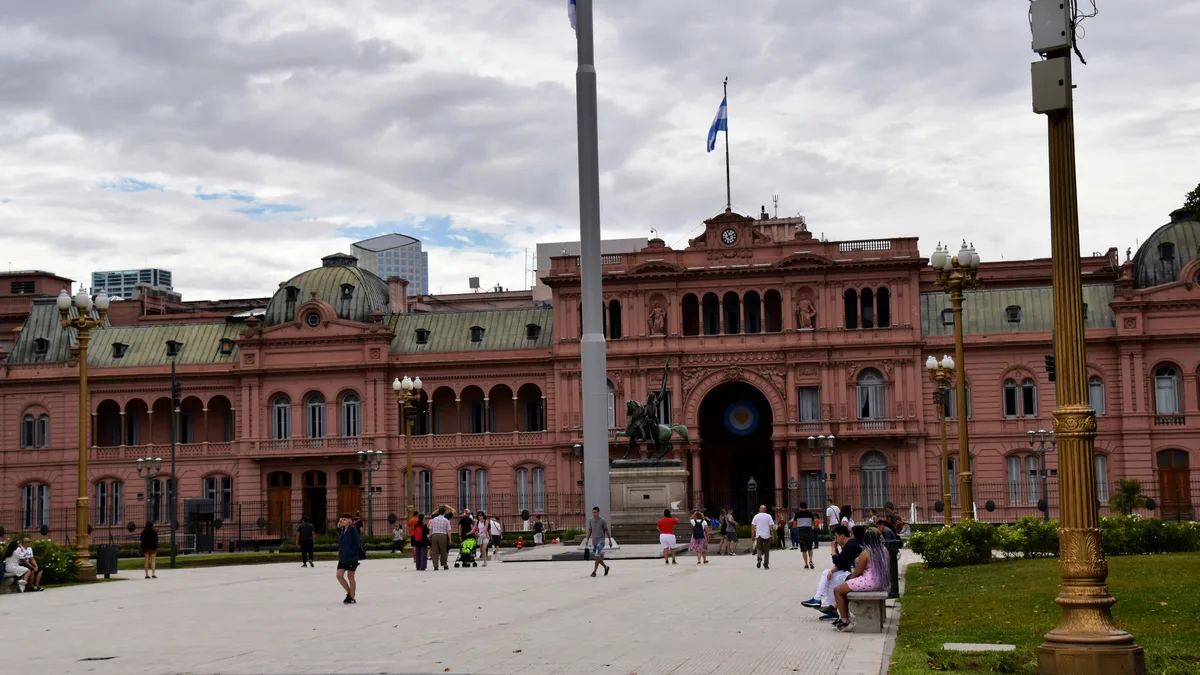
The political heart of Argentina since the country's 1810 independence movement, Plaza de Mayo is flanked by the pink Casa Rosada presidential palace, the Metropolitan Cathedral, and the historic Cabildo. It's also where the Mothers of Plaza de Mayo have marched every Thursday since 1977, demanding answers about relatives who disappeared during the military dictatorship.
 Private Tours
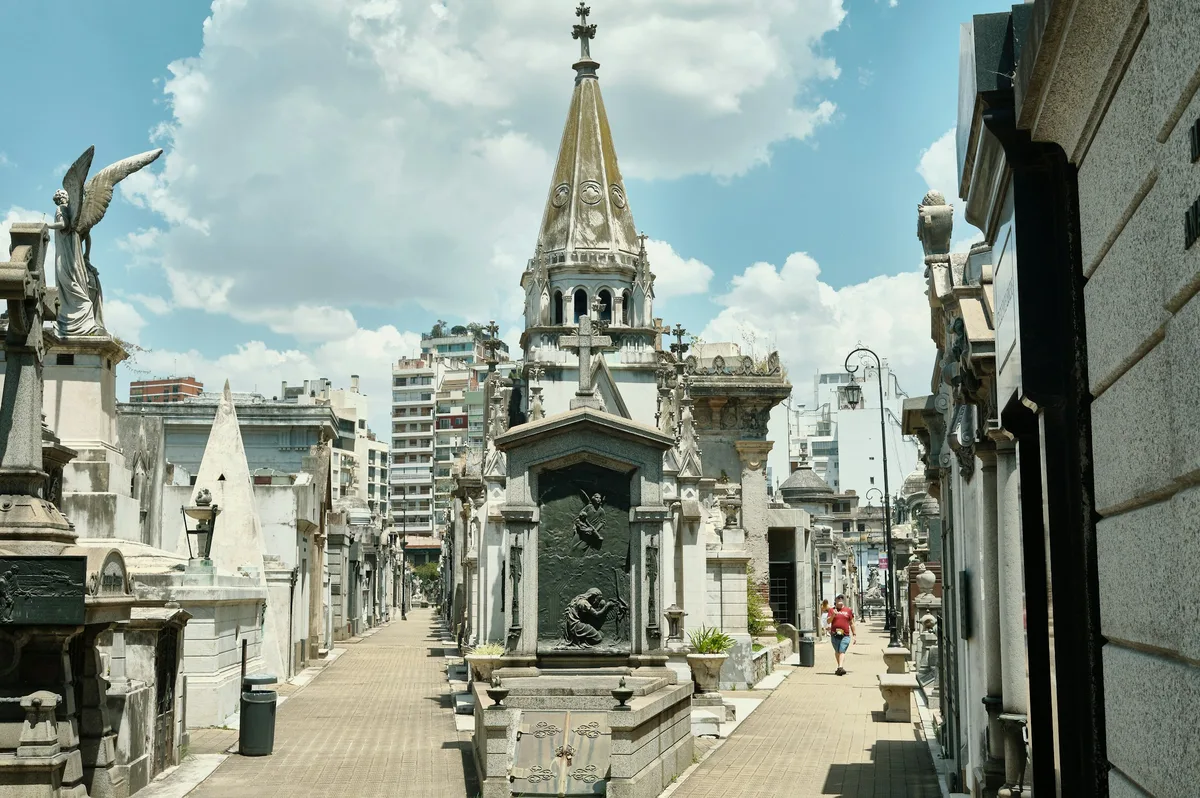
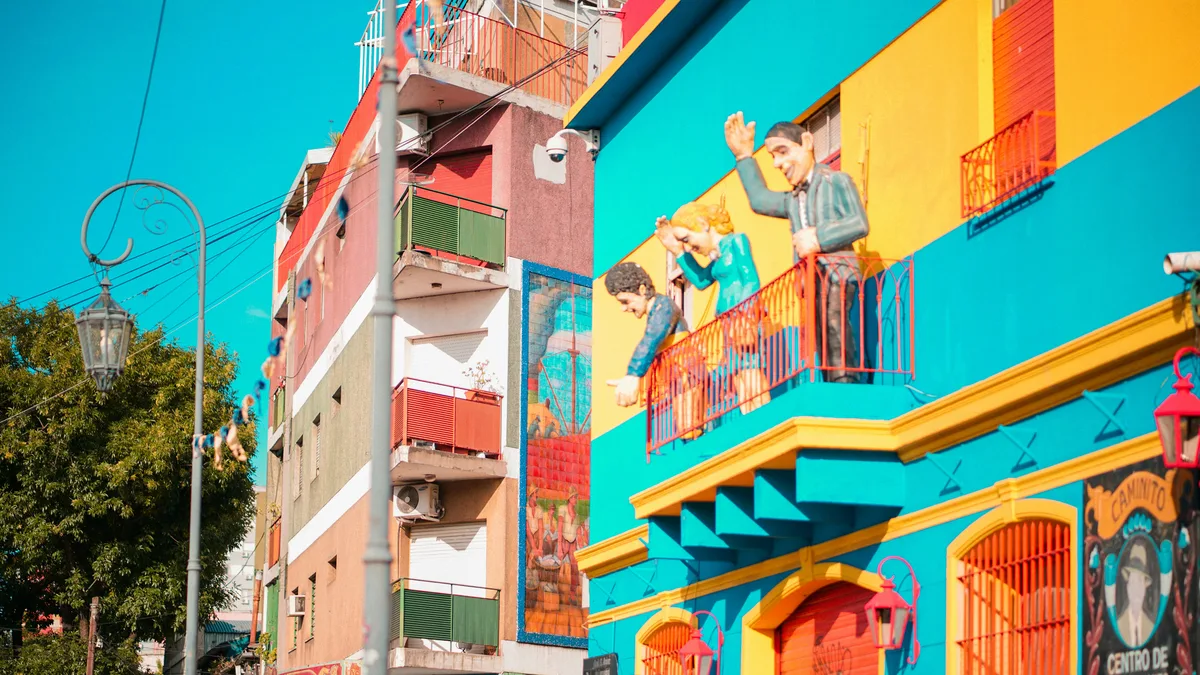
A private, air-conditioned vehicle and a local guide take you through Casa Rosada, La Boca's Caminito, San Telmo, and Recoleta Cemetery in one easy half-day.
 Private Tours
With a local guide, visit a former clandestine detention center and learn the history of the 'Dirty War' — Argentina's most violent period of 20th-century political history — and the people affected by it.
 Private Tours
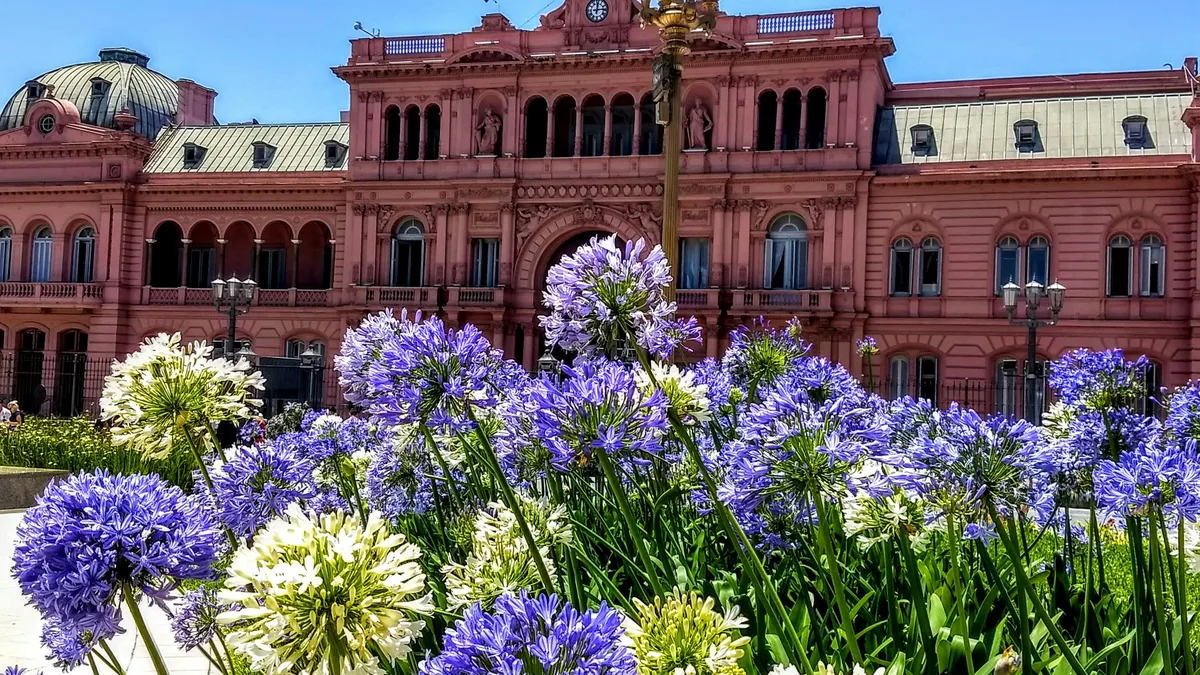
Relive the story of Eva Duarte de Perón — a political leader who fought for Argentina's most disadvantaged — with visits to Plaza de Mayo, the Casa Rosada balcony, her monument, and her tomb at Recoleta Cemetery.
Visitor guide
Plaza de Mayo is the main city square of Buenos Aires, Argentina, and the historic centre of the city. Surrounded by the Casa Rosada presidential palace, the Metropolitan Cathedral and the Cabildo, it has been the focus of political life since the colonial period.
The square's origins trace back to Juan de Garay's foundation of Buenos Aires in 1580, when a square set aside as the Plaza Mayor covered roughly half the area of today's plaza, according to Spanish Wikipedia. The article lists a long series of names, including Plaza de Armas, Plaza de la Victoria and Plaza 25 de Mayo. In 1661 Governor Alonso Mercado y Villacorta bought the block to the east and cleared it to create the Plaza de Armas beside the city's fort. Work on a colonnaded arcade called the Recova began in 1803 and divided the plaza into the Plaza de la Victoria and the Plaza del Fuerte.
The modern square took shape in 1884, when Mayor Torcuato de Alvear ordered the Recova demolished and the two spaces unified under the name Plaza de Mayo. The name commemorates the May Revolution of 1810, which began the process leading to independence from Spain in 1816.
At the centre stands the Pirámide de Mayo, ordered for the first anniversary of the revolution and erected in 1811, which Wikipedia describes as the first national monument in Buenos Aires. Spanish Wikipedia says it was remodelled in 1856 under the direction of Prilidiano Pueyrredón, clad in brick and mortar and topped with a statue of Liberty, and that in 1912 it was moved about 63 m to the centre of the plaza. The white painted headscarves around it, representing those worn by the Mothers of the Plaza de Mayo, were repainted during the plaza's renovation in 2018.
The square saw action in 1806, when British forces under William Carr Beresford were defeated in the Plaza del Fuerte by troops under Santiago de Liniers, and the British surrendered their flag at the central arch of the Recova on 20 August. On 25 May 1810, crowds in the plaza pressed for the installation of the Primera Junta, which was proclaimed from the balcony of the Cabildo with Cornelio Saavedra as president.
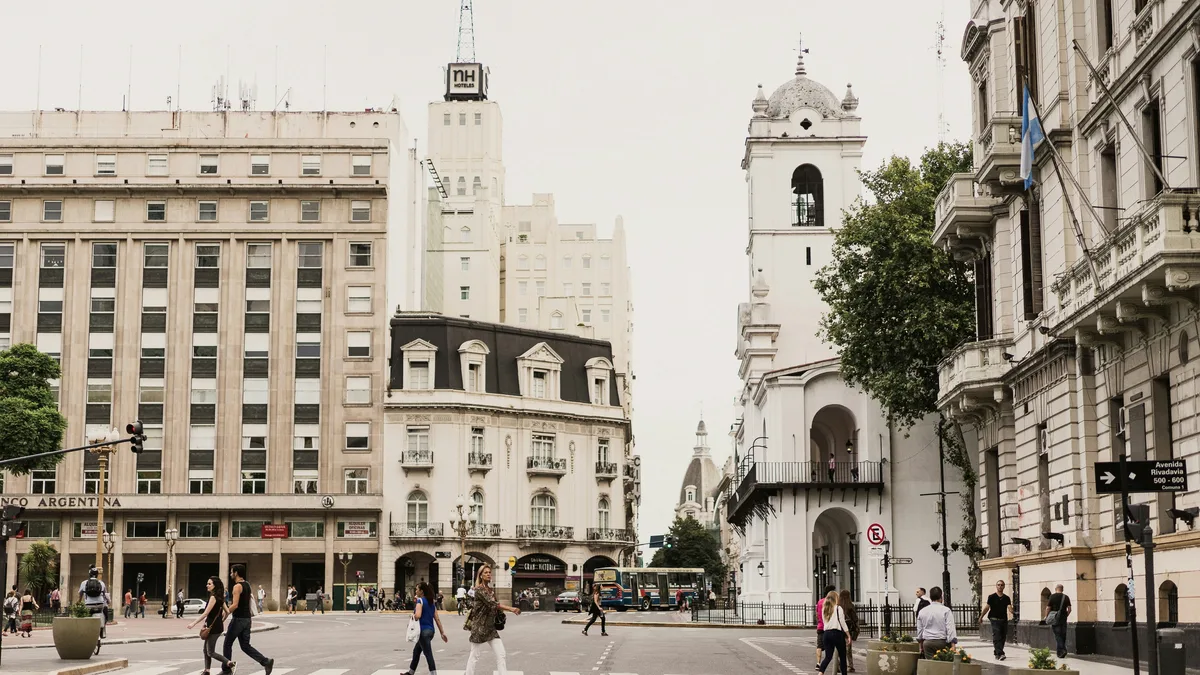
Several major landmarks face the square. The Cabildo, the colonial-era city council, was designed by the Jesuit architect Andrés Blanqui in 1725; six of its eleven arches were removed when Avenida de Mayo and Diagonal Sur were opened, and the building was rebuilt by Mario Buschiazzo in 1940 to resemble its 1810 appearance. The Casa Rosada has been the seat of the national executive since 1862, on the site of the old fort, and its asymmetry is explained by the demolition of its south wing in 1938. The Metropolitan Cathedral stands on the site where Garay placed the Iglesia Mayor in 1593, and holds the tomb of José de San Martín. An equestrian monument to General Manuel Belgrano, with the figure by Albert-Ernest Carrier-Belleuse, was inaugurated by Domingo Faustino Sarmiento in 1873 and later moved in front of the Casa Rosada. Three important avenues begin from the plaza's west side, including the Avenida de Mayo, and underground stations serve the area.
Wikipedia calls the plaza the focal point of political life in Buenos Aires. On 15 April 1953, a bombing during a rally of the CGT labour federation killed five or six people and injured roughly 90 to 100, depending on the source. On 17 October 1945, mass demonstrations here organised by the CGT helped bring about the release of Juan Domingo Perón, and 17 October is still observed as Loyalty Day by traditional Peronists. Presidents of different governments have addressed crowds from the Casa Rosada balcony.
Since 1977 the Mothers of the Plaza de Mayo have gathered in the square with pictures of their children who disappeared during Argentina's military dictatorship, using the symbolic importance of the plaza to draw attention to what was happening. A 2005 city law declared the area around the Pirámide a historic site.
Plaza de Mayo is in the Monserrat district, at the heart of the city's historic core, and is easily combined with the surrounding monuments and nearby streets. A private guided visit can explain how the square, the cathedral and the government buildings fit into Argentina's history.
See every tour and attraction we cover in Buenos Aires.