TorontoOntario · 36 tours
 Niagara FallsOntario · 25 tours
 New York CityNew York · 30 tours
 Las VegasNevada · 8 tours
 San FranciscoCalifornia · 16 tours
 VancouverBritish Columbia · 17 tours
 DubaiUAE · 54 tours
 Abu DhabiUAE · 5 tours
 Buenos AiresArgentina · 23 tours
 AthensGreece · 31 tours
 AucklandNew Zealand · 38 tours
 CancunMexico · 54 tours
No destinations match “”. Try searching all tours instead — that search understands full questions, not just place names.
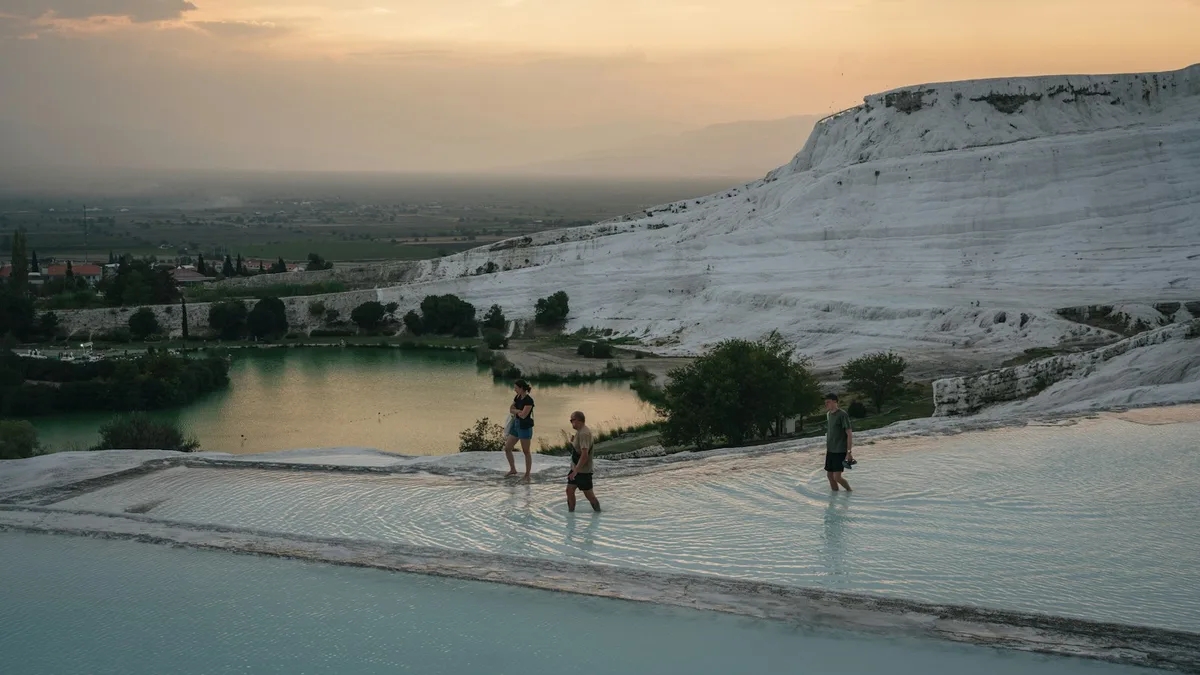
Blinding-white travertine terraces of mineral-rich thermal water cascading down a hillside, with the ruins of the Greco-Roman spa city of Hierapolis built on the plateau above.
 Multi-Day Tours
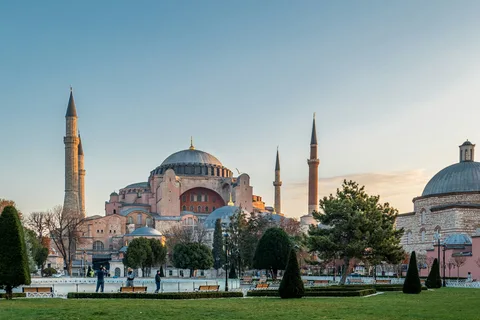
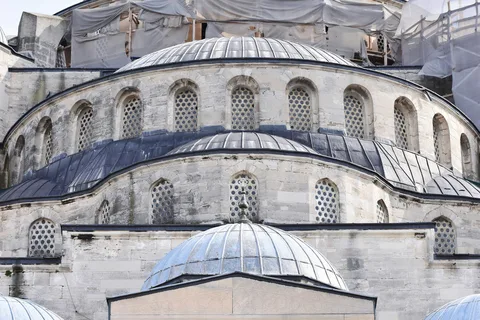
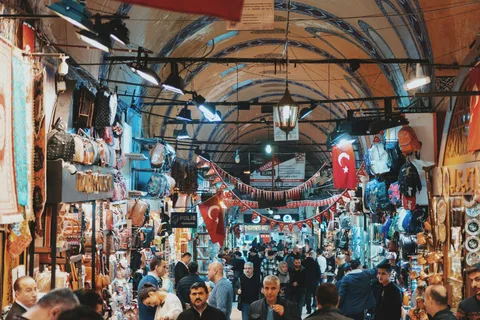
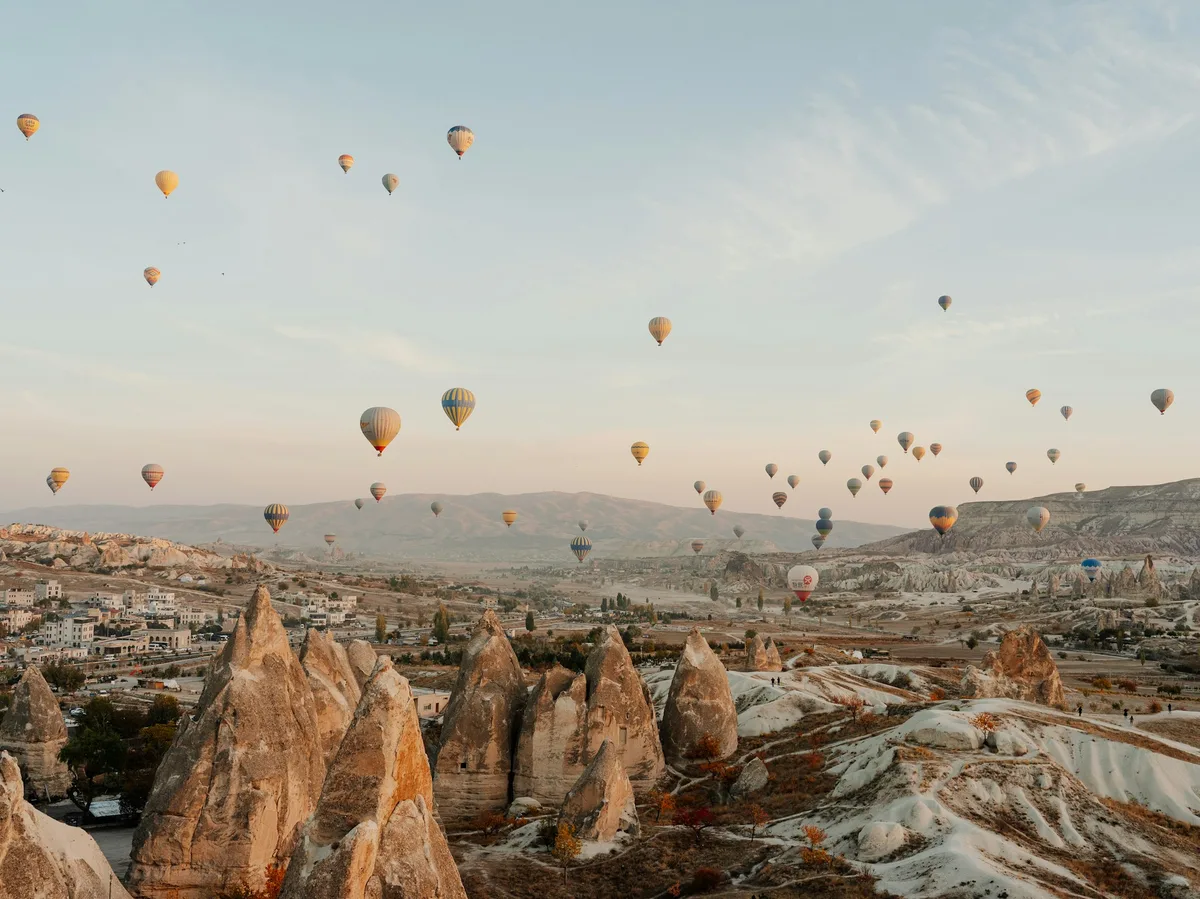
A 10-day private tour through Istanbul's Hagia Sophia, Blue Mosque, and Grand Bazaar, Cappadocia's valleys and underground cities, and Antalya's old town and the thermal terraces at Pamukkale.
 Multi-Day Tours
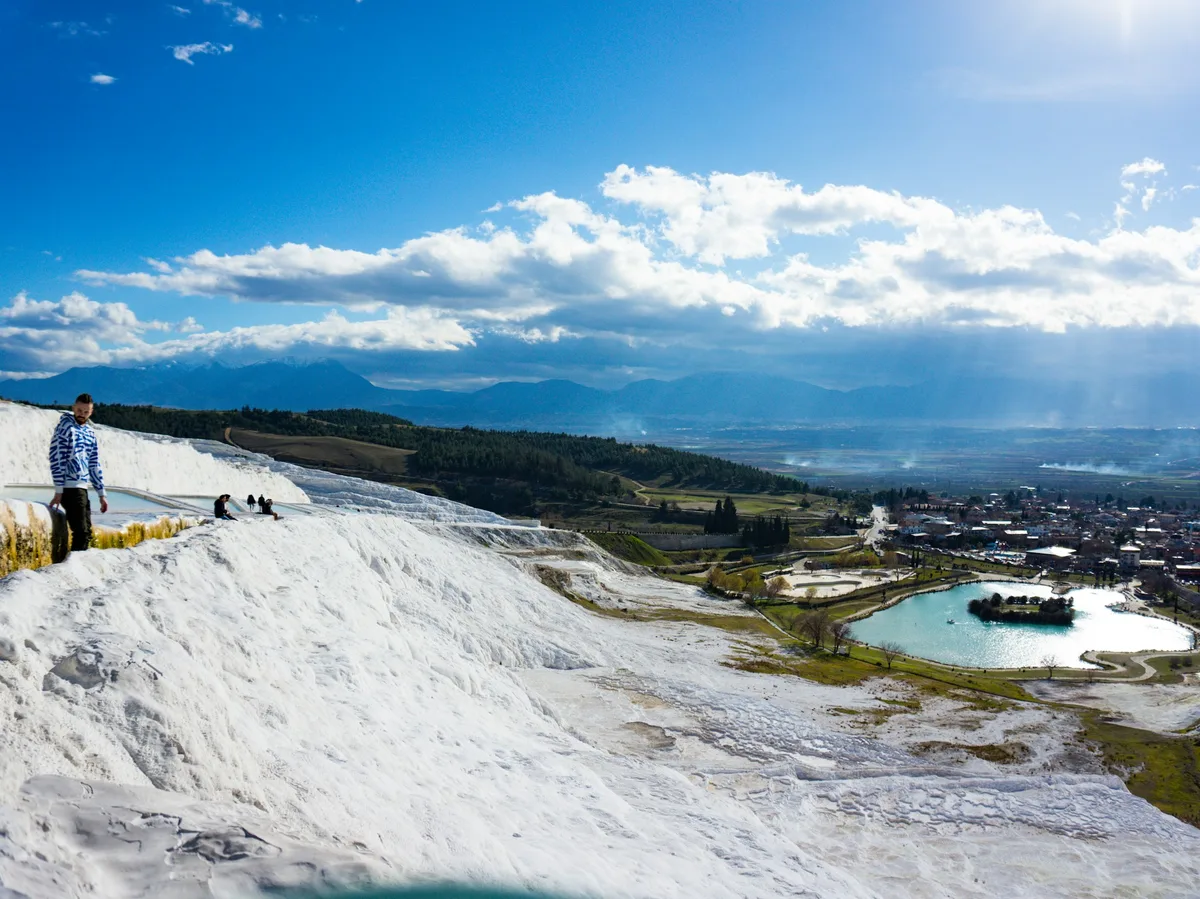
A 10-day overland route from Istanbul through the ruins of Troy, Ephesus, and Pamukkale's travertine terraces, the Mevlana Museum in Konya, and Cappadocia's fairy chimneys and underground cities.
 Multi-Day Tours
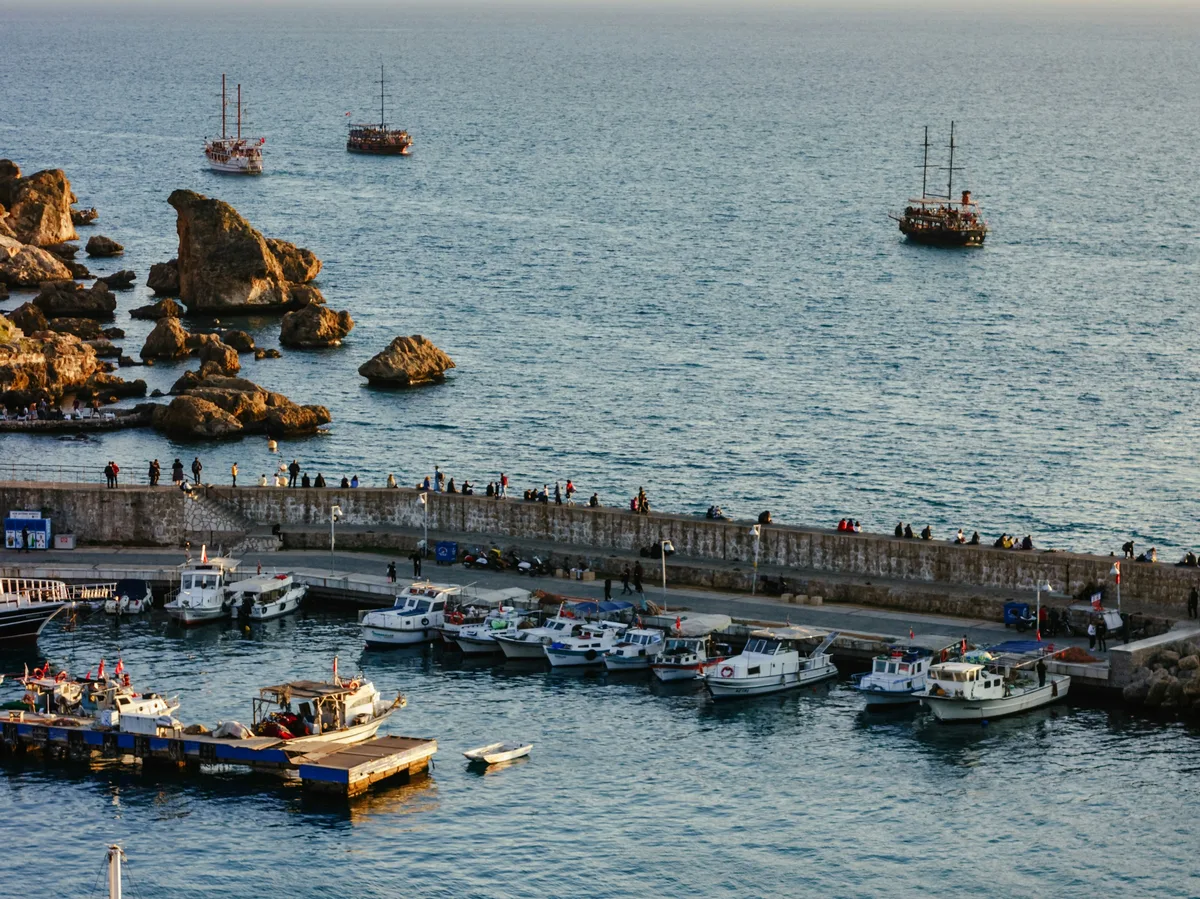
A 5-day coastal break based in Antalya — the old town of Kaleiçi, Hadrian's Gate, and Düden Waterfalls, a day trip to Pamukkale's travertine terraces and Hierapolis, and the Roman theater and ruins at Perge and Aspendos.
Visitor guide
Pamukkale, Turkish for cotton castle, is a natural site in Denizli Province in southwestern Turkey, famous for white terraces of travertine deposited by mineral-rich thermal water. On the plateau above stand the ruins of the ancient Greco-Roman spa city of Hierapolis, and together they are inscribed by UNESCO as Hierapolis-Pamukkale.
According to Wikipedia, the travertine formation is about 2,700 metres long, 600 metres wide and 160 metres high, and it can be seen from Denizli roughly 20 kilometres away. The area has 17 hot springs with temperatures from about 35 to 100 degrees Celsius. The water flows some 320 metres to the top of the terraces, where carbon dioxide escapes and calcium carbonate settles as a soft gel that later hardens into travertine. Local authorities and UNESCO regulate the water flow and periodically close sections so the terraces can regenerate.
Wikipedia states that Hierapolis was founded as a thermal spa early in the 2nd century BC under the Seleucid Empire. Doctors used the springs to treat patients, and the city began minting bronze coins in the 2nd century BC. In 133 BC Attalus III bequeathed his kingdom to Rome, and the city became part of the Roman province of Asia. A major earthquake in AD 17, under Tiberius, destroyed the city, and it was rebuilt. Jewish families had been settled in the region, and a considerable Jewish community lived here.
Early Christianity took hold, and the apostle Philip is said by tradition to have spent his last years and been martyred here, a story Wikipedia describes as alleged. In the 4th century Christians filled the ploutonion, a sacred site linked to the underworld, with stones. In 531 Justinian raised the local bishop to metropolitan rank, and Roman baths were converted into a Christian basilica. The ancient theatre is among the site's best-preserved structures.
Hierapolis has several notable remains. According to Wikipedia, the theatre was probably built under Hadrian after an earthquake in AD 60, has a facade about 91 metres long and originally held roughly 15,000 spectators. The main street, Frontinus Street, ran about 1,500 metres north to south between colonnades and monumental gates. The necropolis stretches over 2 kilometres and holds about 1,200 tombs, one of the best preserved in Turkey, and one sarcophagus carries a relief of a water-powered sawmill. The Martyrium of St Philip, on a hill outside the walls, dates to the 5th century. The Great Baths, built around natural thermal pools, now house the Archaeology Museum, and an Italian archaeological mission has worked at the site since 1957.
Visitors can bathe in thermal pools, including Cleopatra's Pool, where ancient marble columns lie submerged. Wikipedia reports that Pamukkale attracts more than two million visitors a year. Hierapolis-Pamukkale was inscribed as a World Heritage Site in 1988 under both cultural and natural criteria, covering 1,077 hectares.
The site is generally explored on foot, with the terraces often visited barefoot where permitted. A private guided visit with a dedicated vehicle and driver helps link Pamukkale with nearby sites; details are tailored on request.
See every tour and attraction we cover in Turkey.