TorontoOntario · 36 tours
 Niagara FallsOntario · 25 tours
 New York CityNew York · 30 tours
 Las VegasNevada · 8 tours
 San FranciscoCalifornia · 16 tours
 VancouverBritish Columbia · 17 tours
 DubaiUAE · 54 tours
 Abu DhabiUAE · 5 tours
 Buenos AiresArgentina · 23 tours
 AthensGreece · 31 tours
 AucklandNew Zealand · 38 tours
 CancunMexico · 54 tours
No destinations match “”. Try searching all tours instead — that search understands full questions, not just place names.
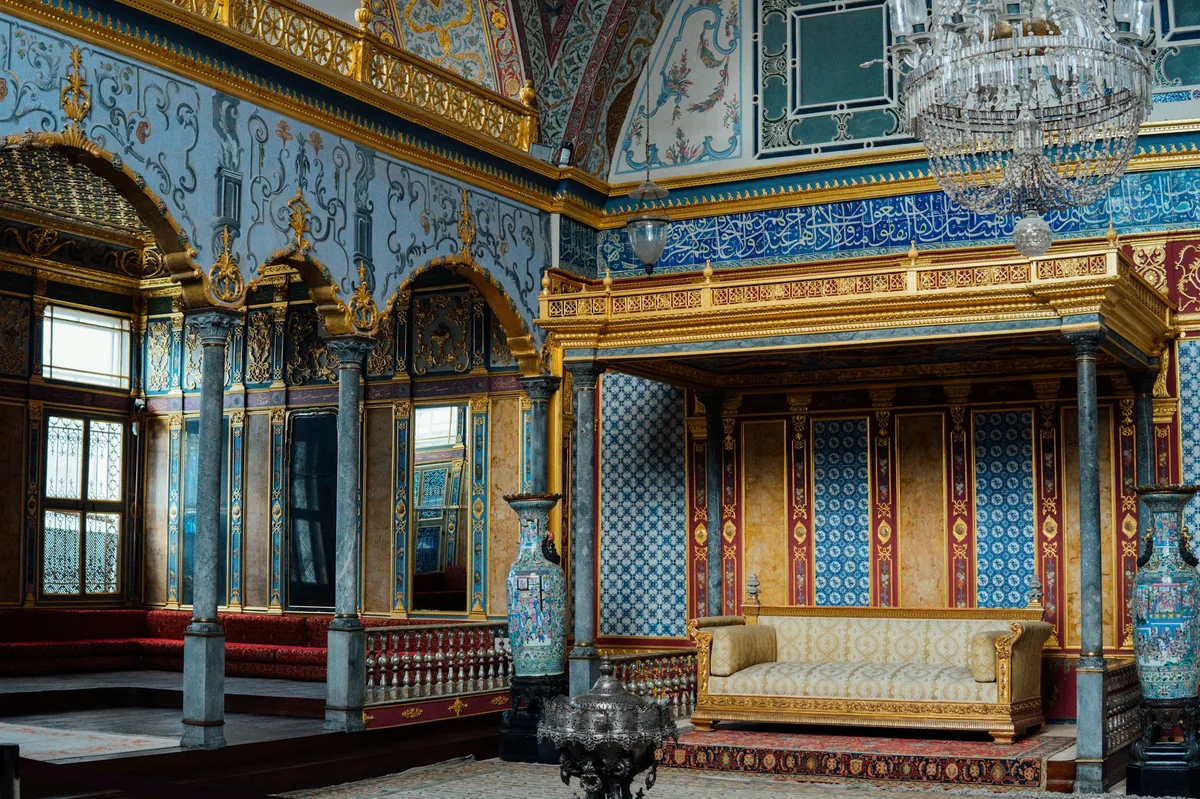
The primary residence of the Ottoman sultans for roughly 400 years, a sprawling palace complex overlooking the Bosphorus with courtyards, treasury rooms, and harem quarters open to visitors.
Visitor guide
Topkapi Palace is a large palace complex on Seraglio Point in Istanbul, Turkey, where the Bosphorus meets the Sea of Marmara and the Golden Horn. Built after the Ottoman conquest of Constantinople, it served for generations as the residence and administrative centre of the sultans and is now a museum, part of the UNESCO-listed Historic Areas of Istanbul.
According to Wikipedia, Sultan Mehmed II ordered construction in 1459, about six years after taking Constantinople, and the complex was first called the New Palace to distinguish it from the Old Palace in Beyazit Square. Sources differ on when the core was finished, with the historian Critobulus giving 1459 to 1465. Mehmed set the basic layout, placing his private quarters on the highest ground. Later sultans expanded it, especially Suleiman the Magnificent between 1520 and 1560, and parts were rebuilt after an earthquake in 1509 and a fire in 1665.
The palace is a group of low buildings around courtyards linked by galleries. The First Courtyard is a large outer precinct that holds the Byzantine church of Hagia Irene. The Second Courtyard, known as Divan Square, held the Imperial Council, the kitchens and the entrance to the Harem; its kitchens were the largest in the Ottoman Empire, rebuilt by the architect Sinan after a fire in 1574. The Third Courtyard, entered through the Gate of Felicity, was the inner private area with the Audience Chamber, the library and the Treasury. The Tower of Justice is the palace's tallest structure and a landmark visible from the Bosphorus.
The Imperial Harem housed the sultan's mother, consorts, children and servants, and had more than 400 rooms. Wikipedia credits Hurrem Sultan, wife of Suleiman, with moving the Harem into the palace after a fire at the Old Palace in 1541. The Treasury holds jewels and heirlooms, including the Topkapi Dagger, with three large emeralds on its hilt, and the Spoonmaker's Diamond. The Chamber of the Sacred Relics contains items regarded as among the most sacred in the Muslim world, including a cloak associated with the Prophet Muhammad. The palace also holds a large porcelain collection, with records cited by Wikipedia giving 16,566 pieces of Chinese porcelain by the 18th century.
Topkapi lost importance in the 17th century as sultans preferred Bosphorus palaces, and the court moved to Dolmabahce Palace in the mid-19th century. After the Ottoman Empire ended, a decree of April 1924 turned the palace into a museum. Only the most important parts are open to the public, although the palace has hundreds of rooms.
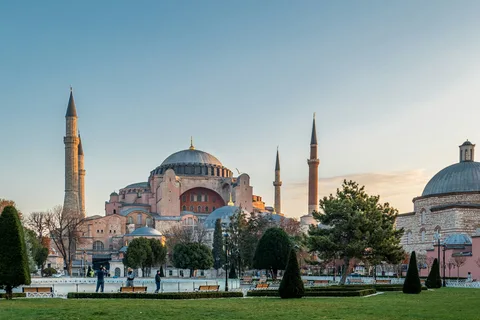
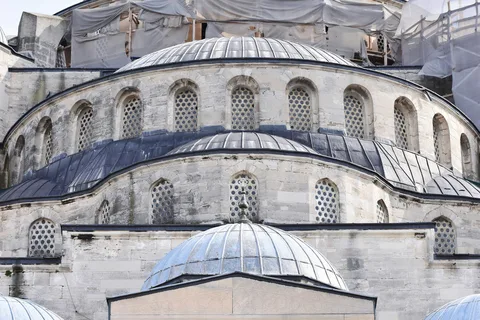
The complex is large and best understood with a guide. A private guided visit with a dedicated vehicle and driver suits those who want to pair Topkapi with Hagia Sophia and the Blue Mosque, with details tailored on request.
See every tour and attraction we cover in Turkey.