TorontoOntario · 36 tours
 Niagara FallsOntario · 25 tours
 New York CityNew York · 30 tours
 Las VegasNevada · 8 tours
 San FranciscoCalifornia · 16 tours
 VancouverBritish Columbia · 17 tours
 DubaiUAE · 54 tours
 Abu DhabiUAE · 5 tours
 Buenos AiresArgentina · 23 tours
 AthensGreece · 31 tours
 AucklandNew Zealand · 38 tours
 CancunMexico · 54 tours
No destinations match “”. Try searching all tours instead — that search understands full questions, not just place names.
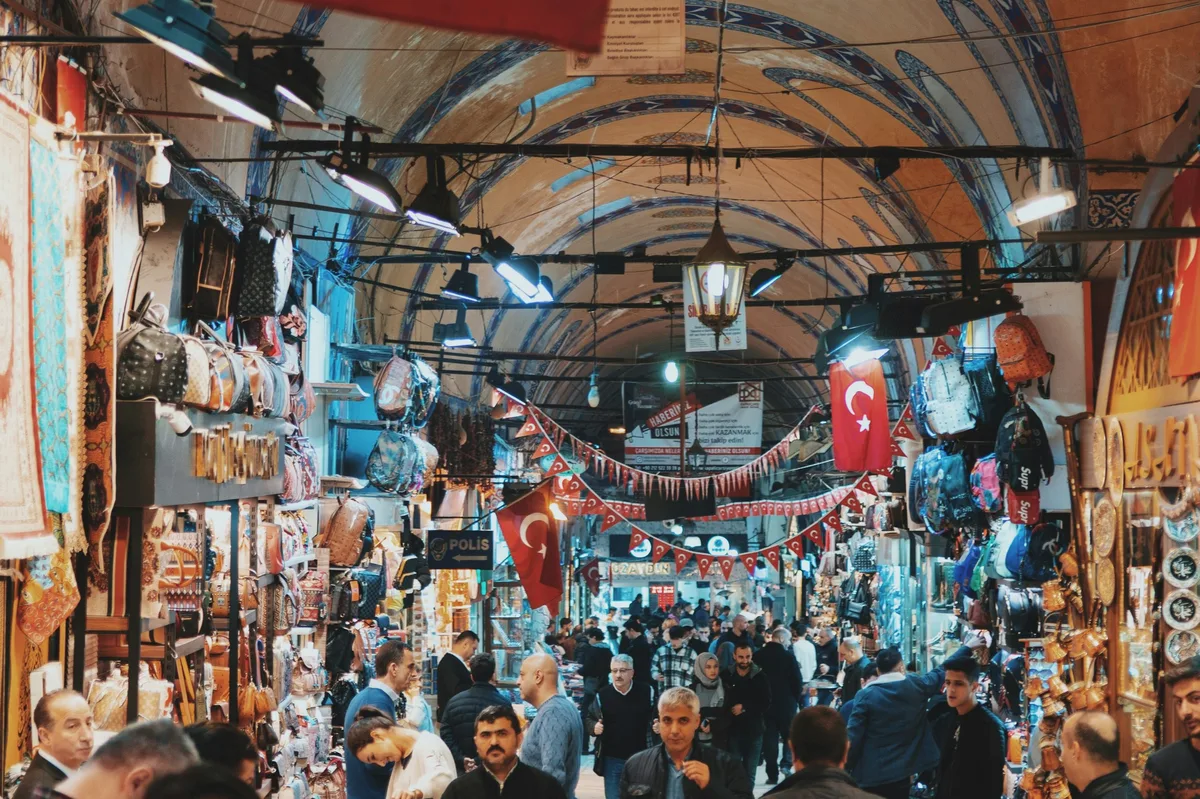
One of the world's oldest and largest covered markets, with thousands of shops along its vaulted alleyways in the heart of Istanbul.
Visitor guide
The Grand Bazaar, known in Turkish as Kapalicarsi or the Covered Market, is a vast covered market in the walled old city of Istanbul, Turkey. Wikipedia describes it as one of the largest and oldest covered markets in the world, a maze of domed streets and courtyards lined with shops that has traded since the 15th century.
According to Wikipedia, construction of the core began in the winter of 1455 to 1456, shortly after the Ottoman conquest of Constantinople, as part of a wider effort to revive the city's economy. Sultan Mehmed II first built the Cevahir Bedesten, a secure stone hall for textiles and jewels, finished around 1460 to 1461. A second hall, the Sandal Bedesten, was added to the north, though its date is disputed. Shops gradually filled the space between the two halls and formed a dedicated commercial quarter. By the early 17th century the bazaar had reached its final shape, and the traveller Evliya Celebi, writing around 1638, counted about 3,000 shops plus 300 in the surrounding hans, or caravanserais. At that time the market was not yet fully roofed.
The bazaar was originally built of wood and suffered repeated fires, beginning in 1515 and recurring in 1548, 1588, 1645 and 1701. After the 1701 fire it was rebuilt in stone and brick and roofed, with reconstruction overseen in 1730 to 1731. Earthquakes struck in 1766 and 1894, and the later quake led to repairs that reduced the complex's area. Further fires occurred in 1943 and 1954, and restorations followed, the most recently cited one in 1980.
The Ic Bedesten is a rectangular hall of stone piers and brick domes with vaulted cellars once used as safes, while the Sandal Bedesten has shops only along its outer walls. In the 19th century the complex reportedly covered about 30.7 hectares with 61 streets and 24 hans, and Wikipedia gives the current figures as 61 covered streets and more than 4,000 shops, noting that no official shop count exists and estimates range from 3,000 to 4,000. Traders of the same product clustered on the same streets, jewellers and armourers worked in the inner bedesten, and merchant guilds paid guards to protect the locked gates at night. The bazaar had no restaurants in Ottoman times, only small kiosks serving simple food and Turkish coffee.
The bazaar lies in the Fatih district between the Beyazit and Nuruosmaniye mosques and is reached by tram from Sultanahmet. It is a market for browsing rather than a single monument, with leather, ceramics, carpets, lamps, jewellery and textiles among the goods typically on offer. Bargaining is customary. A private guided visit with a dedicated vehicle and driver suits visitors who want help navigating the lanes and understanding the trades; details are tailored on request.
See every tour and attraction we cover in Turkey.