TorontoOntario · 36 tours
 Niagara FallsOntario · 25 tours
 New York CityNew York · 30 tours
 Las VegasNevada · 8 tours
 San FranciscoCalifornia · 16 tours
 VancouverBritish Columbia · 17 tours
 DubaiUAE · 54 tours
 Abu DhabiUAE · 5 tours
 Buenos AiresArgentina · 23 tours
 AthensGreece · 31 tours
 AucklandNew Zealand · 38 tours
 CancunMexico · 54 tours
No destinations match “”. Try searching all tours instead — that search understands full questions, not just place names.
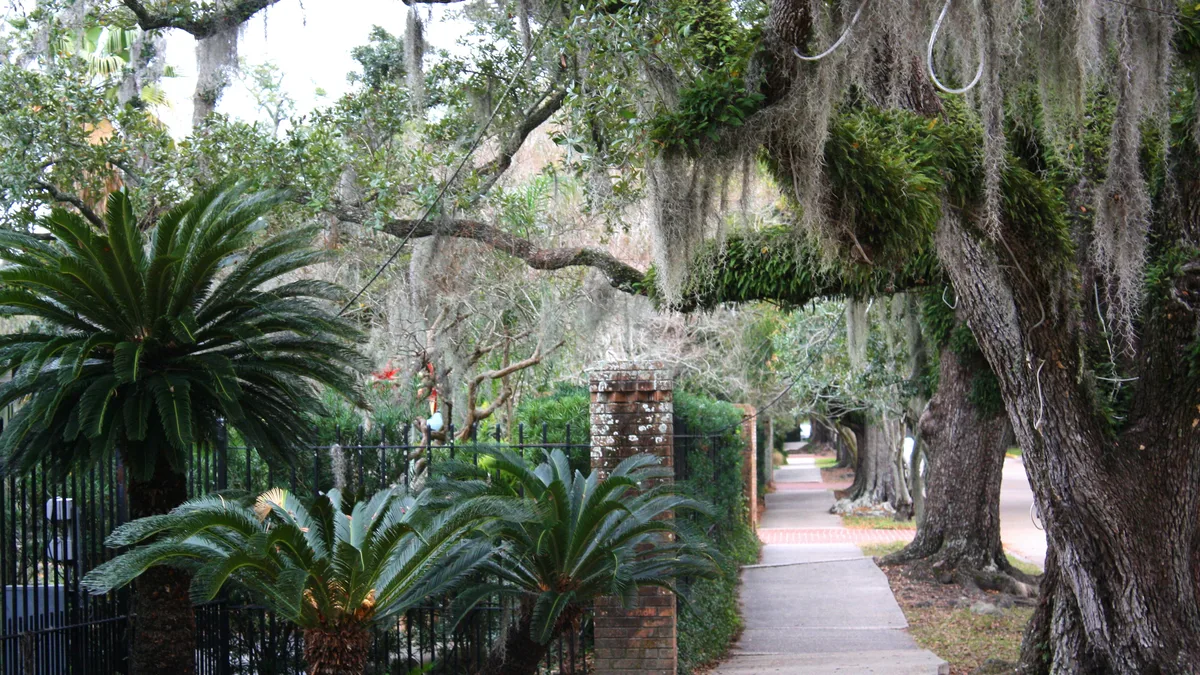
A 1,300-acre urban park with some of the oldest live oak trees in the country, draped in Spanish moss.
Visitor guide
New Orleans City Park is a roughly 1,300-acre park along Bayou St. John, about one mile wide and three miles long, and one of the largest urban parks in the country. It is known for its groves of ancient live oaks, and it holds an art museum, a botanical garden, sculpture gardens, a historic carousel and open lagoons.
The land was part of the Allard Plantation. The park's own timeline says it became city property through the will of John McDonogh, who died in 1850, and that a court declared an initial tract of about 100 acres a public park in 1854. In 1891 the City Council gave control to the newly formed City Park Improvement Association and the property was officially named City Park; the state legislature placed the park under the association's management in 1896. Wikipedia notes the area was a common dueling ground in the 1800s, and reports that about 900 acres were added in 1927.
The 1930s transformed the park. A Works Progress Administration grant of $12 million, according to the park's history, funded roads, fountains, bridges and Tad Gormley Stadium and employed about 20,000 people, and much of the park's public art dates from this era. Wikipedia credits the sculptor Enrique Alferez with many of the WPA-era works. Like many Southern public spaces, the park's amenities were restricted by race until 1958, a part of its history worth knowing when you read about its early decades.
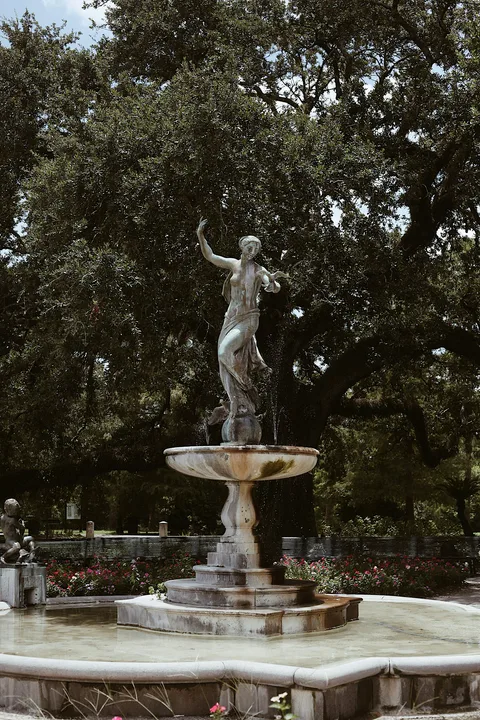
The park describes itself as home to the largest collection of mature live oaks in the world. Ages are quoted differently: the park says some trees are over 800 years old, while Wikipedia says more than 600, so treat any single figure as an estimate. The Dueling Oaks name recalls the park's dueling-ground past; Wikipedia says one of the two original oaks was lost in a 1949 hurricane and the survivor stands near Dueling Oaks Drive.
The New Orleans Museum of Art began life as the Isaac Delgado Museum of Art, which opened in 1911 and has been expanded since. Beside it is the Sydney and Walda Besthoff Sculpture Garden, and elsewhere in the park the Helis Foundation Enrique Alferez Sculpture Garden honors the WPA artist. The New Orleans Botanical Garden grew out of a formal rose garden developed during the 1930s WPA work, with the architect Richard Koch and Alferez among its creators, according to the park's history.
Carousel Gardens Amusement Park houses a carousel that Wikipedia says was first mule-driven in 1897 and made mechanical in 1906. Storyland, a children's attraction, is also in the park, and a landscaped path now circles Big Lake beside the art museum. Golf courses and the stadium round out the grounds. Hurricane Katrina's levee failures left about 95 percent of the park in floodwaters in 2005 and, according to the park, more than 2,000 trees were downed; the park has since been rebuilt and replanted.
The park is large and its attractions are spread out, so a private vehicle and driver with door-to-door pickup can move you between the museum and sculpture garden, the botanical garden and the oak groves without a parking search. Check the park and each attraction directly for current hours, admission and any event closures.
See every tour and attraction we cover in New Orleans.