TorontoOntario · 36 tours
 Niagara FallsOntario · 25 tours
 New York CityNew York · 30 tours
 Las VegasNevada · 8 tours
 San FranciscoCalifornia · 16 tours
 VancouverBritish Columbia · 17 tours
 DubaiUAE · 54 tours
 Abu DhabiUAE · 5 tours
 Buenos AiresArgentina · 23 tours
 AthensGreece · 31 tours
 AucklandNew Zealand · 38 tours
 CancunMexico · 54 tours
No destinations match “”. Try searching all tours instead — that search understands full questions, not just place names.
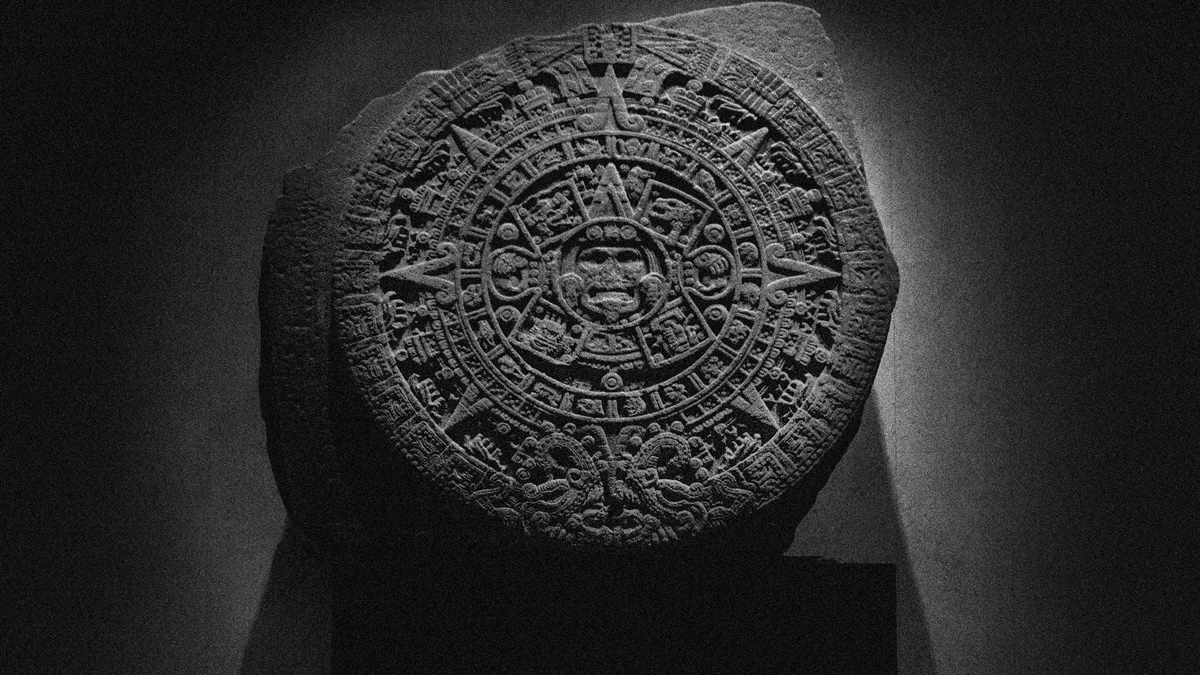
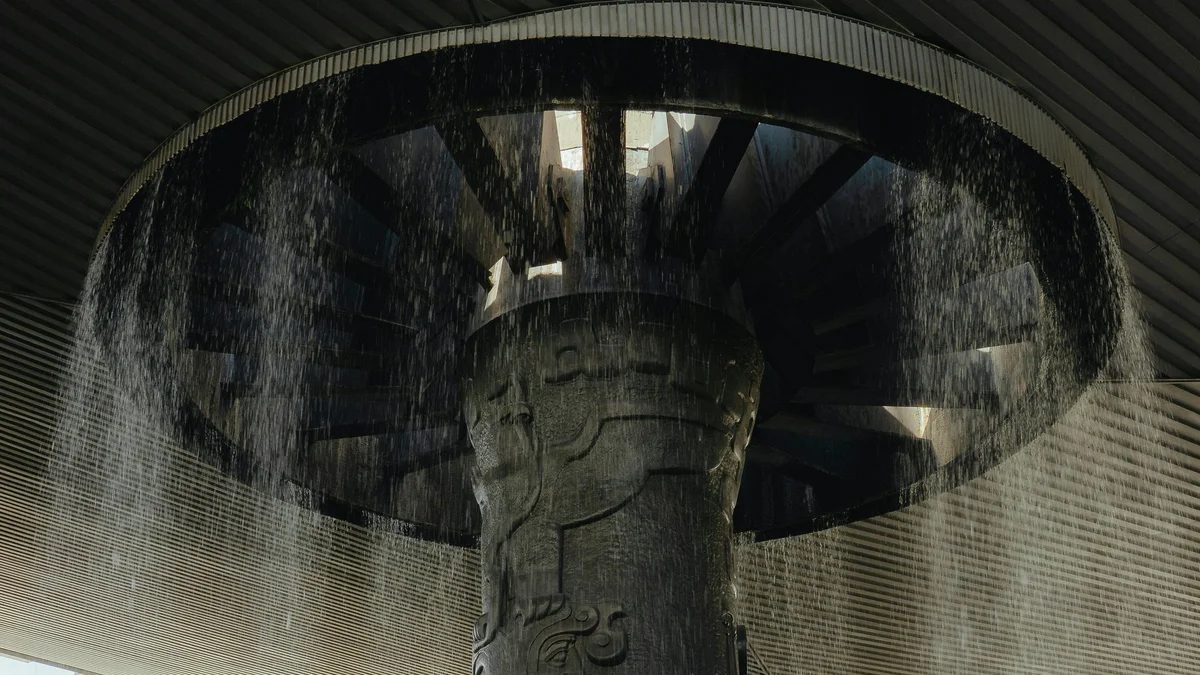
Widely regarded as one of the finest anthropology museums in the world, this Mexico City institution safeguards the real Aztec Sun Stone (Piedra del Sol) alongside genuine artifacts spanning the Maya, Olmec, Teotihuacan, and other Mesoamerican civilizations. Its distinctive building, built around a courtyard shaded by a single massive concrete umbrella column known as El Paraguas, opened in 1964 in Chapultepec Park. The collection traces thousands of years of Mexican history from the country's earliest inhabitants through the Spanish conquest.
Visitor guide
The National Museum of Anthropology, in Spanish Museo Nacional de Antropologia, is a national museum in Chapultepec Park in Mexico City. It holds an extensive collection of archaeological and ethnographic material from Mexico's pre-Columbian and Indigenous cultures and is managed by Mexico's National Institute of Anthropology and History.
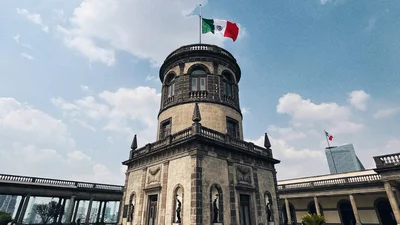
According to Wikipedia, the museum's lineage goes back to a cabinet of curiosities established in 1790 by the botanist Jose Longinos Martinez. Items from the collection of Lorenzo Boturini, including the Coatlicue sculpture and the Sun Stone, were placed at the university in the late 1700s. In 1825 President Guadalupe Victoria set up the National Mexican Museum, and in 1865 Emperor Maximilian moved it to the former mint building. The collections were split several times, and in 1940 the historical material went to Chapultepec Castle while the remainder became the National Museum of Anthropology. The current building was inaugurated by President Adolfo Lopez Mateos on 17 September 1964.
The architect Pedro Ramirez Vazquez led the design, assisted by Jorge Campuzano and Rafael Mijares Alcerreca, and construction took about 19 months. The building covers about 79,700 square meters and has 23 exhibit rooms arranged around a central courtyard, with gardens containing outdoor displays. It combines Mexican materials such as lava rock with steel and concrete, and artists including Mathias Goeritz contributed murals and carved decoration.
The courtyard's most famous feature is a vast concrete roof that locals call el paraguas, the umbrella, supported by a single slender column. A pool beneath the open section connects to the Mexica Room and evokes the lake origins of the Aztec people.
The ground floor covers pre-Columbian civilizations, with sections on the North, West, Maya, Gulf of Mexico, Oaxaca, Mexica, Toltec and Teotihuacan cultures, while the upper floor presents the Indigenous peoples of Mexico since Spanish colonization, with ethnographic displays of rural life. The Mexica Room is described as the largest and most important hall. Among the highlights are the Aztec Sun Stone, the giant stone heads of the Olmec civilization from Tabasco and Veracruz, treasures from the Sacred Cenote at Chichen Itza and a replica of the sarcophagus lid from Pakal's tomb at Palenque. A model and mural show the layout of the Aztec capital Tenochtitlan, which lies beneath modern Mexico City.
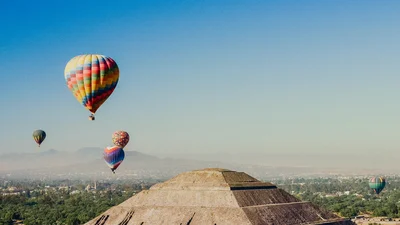
Wikipedia reports the museum as the most visited museum in Mexico. Reception has not been uniform: the writer Octavio Paz criticized the prominence of the Mexica hall, arguing that it turns the museum into a temple to Tenochtitlan. Many visitors treat it as a good primer before visiting sites such as Teotihuacan, Palenque or Chichen Itza.
The museum is large enough that visitors usually choose which halls to prioritize. A private guided visit with a driver suits it, providing context for the artifacts and an efficient route through the building.
See every tour and attraction we cover in Mexico City.