TorontoOntario · 36 tours
 Niagara FallsOntario · 25 tours
 New York CityNew York · 30 tours
 Las VegasNevada · 8 tours
 San FranciscoCalifornia · 16 tours
 VancouverBritish Columbia · 17 tours
 DubaiUAE · 54 tours
 Abu DhabiUAE · 5 tours
 Buenos AiresArgentina · 23 tours
 AthensGreece · 31 tours
 AucklandNew Zealand · 38 tours
 CancunMexico · 54 tours
No destinations match “”. Try searching all tours instead — that search understands full questions, not just place names.
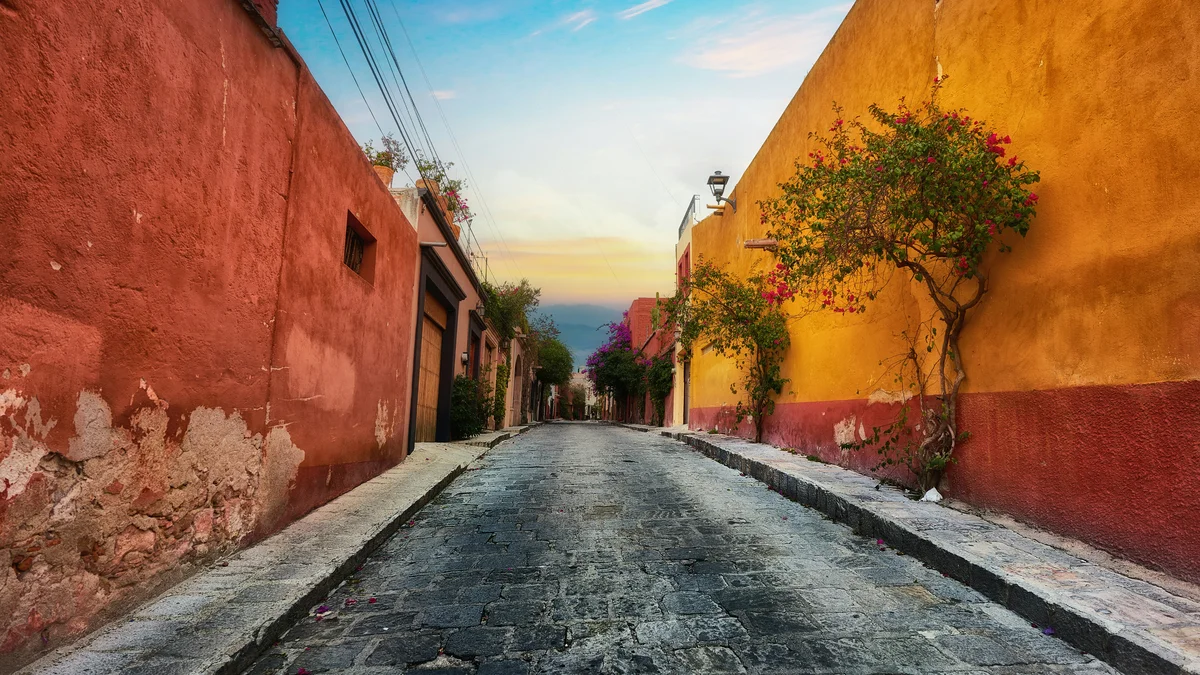
The Museo Frida Kahlo, widely known as Casa Azul for its striking cobalt-blue walls, is the house in Coyoacán where the artist was born, lived with muralist Diego Rivera, and died in 1954. It preserves her studio, personal belongings, and pre-Hispanic art collection much as she left them. The surrounding Coyoacán neighborhood, with its colorful colonial streets and plazas, was Kahlo's lifelong home base in Mexico City.
Visitor guide
The Frida Kahlo Museum, known as La Casa Azul or the Blue House, is a house museum in the Coyoacan district of Mexico City, dedicated to the life and work of the Mexican artist Frida Kahlo. It is the house where she was born, lived and died, and it is recognizable by its cobalt-blue walls.
Coyoacan developed an intellectual reputation from the 1920s, when writers and performers lived there, and the Colonia del Carmen neighborhood grew popular with artists after an open-air painting school opened in 1923. According to Wikipedia, the house was built in 1904 on land once belonging to the Hacienda del Carmen, and it is arranged around a central courtyard with garden space. The main building covers roughly 800 square meters. The entrance hall has a natural-stone mosaic by Mardonio Magana.
Kahlo was born in the house in 1907 and grew up there. After childhood polio and a serious trolley accident at age 18, she spent long periods recovering at home, and it was then that she began to paint. She met Diego Rivera while he was painting murals in Mexico City, and the house grew into a gathering place for artists and intellectuals. Kahlo and Rivera divorced in 1939 and remarried in 1940. In 1941 Rivera moved back into the house and built the wing that enclosed the courtyard, using volcanic stone, ceramic inlays, shells and mirrors. Juan O'Gorman oversaw a redesign of the exterior in 1946.
From January 1937 to April 1939 the exiled Russian revolutionary Leon Trotsky and his wife Natalia Sedova lived in the house after Kahlo and Rivera helped secure his asylum in Mexico. Because of threats against him, the street-facing windows were sealed with adobe bricks and a high wall was built beside the house. Trotsky left after a falling out with Rivera and moved to a nearby house.
Kahlo died in an upper-floor room on 13 July 1954, aged 47. Rivera donated the house and its contents to the Mexican nation in 1957, and the museum opened in 1958 with the poet Carlos Pellicer as its first director, charged with keeping the house as it was. Its profile grew with Kahlo's reputation in the 1980s and 1990s, and it reopened in 1993 after a brief closure. Restoration work was carried out in 2009 and 2010.
The museum displays art by Kahlo and Rivera along with Mexican folk art, pre-Hispanic artifacts, traditional kitchenware, photographs, letters and personal belongings. The house has ten rooms, including a formal living room, a yellow-tiled kitchen, a dining room, and the upper-floor bedroom and studio. The bedroom holds Kahlo's painted plaster corset and a mirror above the bed that she used for self-portraits. Around 2,000 votive paintings are also displayed. In the courtyard garden, a stepped pyramid, a fountain and a reflection pool were added in the 1940s.
The house is in a residential, leafy neighborhood. A private guided visit with a driver can pair the museum with other parts of Coyoacan and southern Mexico City without needing to coordinate transport.
See every tour and attraction we cover in Mexico City.