TorontoOntario · 36 tours
 Niagara FallsOntario · 25 tours
 New York CityNew York · 30 tours
 Las VegasNevada · 8 tours
 San FranciscoCalifornia · 16 tours
 VancouverBritish Columbia · 17 tours
 DubaiUAE · 54 tours
 Abu DhabiUAE · 5 tours
 Buenos AiresArgentina · 23 tours
 AthensGreece · 31 tours
 AucklandNew Zealand · 38 tours
 CancunMexico · 54 tours
No destinations match “”. Try searching all tours instead — that search understands full questions, not just place names.
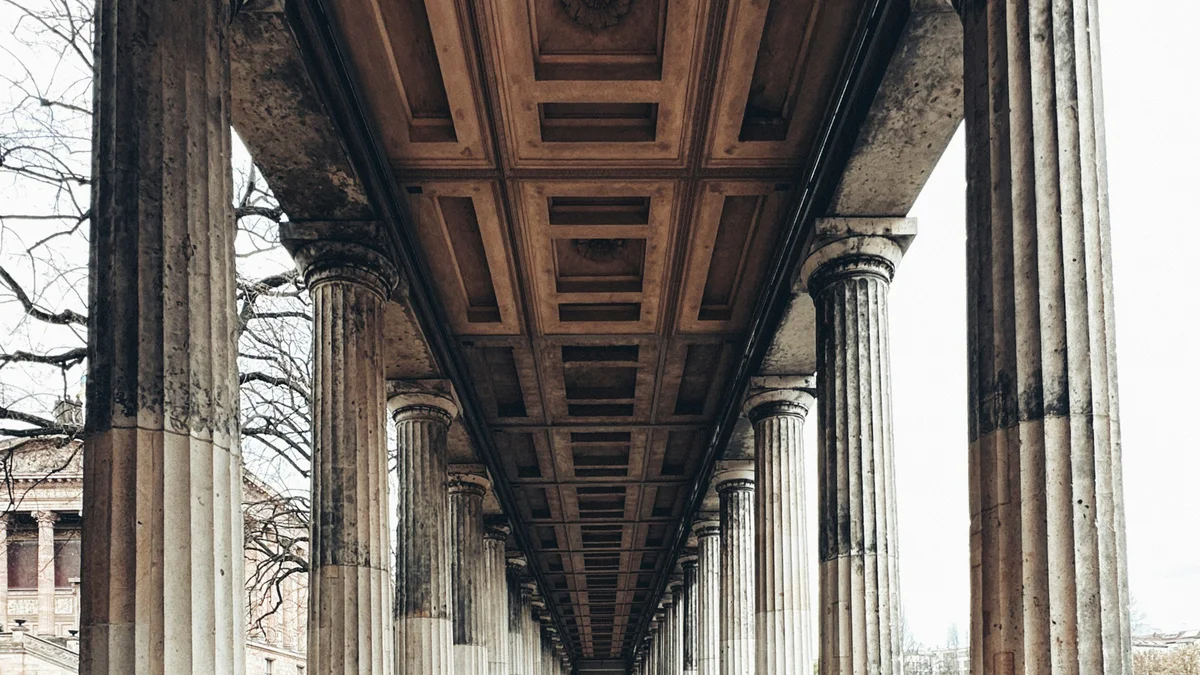
A UNESCO World Heritage Site since 1999, Museum Island sits on the Spree in central Berlin and houses five major museums, including the Neues Museum (home to the Bust of Nefertiti) and the Pergamon Museum, known for its monumental reconstructed ancient architecture. The complex was built up over the 19th and early 20th centuries as a dedicated home for Prussian and German royal collections.
Visitor guide
Museum Island is a group of five museums on the northern part of Spree Island in the Mitte district of Berlin, Germany. Built largely between 1830 and 1930 on the orders of the Prussian kings, it was inscribed as a UNESCO World Heritage Site in 1999 for its testimony to the development of museum architecture.
A first exhibition hall went up in 1797 at the suggestion of the archaeologist Aloys Hirt, and the island, originally residential, was dedicated to art and science by King Frederick William IV of Prussia in 1841. The protected area covers roughly 8.6 hectares. Beside it, the Berlin Cathedral overlooks the Lustgarten park, and across the Spree the reconstructed Berlin Palace houses the Humboldt Forum.
The Altes Museum, or Old Museum, was designed by Karl Friedrich Schinkel, who drew up the plans in 1822. It opened in 1830 and was arranged under Wilhelm von Humboldt to house the royal antiquities. Today it focuses on Greek and Roman art. The Neues Museum, completed in 1859 to designs by Schinkel's former student Friedrich August Stueler, was destroyed in the Second World War and rebuilt under the British architect David Chipperfield, reopening in 2009. It is home to the famous bust of Queen Nefertiti.
The Alte Nationalgalerie, completed in 1876 also to designs by Stueler, was built to house nineteenth-century art, including works donated by the banker Joachim Wagener. The Bode Museum at the island's northern tip opened in 1904 as the Kaiser-Friedrich-Museum and shows sculpture and late Antique and Byzantine art. The Pergamon Museum, constructed between 1910 and 1930, holds large reconstructed structures including the Pergamon Altar and the Ishtar Gate of Babylon.
After the Second World War some art and artefacts were removed by Allied troops, and the collections were divided during the Cold War before being reunited after reunification. Priam's Treasure, excavated by Heinrich Schliemann in 1873, was taken from Berlin to Moscow and remains in the Pushkin Museum. Through the 1990s the city debated how to restore and modernise the buildings, and an ambitious programme aimed to turn the island into a Louvre on the Spree.
The James Simon Gallery, a visitor centre designed by David Chipperfield, opened in 2019 on the site of a Schinkel-designed warehouse demolished in 1938. Under the Master Plan, the central courts of the museums are being lowered and linked by subterranean galleries, forming an Archaeological Promenade intended to work as a sixth, thematic museum. The Bode Museum and Neues Museum have already been adapted in this way.
Because individual buildings and displays change as the restoration programme proceeds, it is worth confirming current arrangements before visiting. The island is compact and walkable, and a private guided visit can focus on whichever of the five museums suits your interests.
See every tour and attraction we cover in Berlin.