TorontoOntario · 36 tours
 Niagara FallsOntario · 25 tours
 New York CityNew York · 30 tours
 Las VegasNevada · 8 tours
 San FranciscoCalifornia · 16 tours
 VancouverBritish Columbia · 17 tours
 DubaiUAE · 54 tours
 Abu DhabiUAE · 5 tours
 Buenos AiresArgentina · 23 tours
 AthensGreece · 31 tours
 AucklandNew Zealand · 38 tours
 CancunMexico · 54 tours
No destinations match “”. Try searching all tours instead — that search understands full questions, not just place names.
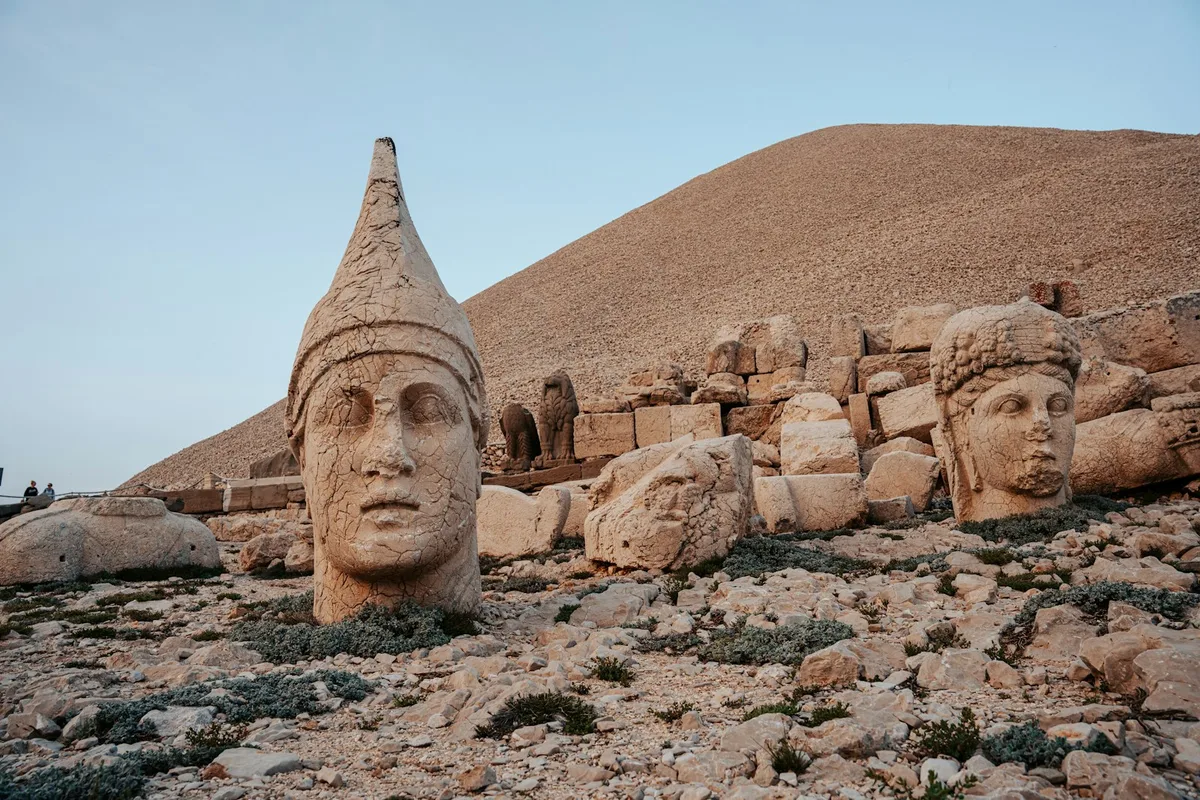
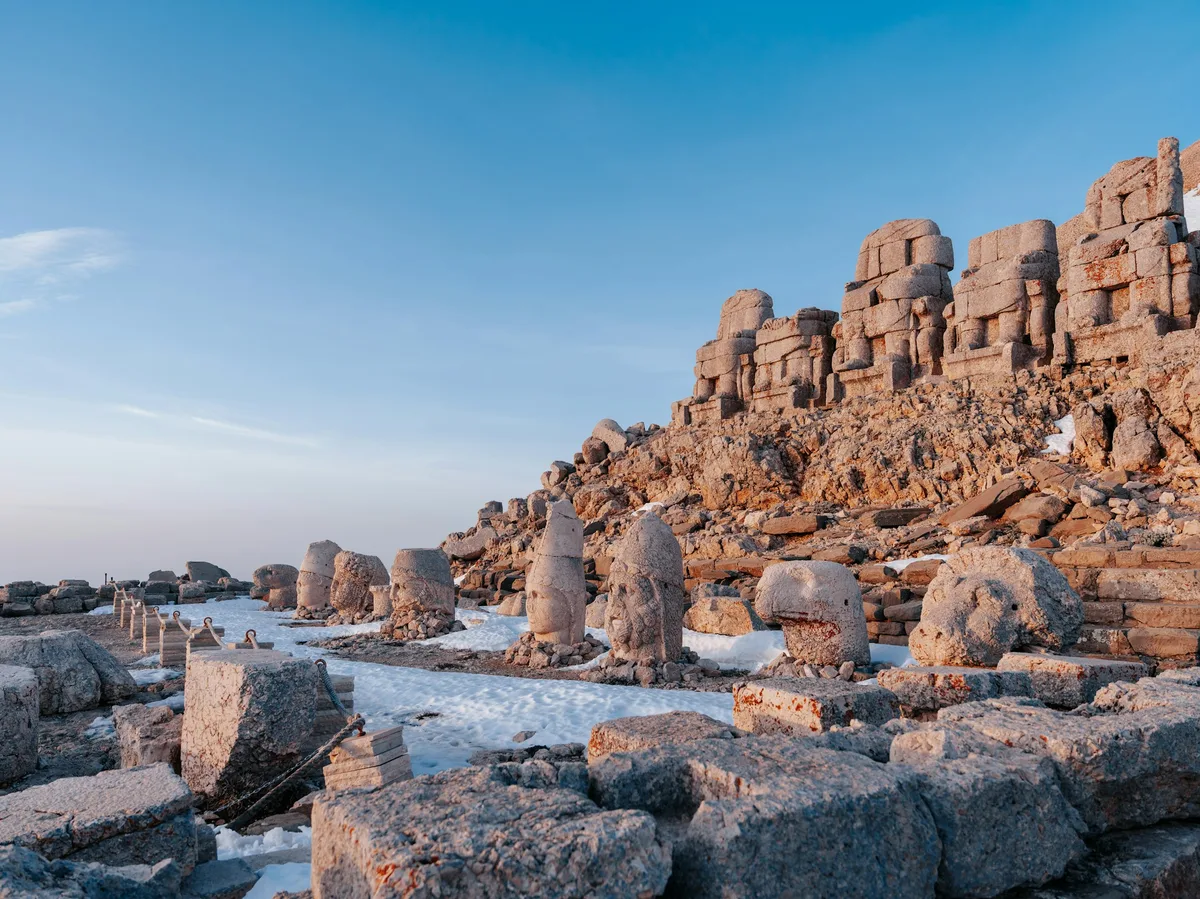
A mountaintop burial sanctuary built by a 1st-century BC king, ringed by colossal stone heads of gods and the king himself, toppled from their statues by centuries of earthquakes.
Visitor guide
Mount Nemrut, also spelled Nemrud, is a mountain in Adiyaman Province in southeastern Turkey, in the Anti-Taurus range. Its summit bears a tomb-sanctuary built by Antiochus I of Commagene, with colossal statues of gods and the king himself, and it is a UNESCO World Heritage Site inscribed in 1987.
According to Wikipedia, Antiochus I of Commagene built the monument in the first century BC; the article dates it to 62 BC, while UNESCO gives his reign as 69 to 34 BC. Wikipedia gives the summit height as about 2,150 metres in its introduction and 2,134 metres in its infobox. The complex centres on a tumulus, a mound of loose rock about 49 metres high and 152 metres across by Wikipedia's figures (UNESCO describes a mound of stone chips about 50 metres high and 145 metres in diameter), which the article suggests was built to protect the tomb from robbers. Excavations have not found Antiochus's burial chamber, but the site is still believed to be his tomb.
On terraces to the east and west stood seated statues, roughly 8 to 9 metres tall, of Antiochus himself, two lions, two eagles and composite deities such as Zeus-Oromasdes, Apollo-Mithras-Helios-Hermes and Heracles-Artagnes-Ares, as well as the goddess Tyche of Commagene. The faces are Greek in style while the clothing and hairstyles are Persian, reflecting the blend of cultures that Antiochus promoted by stressing descent from both the Achaemenids and the Seleucids. Each statue was inscribed with the god's name. At some point the heads were struck off and now lie scattered across the terraces; damage to the noses suggests deliberate iconoclasm. The statues have not been put back in their original positions. Stone reliefs that probably formed a frieze show Antiochus's Greek and Persian ancestors.
The east terrace is the better preserved, with heads of Antiochus, Zeus, Apollo, Heracles and a lion and a row of thrones. The west terrace includes a slab showing a lion with stars and the planets Jupiter, Mercury and Mars, which has been read as a sky chart for 7 July 62 BC and possibly marks when construction began, although other researchers prefer a different date. A similar arrangement exists at Arsameia on the Nymphaios, linked to Antiochus's father.
Wikipedia describes Antiochus as blending the political and religious traditions of Cappadocia, Pontus and Armenia, drawing on Parthian and Armenian customs to revive his dynasty's religion. UNESCO sees the pantheon's syncretism and the kingdom's dual Greek and Persian lineage as evidence of a mixed culture. A path along the base of the mountain suggests a walled passage once linked the two terraces, and the article suggests that the site hosted religious ceremonies given its astronomical and religious character.
In 1881 the German engineer Karl Sester, assessing transport routes for the Ottomans, excavated the site, and Theresa Goell began campaigns in 1954 and devoted much of her life to it. Wikipedia notes that tourists typically visit between April and October, with Adiyaman, Kahta and Malatya common starting points, and the site is often visited at sunrise or sunset. Conditions at altitude can be cold, and the terrain is rocky. A private guided visit with a dedicated vehicle and driver suits the long mountain access; details are tailored on request.
See every tour and attraction we cover in Turkey.