TorontoOntario · 36 tours
 Niagara FallsOntario · 25 tours
 New York CityNew York · 30 tours
 Las VegasNevada · 8 tours
 San FranciscoCalifornia · 16 tours
 VancouverBritish Columbia · 17 tours
 DubaiUAE · 54 tours
 Abu DhabiUAE · 5 tours
 Buenos AiresArgentina · 23 tours
 AthensGreece · 31 tours
 AucklandNew Zealand · 38 tours
 CancunMexico · 54 tours
No destinations match “”. Try searching all tours instead — that search understands full questions, not just place names.
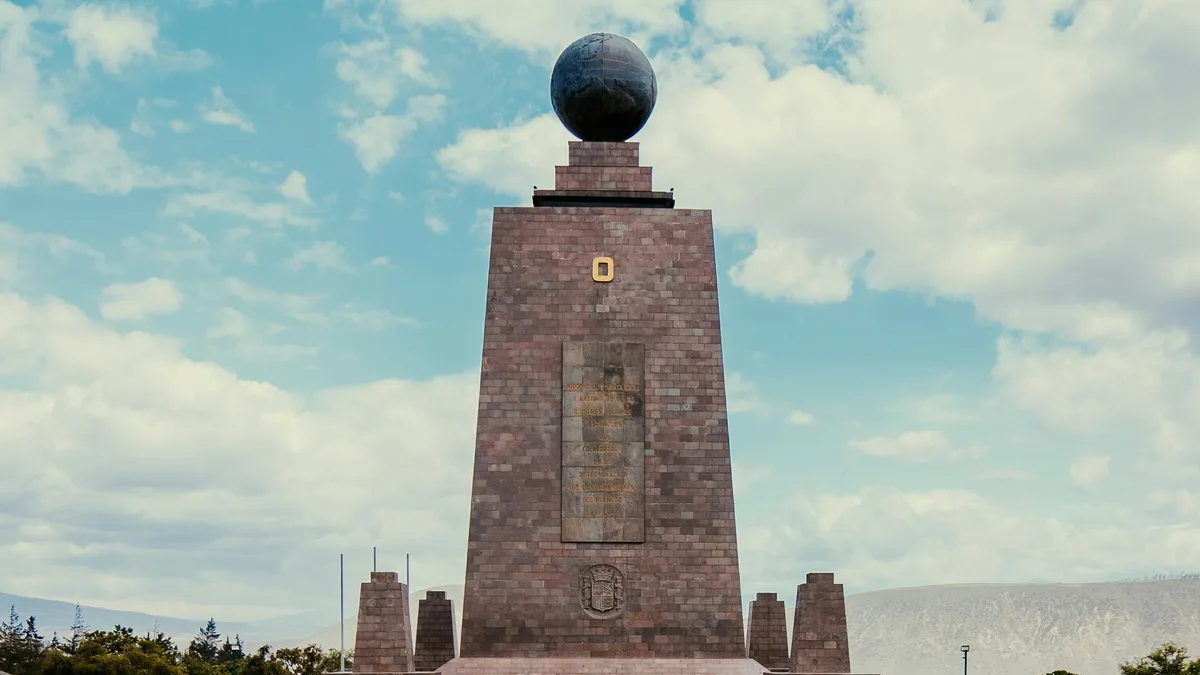
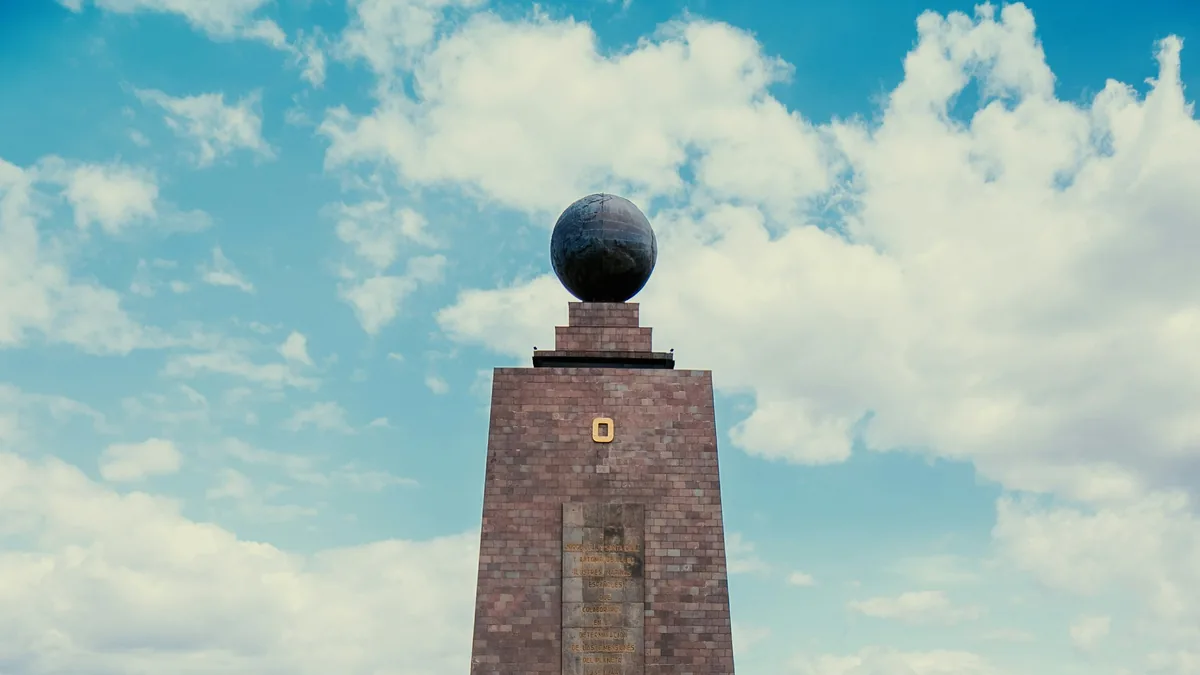
Mitad del Mundo, or the 'Middle of the World,' is a monument and museum complex just north of Quito marking the line of the equator with a large stone obelisk. The adjacent Intiñan Museum offers hands-on demonstrations of equatorial physics, letting visitors straddle the Northern and Southern hemispheres at once.
 Private Tours
A private guided half-day pairing the Mitad del Mundo equator monument with a ride on the TelefériQo cable car for volcano and city views.
 Private Tours
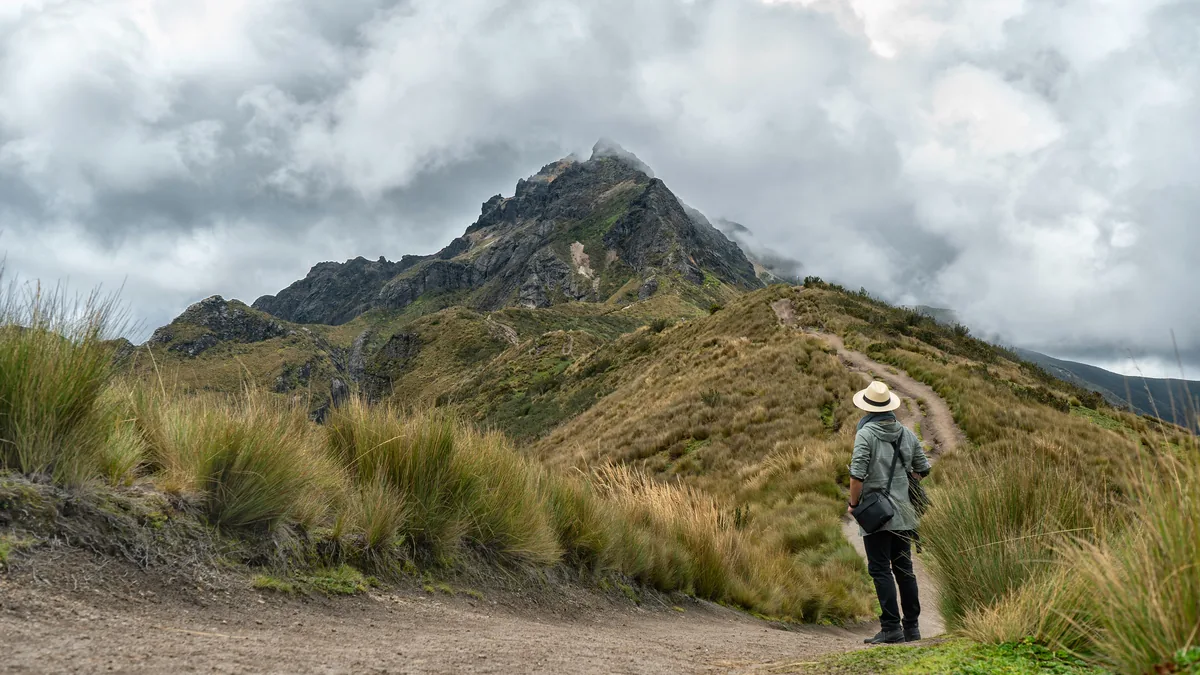
A private half-day tour to the Mitad del Mundo equator monument and the Intiñan Museum's equatorial science exhibits, plus a stop at the Pululahua Geobotanical Reserve — a volcanic crater that's actually inhabited.
Visitor guide
Mitad del Mundo, meaning Middle of the World, is a monument and visitor complex in San Antonio parish, about 26 kilometres north of central Quito, that commemorates the equator. A 30-metre stone-clad monument crowned with a globe stands at its centre, with a nearby private museum offering equator demonstrations.
The current monument is made of iron and concrete covered in andesite stone and was built between 1979 and 1982 to a design by architect Alfredo Fabián Páez, according to Wikipedia. It replaced an older, smaller monument that was moved about 7 kilometres to Calacalí. The globe at the top is 4.5 metres in diameter, and a small ethnographic museum inside covers the indigenous peoples of Ecuador. The surrounding site, owned by the Pichincha provincial government, also has a planetarium, a model of Quito, restaurants and craft shops.
The complex honours the French Geodesic Mission of 1736, an expedition of the French Academy of Sciences led by Louis Godin, Pierre Bouguer and Charles Marie de La Condamine. The scientists came to measure a degree of latitude near the equator to test whether the Earth is flattened at the poles, and their work also helped fix the approximate position of the equator. The country's name, Ecuador, means equator in Spanish.
The painted line at the monument is not exactly on the equator as measured today. Wikipedia explains that using the WGS84 system employed by modern GPS, the equator lies roughly 240 metres from the marked line (English Wikipedia says north, Spanish Wikipedia says the structure sits south of the true line). The older measurements were remarkable for their time, and the monument remains a cultural landmark even if the line is an approximation.
A privately run attraction, the Intiñan Solar Museum, lies a short distance northeast of the monument. It presents itself as marking the true equator, although modern measurements suggest otherwise. Its demonstrations include water draining in different directions and balancing an egg on its end. Wikipedia notes that the Coriolis effect is too weak to influence household drains and that egg balancing works equally well elsewhere, so the demonstrations are best enjoyed as entertaining science theatre rather than proof of equatorial physics.
Mitad del Mundo is an easy half-day outing from Quito and is often combined with other sights in the north of the city region. A private tour with a driver and guide can separate the history from the showmanship and suit travellers interested in geography, indigenous culture or family-friendly stops.
According to Spanish-language Wikipedia, the tourist complex was commissioned by the provincial council in 1981 and completed and inaugurated in 1992. The monument is a pyramid of iron and concrete covered in carved andesite, with each face oriented to a cardinal point and a metal globe about 4.5 metres across at the top, crossed by a band marking the equator. Inscriptions honour Pedro Vicente Maldonado, the Spanish scientists Jorge Juan and Antonio de Ulloa, the French expedition members and the Ecuadorian government. The complex also includes pavilions with exhibitions, among them one dedicated to the painter Oswaldo Guayasamín and one on the geodesic mission, as well as an insect museum and a model of colonial Quito. Spanish Wikipedia also lists the Intiñan museum, the Catequilla site and the Quitsato sundial as places that GPS studies place on the equator itself.
See every tour and attraction we cover in Quito.