TorontoOntario · 36 tours
 Niagara FallsOntario · 25 tours
 New York CityNew York · 30 tours
 Las VegasNevada · 8 tours
 San FranciscoCalifornia · 16 tours
 VancouverBritish Columbia · 17 tours
 DubaiUAE · 54 tours
 Abu DhabiUAE · 5 tours
 Buenos AiresArgentina · 23 tours
 AthensGreece · 31 tours
 AucklandNew Zealand · 38 tours
 CancunMexico · 54 tours
No destinations match “”. Try searching all tours instead — that search understands full questions, not just place names.
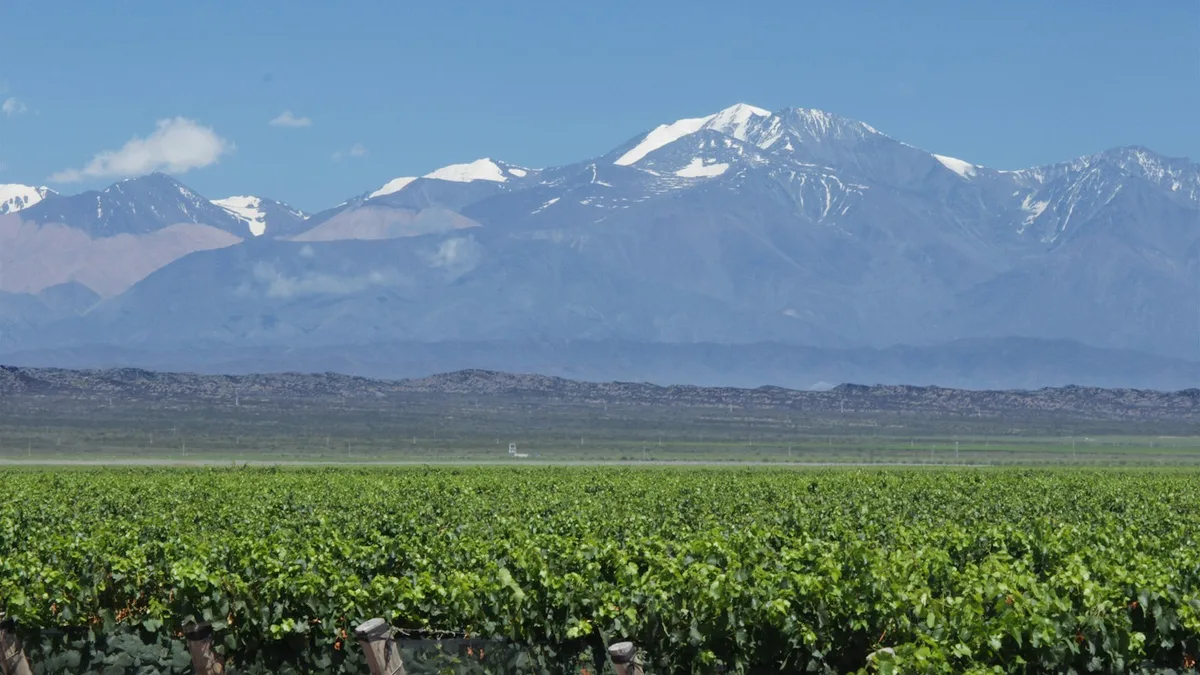
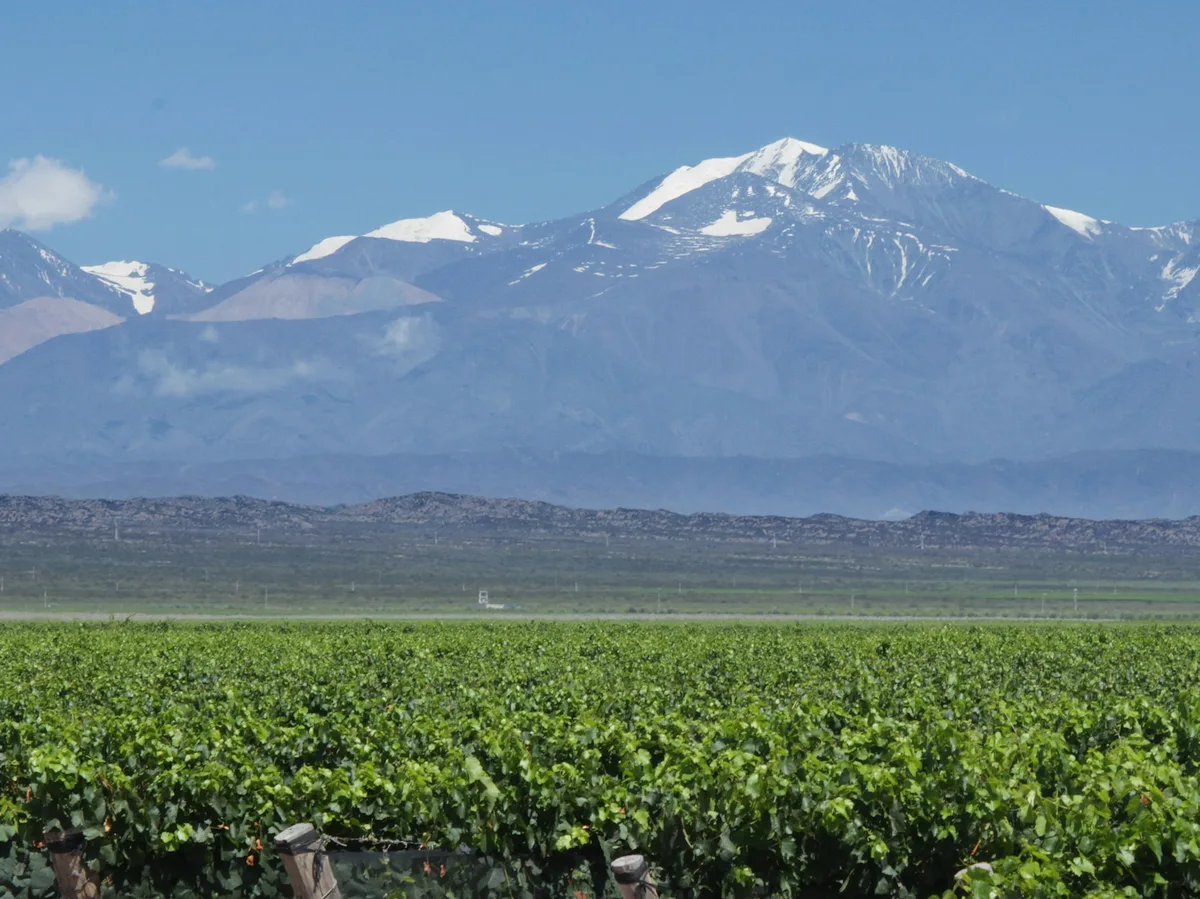
Argentina's largest wine-producing area, in the foothills of the Andes, known especially for Malbec grown at high altitude across dozens of family and estate bodegas.
Visitor guide
The Mendoza wine region lies in the eastern foothills of the Andes in western Argentina and is the country's most important wine-producing area. Wikipedia states that Mendoza Province accounts for more than 60 percent of Argentina's wine production, while Mendoza government figures put its share of wine elaboration closer to 78 to 80 percent, with Malbec its most important grape.
Wikipedia traces Argentine viticulture to Spanish colonisation, with missionaries planting the first vineyards in the 16th century. It gives 1556 for a first vineyard using cuttings from Chile's Central Valley and notes that vineyards expanded to Mendoza in the early 1560s, though it also records a 1557 commercial vineyard in Santiago del Estero, so early dates differ. Malbec reached Argentina later: the article says the French agronomist Miguel Aimé Pouget brought cuttings from France, including the first Malbec vines, at the request of Domingo Faustino Sarmiento when he was provincial governor, without giving a date.
Mendoza's vineyards sit among the highest in the world, with the average site located between about 600 and 1,100 m above sea level. The climate is continental and semi-arid, with four distinct seasons and no severe temperature extremes, which gives the vines a stable growing cycle. Summer hail, known locally as La Piedra, is the main climatic worry for growers.
The soils are largely alluvial, loose sand over clay. Because rainfall is low, vineyards depend on water from melting Andean glaciers carried by rivers such as the Mendoza, Tunuyán, Diamante and Atuel, supplemented by boreholes. Wikipedia notes that parts of the irrigation system of channels, canals and reservoirs date back to the 16th century. Spanish Wikipedia adds that irrigation channels called acequias water the trees lining the streets of Mendoza city, which receives roughly 267 mm of rain a year. Wikipedia also observes that Argentina is largely free of the phylloxera problem that damaged vineyards elsewhere, and most vines are grown on their own roots; flood irrigation and sandy soils are among the proposed reasons.
According to Wikipedia, Mendoza, historically part of Cuyo, experienced a wine boom in the 19th and early 20th centuries. The railway linking Buenos Aires and Mendoza opened in 1885 and replaced slow, costly cart trade, while mass immigration, mainly from southern Europe, increased demand and brought winemaking know-how. Vineyards grew from about 1,000 hectares in 1830 to 45,000 in 1910, and by 1910 around 80 percent of Argentine vineyards were planted with French stock, mainly Malbec. Exports grew in the 1990s, when visiting winemakers from France, California and Australia introduced temperature-controlled fermentation, yield control and new oak barrels, and the 2002 peso devaluation lowered production costs and boosted wine tourism.
The main wine departments are Maipú and Luján de Cuyo. Luján de Cuyo received Argentina's first delineated appellation in 1993 and is known for Malbec grown at roughly 800 to 1,100 m, while Maipú is praised for its Cabernet Sauvignon. The Valle de Uco, which includes Tupungato with vineyards at nearly 1,200 m, is described as an emerging source of premium wines including Chardonnay; in 1994 Nicolás Catena Zapata planted Malbec at nearly 1,500 m at the Adrianna Vineyard in Gualtallary, Tupungato. San Rafael to the south and San Martín to the east have been historically important producers.
Malbec leads plantings, followed by Cabernet Sauvignon, Tempranillo and Chardonnay, while the pink-skinned Criolla Grande and Cereza varieties still account for around a quarter of vines, mostly used for everyday wine and grape concentrate. Wikipedia notes that Argentine Malbec has smaller berries in tighter clusters than French Malbec, and that altitude research, which examines how stronger sunlight at height affects the grapes, is being conducted by producers such as Bodega Catena Zapata.
Mendoza's annual Fiesta Nacional de la Vendimia, first held in 1936, celebrates the grape harvest with parades, a blessing of the fruits and a main show at the Frank Romero Day amphitheatre, and takes place around the first weekend of March. Wineries range from large producers to smaller family estates, many set against views of the Andes. Harvest in the southern hemisphere takes place in the early part of the year, and the setting changes with the seasons. A private guided visit with a driver suits a day among the vineyards, since it lets you taste wine without needing to drive between estates.
See every tour and attraction we cover in Argentina.