TorontoOntario · 36 tours
 Niagara FallsOntario · 25 tours
 New York CityNew York · 30 tours
 Las VegasNevada · 8 tours
 San FranciscoCalifornia · 16 tours
 VancouverBritish Columbia · 17 tours
 DubaiUAE · 54 tours
 Abu DhabiUAE · 5 tours
 Buenos AiresArgentina · 23 tours
 AthensGreece · 31 tours
 AucklandNew Zealand · 38 tours
 CancunMexico · 54 tours
No destinations match “”. Try searching all tours instead — that search understands full questions, not just place names.
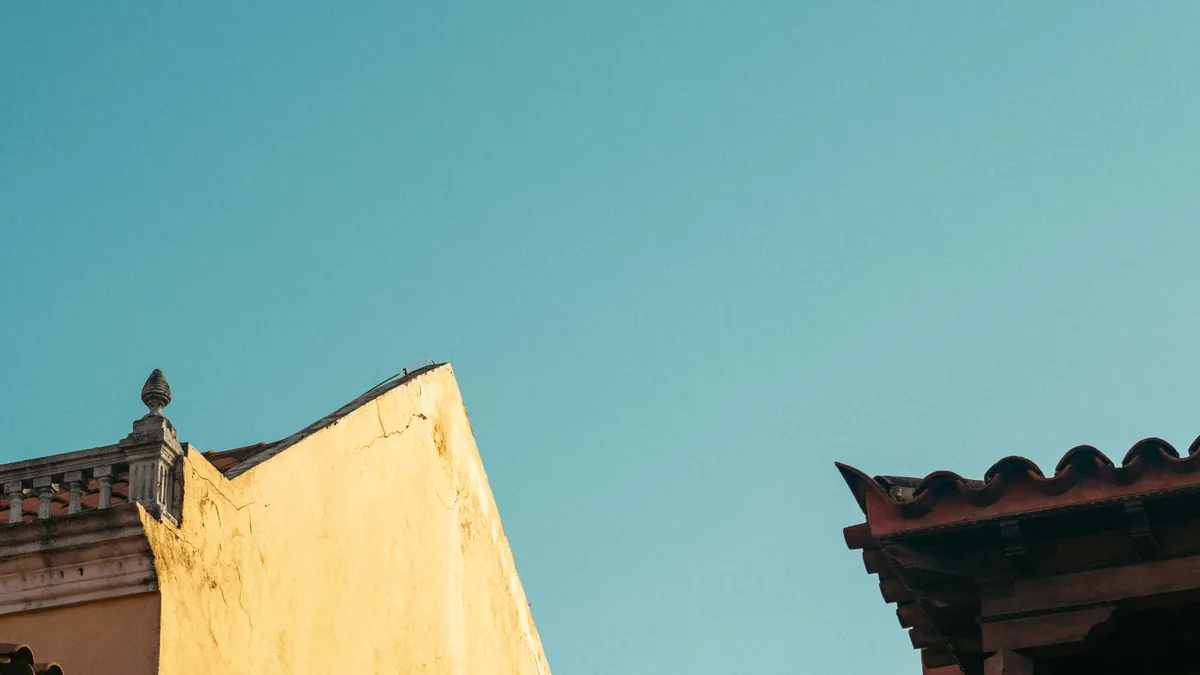
A row of 23 vaulted chambers fronted by 47 arches, built into Cartagena's city walls in the late 1700s, among the last major structures the Spanish added to the fortifications. Originally used to store munitions and later as a military prison, Las Bóvedas today houses small shops selling local handicrafts and souvenirs, just steps from the walls' northern edge.
Visitor guide
Las Bovedas, or The Vaults, is a row of arched, bombproof chambers built into the city walls of Cartagena de Indias, Colombia. It stands between the Santa Clara and Santa Catalina bastions and forms part of the colonial fortifications that are included in Cartagena's UNESCO World Heritage listing.
According to Wikipedia, the 23 bombproof vaults were built between 1789 and 1795 to a design by the military engineer Antonio de Arevalo, and the 47 porticos in front of them were completed in 1798. Other sources give slightly different years: History Hit says 1792 to 1798, and the Cuban reference site EcuRed says work began in 1789 and finished in 1798, so the exact construction years are uncertain. EcuRed calls Arevalo the last of the great Spanish military engineers to work in Cartagena and describes the vaults as the final work of the walled city, closing the ring of fortifications around the old town.
The site had a history of weakness. A Spanish-language source notes that strong northerly winds had opened a breach between the Santa Clara and Santa Catalina bastions that an earlier engineer, Juan de Herrera y Sotomayor, never managed to close, and that another engineer, Lorenzo de Solis, proposed building here in 1755.
EcuRed describes a symmetrical neoclassical structure with a portico of 47 round arches and 23 half-barrel vaults behind it. A triangular pediment above the central arch carries a marble Spanish royal coat of arms bearing the date 1798. The chambers were conceived to resist bomb attack, to house royal troops where they would defend the wall, to store munitions and to strengthen a stretch of the rampart. Loopholes on the outer face let sentries watch the adjacent beach and also ventilated the interior, and two chimneys at the ends of the building let air circulate through passages to the inner galleries, which helped in Cartagena's hot climate.
EcuRed says the building was first used as a barracks by Cartagena's white militia, and that it later became a munitions depot and then served the region's liquor industry. Wikipedia and History Hit both say the vaults were used as dungeons or prison cells during the nineteenth-century wars, and that prisoners could be standing in seawater at high tide. EcuRed adds that during the War of Independence the vaults held prisoners including General Francisco de Paula Santander, though this specific claim comes from a single source among those reviewed. Wikipedia also notes that, after independence, patriot and republican forces used the vaults as a garrison in the same way as the Spanish crown.
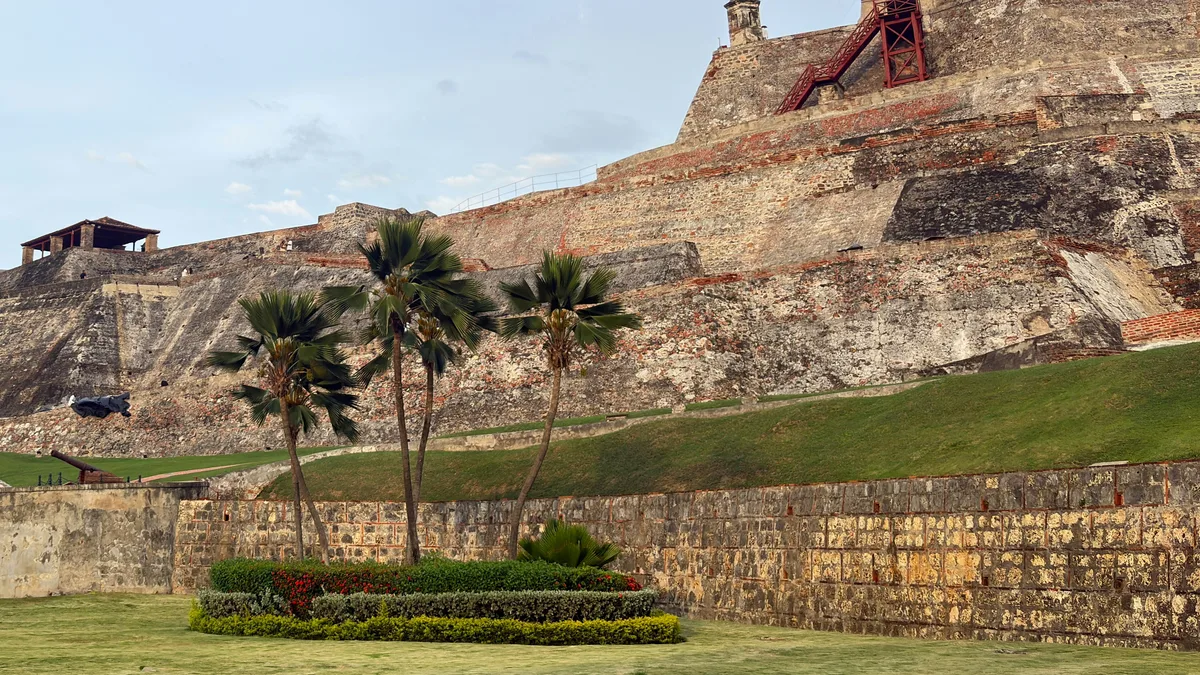
Cartagena was a major Spanish port on the Caribbean, and its defences were repeatedly strengthened in the eighteenth century because English and other forces threatened it. The surviving ring of walls, forts and bastions is the main reason the old town was inscribed on the UNESCO World Heritage List in 1984, under the name Port, Fortresses and Group of Monuments, Cartagena. The Vaults are one of the most recognisable stretches of that system because of their long, repeating arcade.
The Caribbean Sea is visible from the top of the structure, which makes the walkway above the vaults a popular lookout over the water. The former chambers now house craft shops, galleries and other businesses selling traditional Colombian handicrafts and souvenirs. EcuRed notes that the national government restored the floors in the twentieth century after the original concrete and brick surface was largely ruined. A private guide can explain how the vaults fit into the larger defensive system devised by Spanish engineers, and a driver can drop visitors near the city gates, since the old town is best explored on foot.
See every tour and attraction we cover in Cartagena.