TorontoOntario · 36 tours
 Niagara FallsOntario · 25 tours
 New York CityNew York · 30 tours
 Las VegasNevada · 8 tours
 San FranciscoCalifornia · 16 tours
 VancouverBritish Columbia · 17 tours
 DubaiUAE · 54 tours
 Abu DhabiUAE · 5 tours
 Buenos AiresArgentina · 23 tours
 AthensGreece · 31 tours
 AucklandNew Zealand · 38 tours
 CancunMexico · 54 tours
No destinations match “”. Try searching all tours instead — that search understands full questions, not just place names.
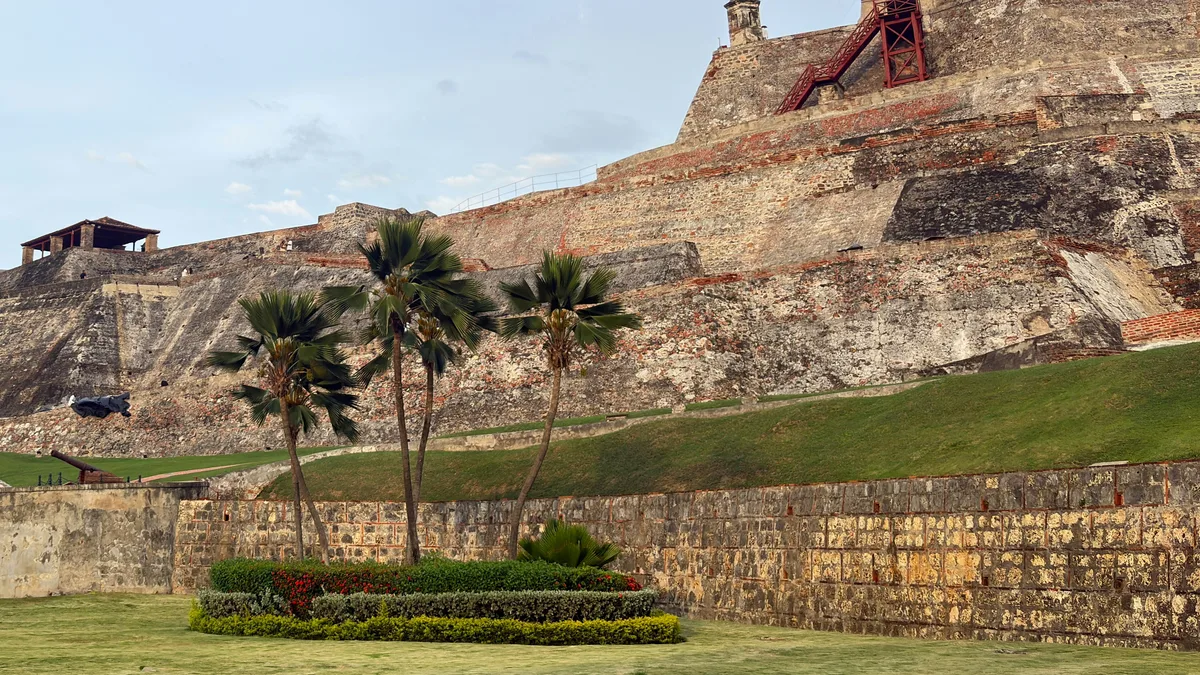
Often described as the largest fortification the Spanish built in the Americas, begun in the sixteenth century and greatly expanded between 1657 and 1798. Its sloped stone walls and network of tunnels helped Cartagena withstand a major 1741 siege by British Admiral Edward Vernon, and it remains one of the best-preserved colonial military structures in the world.
 Private Tours
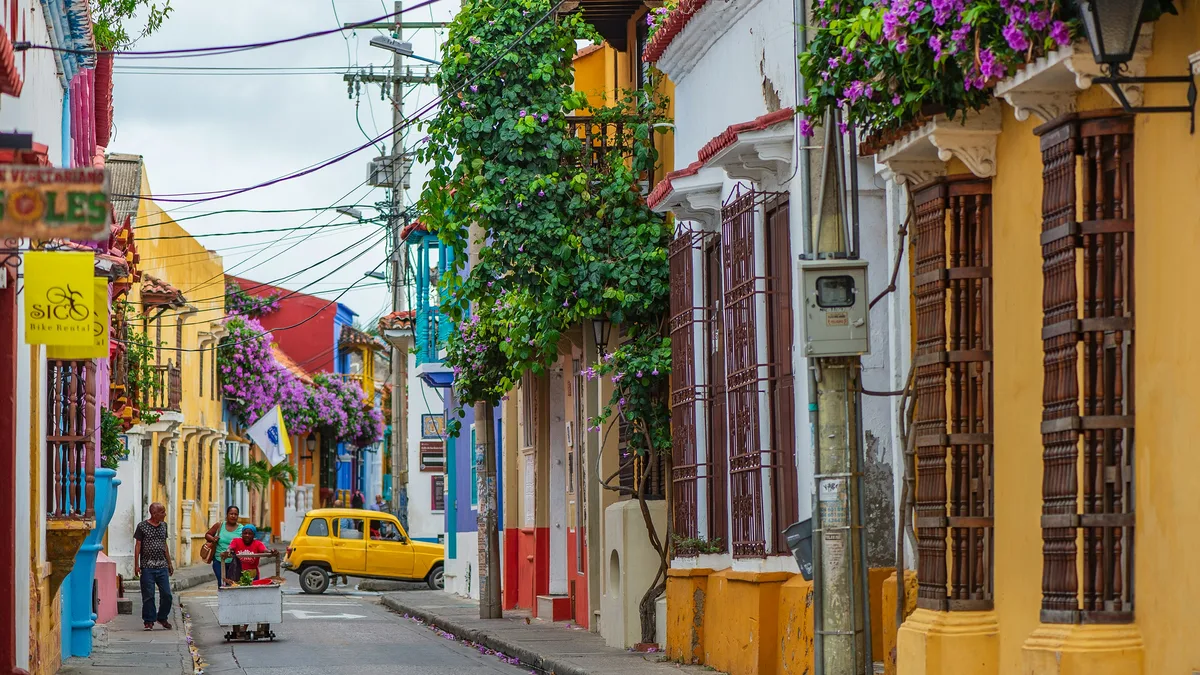
See more of Cartagena than a walking tour can reach, from the Republican-era mansions of Manga to the sweeping views from Castillo San Felipe de Barajas and Convento de la Popa.
 Private Tours
Learn how the 1741 Battle of Cartagena shaped the region for centuries, then explore Colombia's pre-Columbian heritage at the Zenú Gold Museum, all on a private half-day tour with real street food stops.
Visitor guide
The Castillo San Felipe de Barajas is a Spanish colonial fortress in Cartagena, Colombia, standing on the Hill of San Lazaro and commanding the land and sea approaches to the city. It is part of the UNESCO-listed port, fortresses and group of monuments of Cartagena.
According to Wikipedia, the castle was originally known as the Castillo de San Lazaro and sits about 41 metres above sea level. Its name honours King Philip IV of Spain. Wikipedia's own dates conflict, citing both 1536 and 1639 for early construction, so the safest summary is that the fortress was first built in the sixteenth and seventeenth centuries and expanded in stages, with a major building phase between 1639 and 1657. It was designed as a triangular fort on a hill with eight batteries and a garrison of about 200 soldiers and four gunners.
Construction relied on enslaved African labour under Spanish supervision, a fact that is part of the site's history. Further work followed over the next century, including repairs by Jose de Herrera y Sotomayor in 1739 and an expansion by Antonio de Arevalo in 1763.
The fortress was involved in several clashes between the late seventeenth and early nineteenth centuries. In the 1697 raid on Cartagena during the War of the Grand Alliance, the castle fell to the French privateer Baron de Pointis. In 1741, during the Battle of Cartagena de Indias, part of the War of Jenkins' Ear, British admiral Edward Vernon attacked the fortress, and his forces were repelled by the Spanish admiral Blas de Lezo. During the wars of independence, a large Spanish expeditionary force under Pablo Morillo took Cartagena in December 1815.
The fortification is a series of walls, wide at the base and narrow towards the parapet, arranged as interlocking bunkers so that the batteries and parapets protect one another. Wikipedia lists the surrounding batteries as Santa Barbara, San Carlos y los Apostoles, del Hornabeque, de la Cruz, de la Redencion and San Lazaro, with a combined 68 guns facing away from the city. A caponier joined the Media Luna causeway.
The most distinctive feature is the maze of tunnels. A main underground gallery runs along the perimeter of the complex at sea level, and chambers within it could be exploded to stop attackers moving across the top. Water channels and breakwaters were built to manage rainwater. Wikipedia describes it as a formidable defensive complex of Spanish military architecture, and some descriptions call it the largest fortification the Spanish built in the Americas, though that superlative is not firmly established in the sources read here.
For many decades the castle was poorly preserved, and tropical vegetation covered the battlements and soil built up in the tunnels after it stopped being used for military purposes. UNESCO listed it in 1984 together with the historic centre of Cartagena. Since 1990 it has also hosted social and cultural events for foreign delegations at presidential summits and ministerial meetings, including the Non-Aligned Movement summit in 1995 and the Rio Group summit in 2000.
The fort is open to visitors, but only some of its tunnels can be viewed. The hilltop is hot and exposed, so water, sun protection and comfortable shoes are useful. A private guide can explain the military engineering and the 1741 siege while a driver handles the short transfer from the old town.
See every tour and attraction we cover in Cartagena.