TorontoOntario · 36 tours
 Niagara FallsOntario · 25 tours
 New York CityNew York · 30 tours
 Las VegasNevada · 8 tours
 San FranciscoCalifornia · 16 tours
 VancouverBritish Columbia · 17 tours
 DubaiUAE · 54 tours
 Abu DhabiUAE · 5 tours
 Buenos AiresArgentina · 23 tours
 AthensGreece · 31 tours
 AucklandNew Zealand · 38 tours
 CancunMexico · 54 tours
No destinations match “”. Try searching all tours instead — that search understands full questions, not just place names.
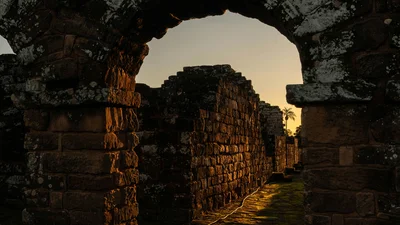
A partially restored 18th-century Jesuit mission near Trinidad, also a UNESCO World Heritage Site, notable for its unusual triple-nave church design that was never fully completed. Its scale still gives a real sense of the ambition of Paraguay's Jesuit reduction settlements.
Multi-Day Tours
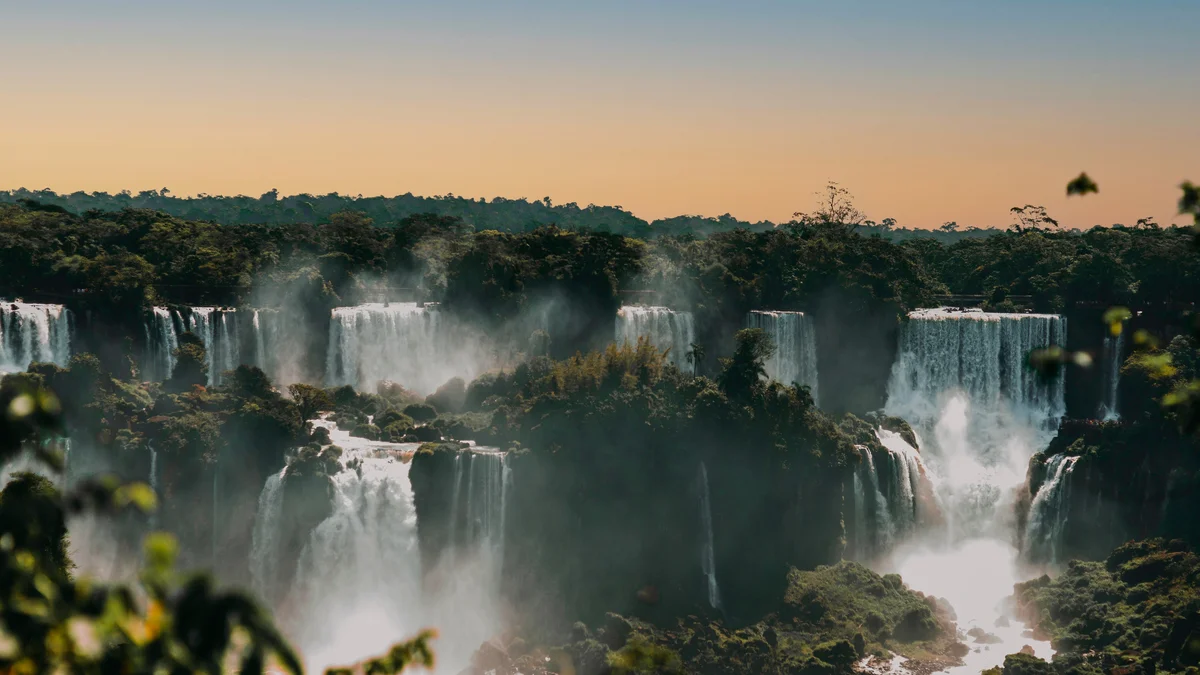
A comprehensive, custom-paced circuit through Paraguay's real highlights — colonial Asunción, the artisan towns of the Golden Circuit, the UNESCO Jesuit mission ruins, the Itaipu Dam, and a finish at Iguazu Falls.
 Multi-Day Tours
A focused private trip from Asunción through Paraguay's colonial mission towns and UNESCO-listed Jesuit ruins, finishing with a full day at Iguazu Falls.
Visitor guide
The Jesuit Mission of Jesus de Tavarangue is a set of ruins of a former Jesuit mission settlement in Itapua department in southern Paraguay. It is best known for the unfinished church at its centre. Together with the nearby La Santisima Trinidad de Parana, it was inscribed as a UNESCO World Heritage Site in 1993.
According to the travel reference Atlas Obscura, the Reduccion de Jesus was established in 1685 at a different site near the Monday River. It was relocated several times and moved to its present site in 1760. The mission belonged to the Jesuit network of about thirty reductions in what are now Paraguay, Argentina, Brazil and Bolivia, where Guarani communities lived in self-sufficient towns of roughly 2,000 to 3,000 people. The Jesuits studied Guarani and developed a written form of the language.
The main interest of the site is the church, which was still under construction when the Jesuits were expelled from the Rio de la Plata province in 1767 and was never completed. Wikipedia says the planned building was about 70 metres long and 24 metres wide, which would have made it one of the largest churches of its time, and that it was modelled on a Jesuit church in Europe, described in one source as the Sanctuary of Loyola in Spain and in another as the Church of Saint Ignatius of Loyola, so the exact model is not certain.
Notable features include three impressive front doors, a stone pulpit, friezes with angels, carved stone lintels in the shape of roses and a bell tower. The semi-complete building later fell into ruin, which is why the church reads today as a partly finished structure open to the sky.
The Trinidad and Jesus ruins were inscribed in 1993 at the seventeenth session of the World Heritage Committee under cultural criterion iv. UNESCO lists the Jesus core zone at about 15.9 hectares, with a buffer zone of about 20 hectares. Wikipedia describes the ruins as showing a distinctive way of life and education in the Jesuit reductions, and calls the Jesus church one of the most important structures among the region's thirty Jesuit towns.
The missions are inseparable from the Guarani people, whose labour and craft skills built the churches. Wikipedia says that conditions for Indigenous people improved after the missions were set up, compared with the encomienda system that had forced many into service, though historians view the reductions in different ways, and the missions were also tools of Spanish colonial and religious policy.
Jesus de Tavarangue lies a short drive from the road between Encarnacion and the Trinidad ruins, so many visitors see both in one outing, with a private vehicle and driver covering the distance. The ruins are in an open setting with little shade, so sun and heat can matter, and a guide can bring the architecture and the Guarani story to life.
See every tour and attraction we cover in Paraguay.