TorontoOntario · 36 tours
 Niagara FallsOntario · 25 tours
 New York CityNew York · 30 tours
 Las VegasNevada · 8 tours
 San FranciscoCalifornia · 16 tours
 VancouverBritish Columbia · 17 tours
 DubaiUAE · 54 tours
 Abu DhabiUAE · 5 tours
 Buenos AiresArgentina · 23 tours
 AthensGreece · 31 tours
 AucklandNew Zealand · 38 tours
 CancunMexico · 54 tours
No destinations match “”. Try searching all tours instead — that search understands full questions, not just place names.
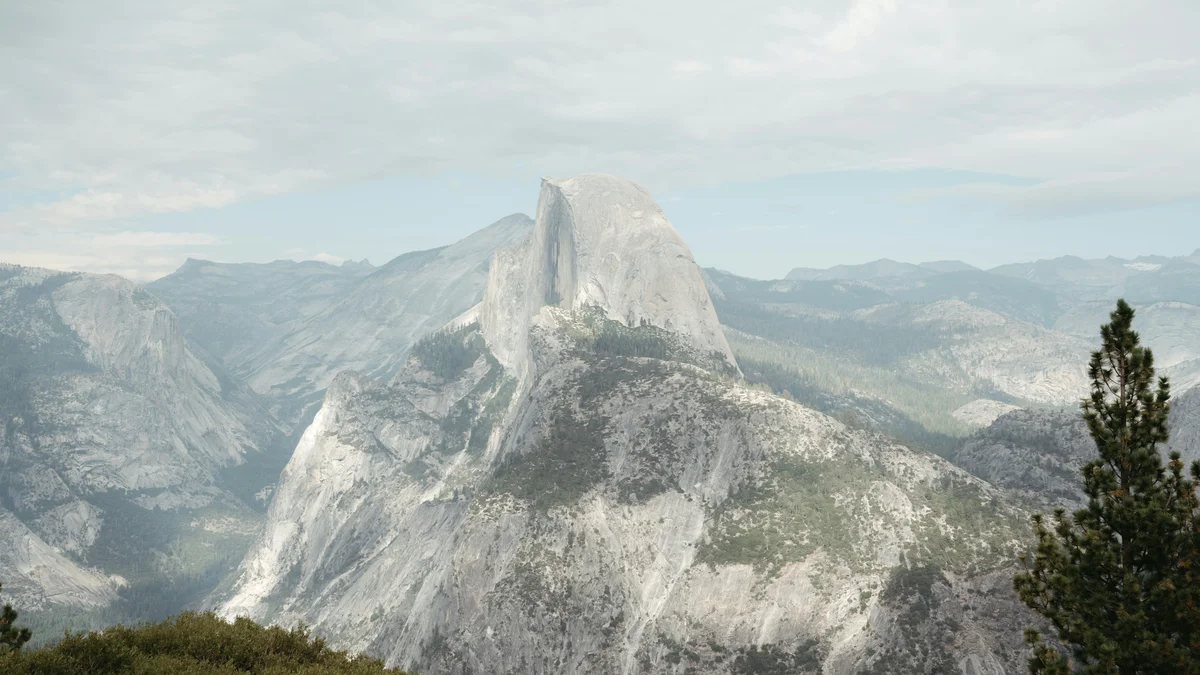
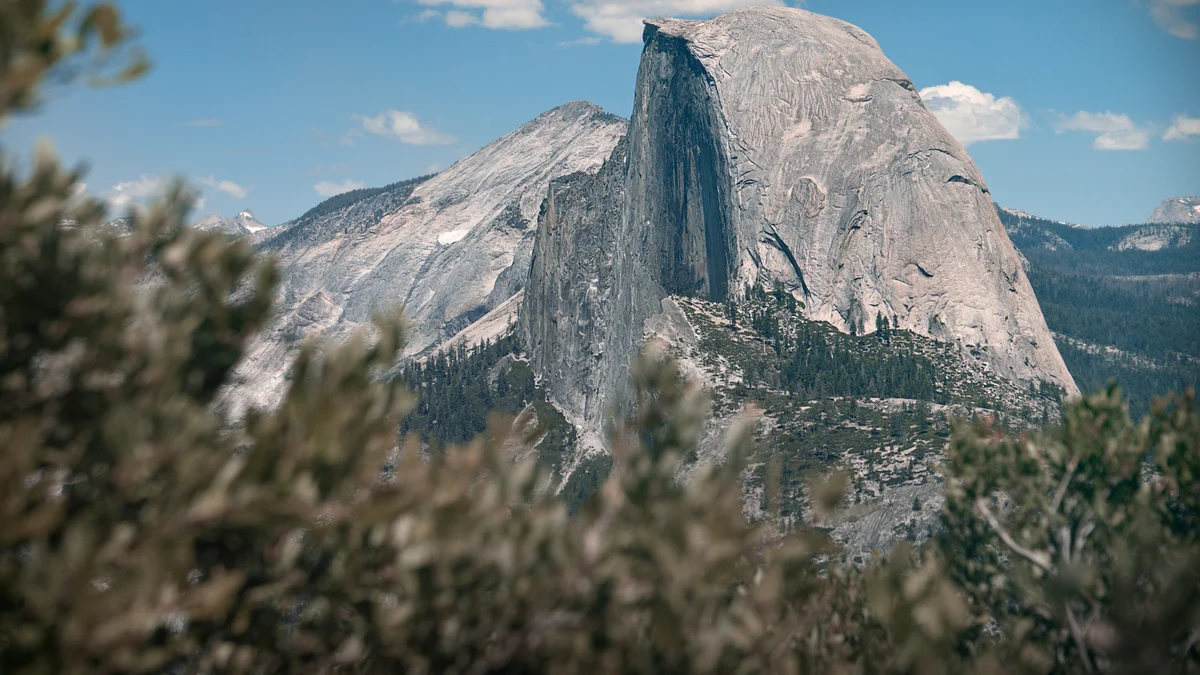
Half Dome is a granite dome rising nearly 5,000 feet above Yosemite Valley, sheared off on one side to give it the distinctive silhouette that has become the park's most recognizable symbol. Reaching the summit requires a strenuous roughly 14 to 16 mile round-trip hike, including a final push up steel cables bolted into the dome's steep back side, and the National Park Service requires a permit for that cable section during the main season. Most visitors instead admire it from valley viewpoints like Glacier Point or the meadows below, where its profile dominates the skyline.
Visitor guide
Half Dome is the granite dome at the eastern end of Yosemite Valley, rising to an elevation of 8,846 feet, and it is the emblem of Yosemite National Park. Its smooth, sheared northwest face and rounded back make it unmistakable from almost anywhere in the valley. It is also the destination of one of the park's most famous and most demanding day hikes.
Half Dome is a Cretaceous-age granitic mass roughly 93 million years old that cooled slowly underground and was later uncovered by erosion. Its sheer northwest face and rounded sides follow natural joints in the rock, and the northwest 'half' may be around 80 percent intact, so the name describes a shape rather than a literal missing piece. The Ahwahnechee name is Tis-sa-ack, generally given as 'cleft rock.' Another account associates the dome with the face of a young woman stained with tears, tied to dark streaks on the rock.
An 1865 survey report called the peak 'perfectly inaccessible,' according to the National Park Service. George Anderson proved otherwise on October 12, 1875, when he drilled eyebolts into the rock and pulled himself up. Sally Dutcher became the first documented woman to reach the summit, in October 1875, according to the National Park Service. The route Anderson established is the forerunner of today's cables: two steel cables run up the final stretch of about 400 feet, first installed in 1919 and listed on the National Register of Historic Places in 2012. Technical rock climbers tackle the Regular Northwest Face, first climbed in 1957 by Royal Robbins, Mike Sherrick and Jerry Gallwas, and Alex Honnold free soloed a route on the face in 2008.
The Park Service describes the day hike as 14 to 16 miles round trip with about 4,800 feet of elevation gain, and most hikers take 10 to 12 hours. The summit is nearly 5,000 feet above the valley floor. The cables are usually up from the Friday before Memorial Day until the day after the second Monday in October, though the dates can change with conditions. A permit is required when the cables are up. Day-hike permits are distributed by lottery through Recreation.gov, and a limited number are released shortly before each date; the number allowed beyond the base of the subdome is capped at 300 hikers per day. Always check the Park Service for current rules, permits and conditions, particularly because afternoon thunderstorms can make the final granite slabs dangerous.
Most visitors never climb it, and the views from below are excellent. The face glows at sunset from Sentinel Bridge and Valley View, it is framed from Glacier Point at close to eye level, and Mirror Lake in Tenaya Canyon sits at its foot. Ansel Adams's 1927 photograph Monolith, the Face of Half Dome helped make the dome a symbol of the conservation movement, and the shape appears on the California state quarter and in outdoor-brand logos.
A Voyzo private tour cannot take you up the cables, which require a permit and a long day of hiking, but a private vehicle and driver lets you build a relaxed valley day around the best viewpoints, with the flexibility to stop when the light is right.
See every tour and attraction we cover in Yosemite National Park.