TorontoOntario · 36 tours
 Niagara FallsOntario · 25 tours
 New York CityNew York · 30 tours
 Las VegasNevada · 8 tours
 San FranciscoCalifornia · 16 tours
 VancouverBritish Columbia · 17 tours
 DubaiUAE · 54 tours
 Abu DhabiUAE · 5 tours
 Buenos AiresArgentina · 23 tours
 AthensGreece · 31 tours
 AucklandNew Zealand · 38 tours
 CancunMexico · 54 tours
No destinations match “”. Try searching all tours instead — that search understands full questions, not just place names.
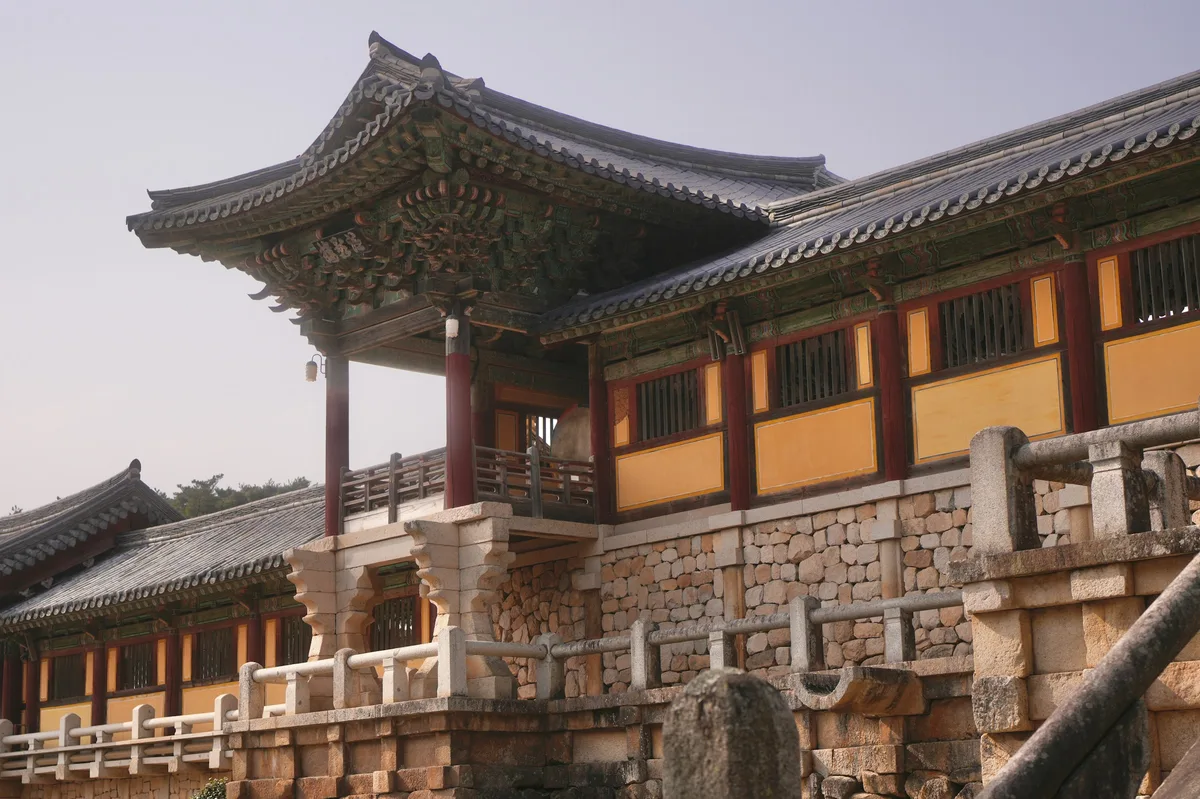
The former capital of the Silla dynasty, its royal burial mounds, an ancient astronomical observatory, and UNESCO-listed Buddhist temples earning it the nickname 'the museum without walls.'
Visitor guide
Gyeongju is a coastal city in North Gyeongsang Province, South Korea, and was the capital of the Silla kingdom, which Korean records date from 57 BC to 935 AD. It is often called the museum without walls because of the density of tombs, temples, pagodas and royal sites left from that period. Its Buddhist temples and archaeological zones include several UNESCO World Heritage Sites.
According to Wikipedia, Korean records say the state of Saro was founded in 57 BCE when six villages united under Bak Hyeokgeose, and the capital was called Sŏrabŏl in the Silla period. After the unification of the peninsula in 668 AD, Gyeongju became the centre of Korean political and cultural life. The Samguk Yusa estimates more than 170,000 households at its peak, though the article notes that figures vary. The last Silla king, Gyeongsun, surrendered to King Taejo of Goryeo in 935, and Taejo renamed the city Gyeongju in 940. Today the city lies about 370 kilometres southeast of Seoul and about 50 kilometres north of Busan.
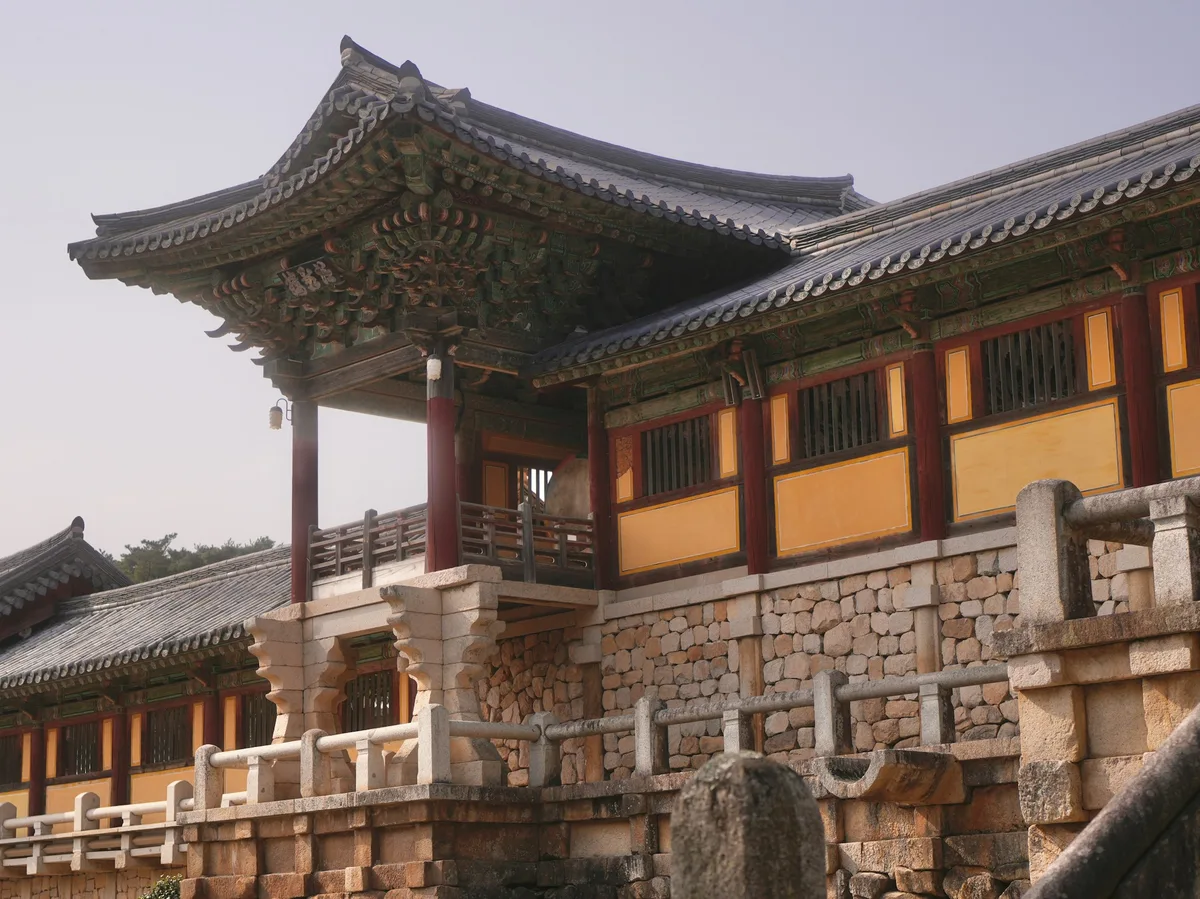
Bulguksa is a Buddhist temple on Tohamsan, a head temple of the Jogye Order. Temple records say a small temple was built on the site under King Beopheung in 528, while the Samguk Yusa says the present temple was begun under King Gyeongdeok in 751 by the chief minister Kim Daeseong, and completed by the Silla court in 774. The Japanese invasions of the 1590s burned the wooden buildings, and reconstruction began after 1604, with a major modern restoration from 1969 to 1973.
Two stone pagodas stand in its courtyard. Dabotap is 10.4 metres tall and highly ornate, while Seokgatap is 8.2 metres tall with simple lines; both were designated National Treasures on 20 December 1962. Bulguksa and the nearby Seokguram Grotto were added to the UNESCO World Heritage List in 1995.
The Gyeongju Historic Areas were inscribed by UNESCO in 2000 and include five zones: the Namsan belt, the Wolseong belt, the Tumuli Park belt, the Hwangnyongsa belt and the Sanseong belt. The Namsan belt contains ruins of 122 temples, 53 stone statues and 64 stone pagodas, according to Wikipedia. In the Tumuli Park belt, excavated royal tombs held wooden coffins and grave goods including gold, glass and fine ceramics. The Heavenly Horse Tomb contained a birch-bark saddle flap painted with a winged horse.
Cheomseongdae, built in the 7th century under Queen Seondeok, is a 9.17-metre tower made of about 365 granite pieces and is described as the oldest surviving observatory in Asia and possibly the world. Anapji is an artificial pond associated with the royal palace area. Hwangnyongsa, whose foundation stones suggest a temple covering 72,500 square metres, is described as the largest temple ever built in Korea; its wooden pagoda was destroyed in the 13th century.
Yangdong Folk Village is also listed by UNESCO, and the Gyeongju National Museum holds artefacts from the Silla period. The city is also known for Hwangnam bread, a red-bean pastry first baked in 1939.
The sites are spread across the city and nearby hills, so a private vehicle and driver can link them efficiently. A guide's explanations are valuable at tomb mounds and ruins, where much of the story lies underground or in the foundation stones rather than in standing buildings.
See every tour and attraction we cover in South Korea.