TorontoOntario · 36 tours
 Niagara FallsOntario · 25 tours
 New York CityNew York · 30 tours
 Las VegasNevada · 8 tours
 San FranciscoCalifornia · 16 tours
 VancouverBritish Columbia · 17 tours
 DubaiUAE · 54 tours
 Abu DhabiUAE · 5 tours
 Buenos AiresArgentina · 23 tours
 AthensGreece · 31 tours
 AucklandNew Zealand · 38 tours
 CancunMexico · 54 tours
No destinations match “”. Try searching all tours instead — that search understands full questions, not just place names.
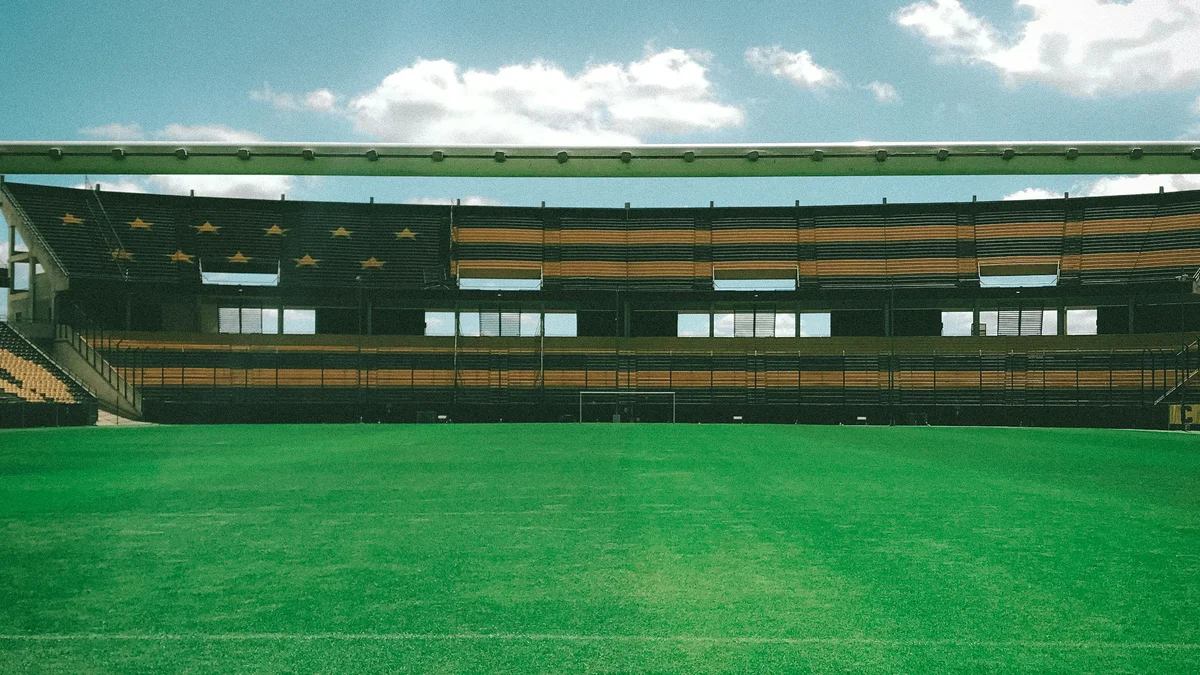
Built in 1930 to host the first-ever FIFA World Cup, which Uruguay won on home soil. It remains the only stadium in the world that FIFA has formally declared a global football monument. The complex includes the Museo del Fútbol, home to trophies and memorabilia from Uruguay's football history, and is still used for the national team's matches today.
Visitor guide
Estadio Centenario is a football stadium in Parque Batlle in Montevideo, Uruguay, built for the first FIFA World Cup in 1930. It is the national stadium of Uruguay, designed by the architect Juan Antonio Scasso, and FIFA has recognised it as a historical monument of world football.
Work began in July 1929, and Wikipedia says the stadium was built in roughly eight to nine months, largely by immigrant workers. Its name honours the centenary of Uruguay's first constitution, ratified in 1830. Heavy rains slowed construction, so several early World Cup matches were played at other grounds. The stadium opened on 18 July 1930, when Uruguay beat Peru 1 to 0 with a goal by Hector Castro.
It hosted ten matches of the tournament, including both semi-finals and the final, in which Uruguay defeated Argentina 4 to 2 before a crowd of 68,346. The stadium's record attendance, 79,867, was set in a match between Uruguay and Yugoslavia on 27 July 1930. Montevideo hosted every match of the tournament, according to Wikipedia's article on the city.
The stadium has four grandstands. The Olympic Tribune, the main stand, is named for Uruguay's Olympic football titles in 1924 and 1928. Two terraces are called Colombes and Amsterdam, after the 1924 and 1928 Olympic venues, and the America Tribune faces the Olympic stand. The Torre de los Homenajes, one of the stadium's towers, received a panoramic lift in a 2004 remodel. Capacity is about 60,000 with a pitch of 105 by 68 metres.
The Uruguayan Football Museum, opened in December 1975, sits beneath the Olympic stand, along with a primary school. In 1983 FIFA named the stadium the first Historical Monument of World Football, and Wikipedia says it is the only building to have received that recognition. Its status ties it closely to the national identity of Uruguay, which won the first World Cup on home soil.
Peñarol played its home matches there from 1933 until 2016, and Nacional has used it for some international fixtures. Wikipedia lists Copa America tournaments there in 1942, 1956, 1967 and 1995, and the stadium has also hosted South American club finals and concerts by international artists.
Many visitors come for the museum and a look at the stands and tower, and a private guide can explain the story of the 1930 tournament and why football is so important to Uruguay. Matches and events change access, so details of what can be seen on a given day are best checked in advance. The stadium is in Parque Batlle, a green district a short drive from Ciudad Vieja.
The stadium's story is bound up with Uruguay's football history, including the Olympic titles of 1924 and 1928 that are commemorated in the names of its stands. A guide can connect the stands, the museum and the tower into a short story of how a small country became an early football power.
Beyond the 1930 final, the stadium has been the main home of the national team, which gives it a living role in Uruguayan sporting life rather than only a museum-like one.
See every tour and attraction we cover in Montevideo.