TorontoOntario · 36 tours
 Niagara FallsOntario · 25 tours
 New York CityNew York · 30 tours
 Las VegasNevada · 8 tours
 San FranciscoCalifornia · 16 tours
 VancouverBritish Columbia · 17 tours
 DubaiUAE · 54 tours
 Abu DhabiUAE · 5 tours
 Buenos AiresArgentina · 23 tours
 AthensGreece · 31 tours
 AucklandNew Zealand · 38 tours
 CancunMexico · 54 tours
No destinations match “”. Try searching all tours instead — that search understands full questions, not just place names.
A hillside monument overlooking Mendoza City, dedicated to General José de San Martín and the Army of the Andes, whose 1817 crossing of the mountains helped secure independence for Argentina and Chile — one of Mendoza's most recognizable landmarks.
Visitor guide
The Cerro de la Gloria, meaning Glory Hill, is a small hill in General San Martín Park in Mendoza, Argentina, topped by a large memorial to the Army of the Andes. The monument commemorates the army led by General José de San Martín that crossed the Andes to help liberate Chile and Peru.
Spanish Wikipedia says the hill was formerly known as Cerro del Pilar, and the provincial executive changed its name on 30 January 1913, shortly before the monument was finished. Its summit is about 980 m above sea level, and it rises within Parque General San Martín on the western side of the city. Pedestrian paths, some with ramps, and a paved road with several lookouts lead to the top, where parking and facilities sit near the monument.
According to Wikipedia, work on the monument began in 1911 as part of the celebrations of the Argentine Centennial of 1910. It was inaugurated on 12 February 1914, the 97th anniversary of the Battle of Chacabuco, the 1817 battle in Chile that followed the Army of the Andes' crossing. The monument is the work of the Uruguayan sculptor Juan Manuel Ferrari together with several Argentine collaborators, including Juan Carlos Oliva Navarro and Víctor Garino. Ferrari merged two original design models into the final proposal, and Spanish Wikipedia notes input from Francisco Moreno, a member of the national commission that chose the design.
The base is made of massive rock blocks representing the Andes, while the large bronze sculptures were cast in Buenos Aires. The highest point of the monument is about 16 metres. At the front stands an equestrian statue of San Martín, flanked on each side by a group of five mounted grenadiers. At the top, cavalry is shown in attack position at the sound of the bugle, and above them an allegorical figure of Liberty, wrapped in the national flag and holding broken chains, represents independence, with a condor taking flight beside her as the symbol of the Andes. Reliefs around the base show the workshop run by Fray Luis Beltrán, donations from the women and people of the province, and the army's departure for Chile. The base also carries shields of Argentina, Chile and Peru, and a dedication reads La Patria al Ejército de los Andes, which means The Fatherland to the Army of the Andes.
The monument honours San Martín's campaign, in which his army crossed the Andes in the early months of 1817 and defeated Spanish forces in Chile. Wikipedia notes that Mendoza itself played a central role in this effort: the city was where San Martín and other Argentine and Chilean patriots organised the army, after the creation of the state of Cuyo in 1813 with San Martín as governor. Their victories contributed to the independence of Chile and later Peru.
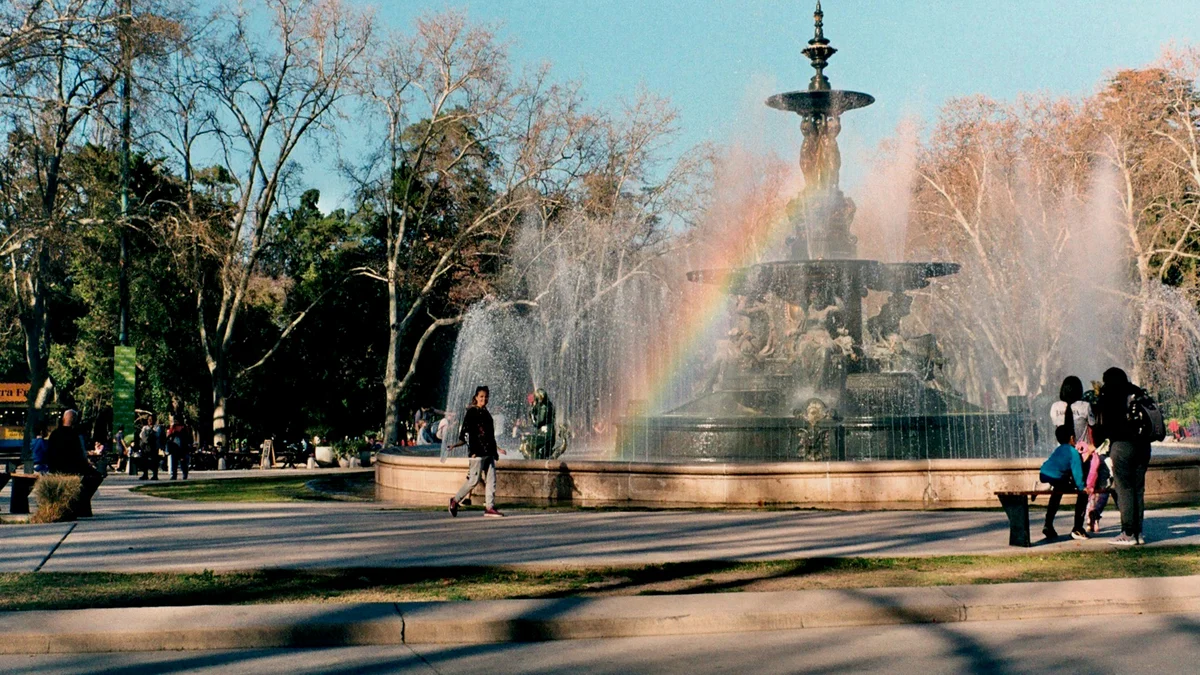
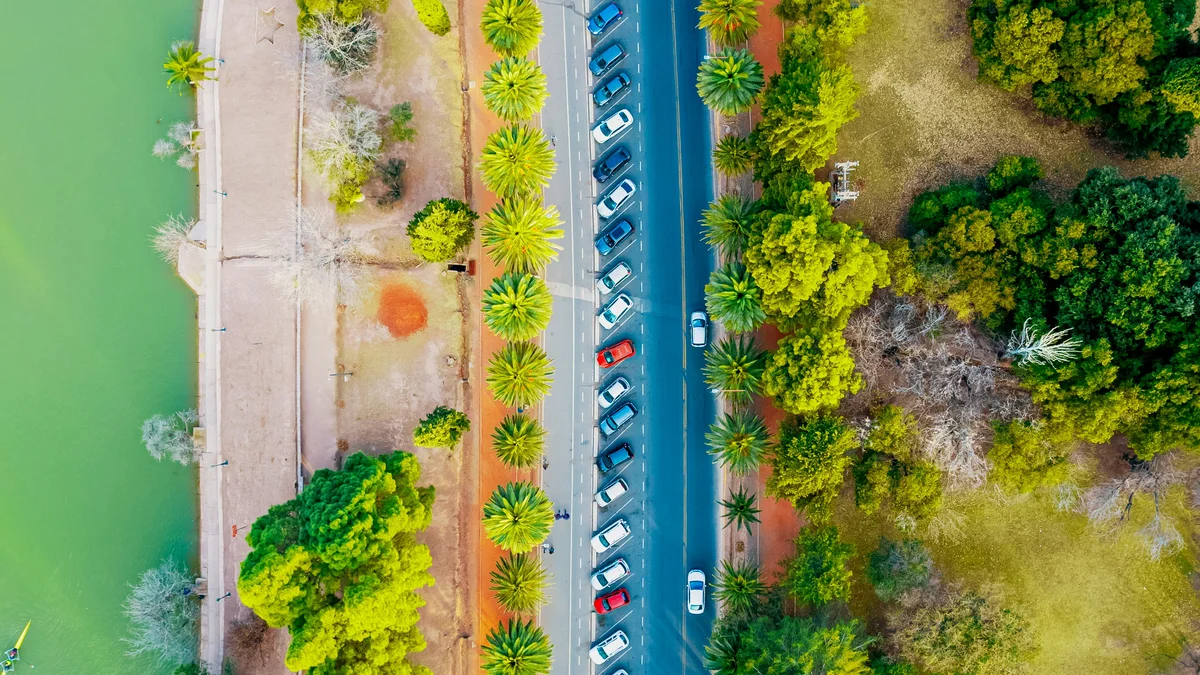
The hill lies within Parque General San Martín, a large park designed by Carlos Thays and begun in 1896. On its slopes and edges are the former zoo site, several university and research institutions, and the Estadio Malvinas Argentinas, a venue of the 1978 World Cup. The monument and its viewpoint are commonly combined with a visit to the park's lake, rose garden and gates. A private guided visit can explain the history of the Army of the Andes and make the stop easy to fit around other Mendoza sights.
See every tour and attraction we cover in Mendoza.