TorontoOntario · 36 tours
 Niagara FallsOntario · 25 tours
 New York CityNew York · 30 tours
 Las VegasNevada · 8 tours
 San FranciscoCalifornia · 16 tours
 VancouverBritish Columbia · 17 tours
 DubaiUAE · 54 tours
 Abu DhabiUAE · 5 tours
 Buenos AiresArgentina · 23 tours
 AthensGreece · 31 tours
 AucklandNew Zealand · 38 tours
 CancunMexico · 54 tours
No destinations match “”. Try searching all tours instead — that search understands full questions, not just place names.
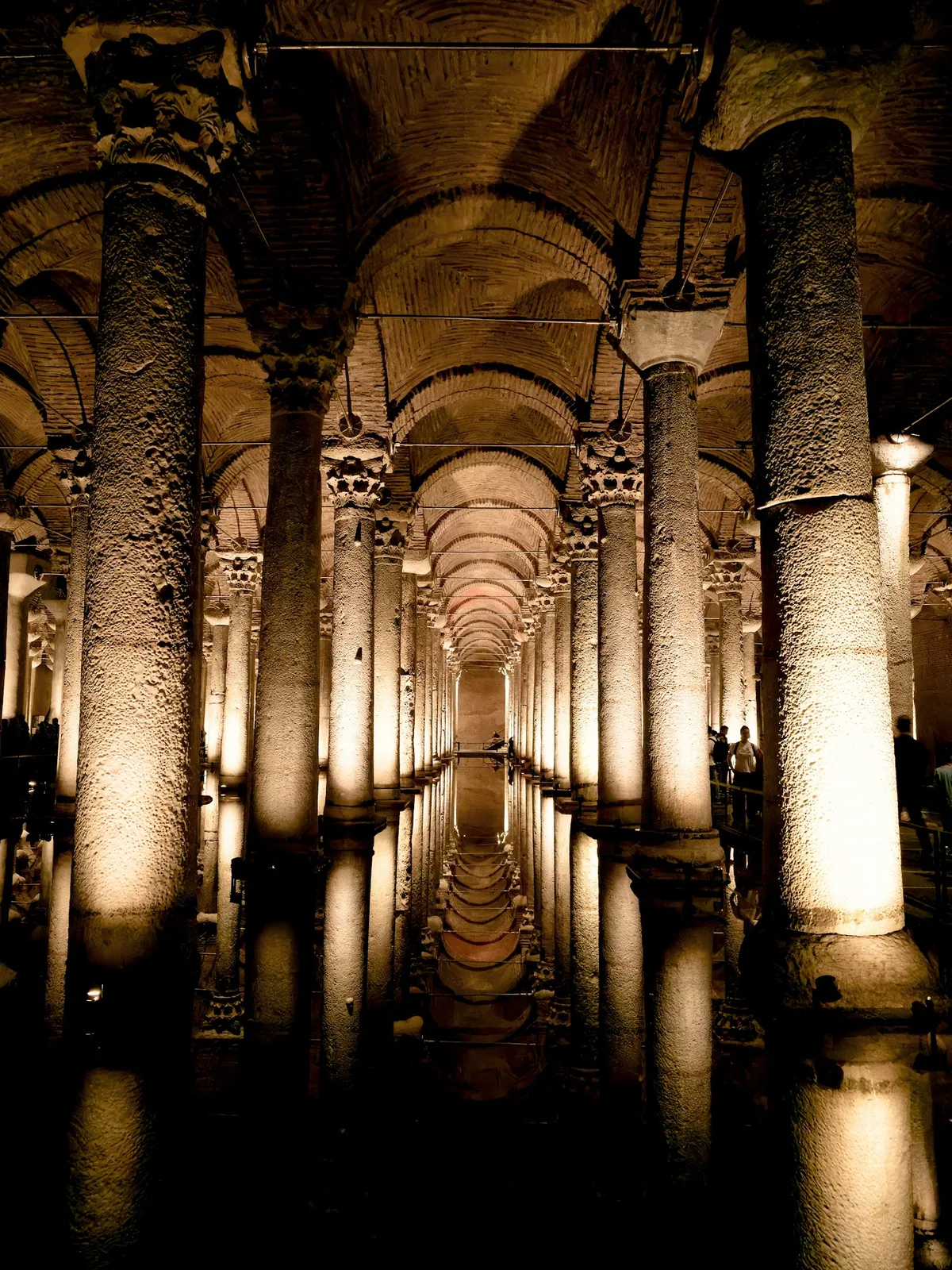
A 6th-century underground reservoir beneath Istanbul's old city, its ceiling held up by 336 marble columns, two resting on carved Medusa heads salvaged from earlier Roman structures.
Visitor guide
The Basilica Cistern, known in Turkish as Yerebatan Sarnici, is an underground water reservoir beneath the old city of Istanbul, Turkey, built in the 6th century under the Byzantine emperor Justinian I. A forest of marble columns rises from shallow water beneath brick vaults, and it is part of the UNESCO-listed Historic Areas of Istanbul.
According to Wikipedia, the cistern is described as the largest of several hundred ancient cisterns beneath Istanbul and lies about 150 metres southwest of Hagia Sophia. It takes its name from the Stoa Basilica, a large public square on the First Hill of Constantinople, which had earlier held a great basilica that served as a commercial, legal and artistic centre. Historical texts claim that 7,000 enslaved people worked on the construction, and Wikipedia attributes the cistern to Justinian's reign in the 6th century.
Water arrived from the Belgrad Forest, about 19 kilometres north of the city, through aqueducts including the Valens Aqueduct. The cistern was largely forgotten by the wider population, although locals who still drew water from it kept it known, until the French traveller Petrus Gyllius, who was in Constantinople in the 1540s, recorded it and described being rowed among the columns, with fish visible beneath the boat.
The chamber measures roughly 138 by 65 metres and can hold about 80,000 cubic metres of water. Its 336 marble columns, each about 9 metres tall, stand in 12 rows of 28. Most have Ionic or Corinthian capitals, and many appear to be recycled from older buildings across the empire. One column is carved with a pattern of an eye, branches and tears. Two column bases in the northwest corner reuse blocks carved with the face of Medusa, whose origin is unknown; Wikipedia says they are thought to have come from a late Roman building, with no evidence they were originally made as column bases.
Wikipedia notes that the cistern is part of the Historic Areas of Istanbul, listed by UNESCO since 1985, and is classed under Turkish law as a first-degree archaeological site, which limits permanent alterations and requires reversible interventions. The Turkish name Yerebatan Sarnici means Subterranean Cistern, while the English name refers to the Stoa Basilica above it. Between 2020 and 2022 restoration crews replaced deteriorated iron tie-rods with stainless-steel rods, removed mid-20th-century concrete walkways and sediment, and revealed the original 6th-century brick floor.
The cistern was repaired in 1723 under Ahmed III, again in the 19th century under Abdulhamid II, and in 1968. Between 1985 and 1987 the municipality removed about 50,000 tons of silt and opened the site to the public in September 1987. It was closed for restoration and earthquake-proofing from 2017 to 2022. The cistern appears in the 1963 James Bond film From Russia with Love and in Dan Brown's novel Inferno.
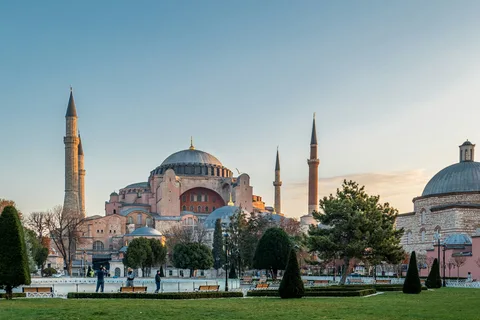
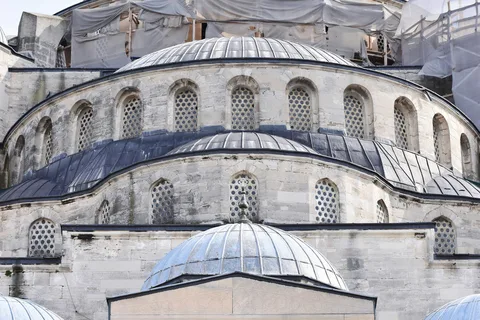
It is a short walk from Hagia Sophia and the Blue Mosque, and a private guided visit with a dedicated vehicle and driver can link them in one day; details are tailored on request.
See every tour and attraction we cover in Turkey.